How should peonies be fertilized so they bloom large and abundant?
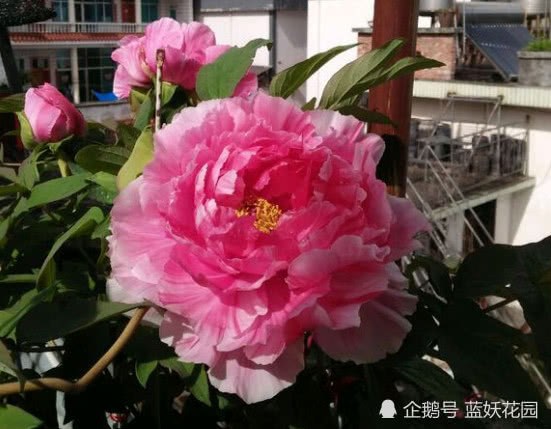
12. The fertilizing secrets for peonies to bloom large and abundant, you'd better save this quickly!
This is the 12th article in the original "Peony Cultivation" column by Lanyao
Yesterday we talked about watering management for peonies. If you want peonies to grow well and bloom brilliantly, watering alone is definitely not enough. Fertilizing is the primary condition for ensuring blooming and brilliant blooms.
So how exactly should peonies be fertilized?
There is a gardening saying about fertilizing peonies; I wonder if you have heard it. "Clear peony, turbid herbaceous peony."
Many people do not thoroughly understand "clear" and assume peonies do not need fertilizer and should only be watered with clear water. This is of course incorrect.
In peony cultivation, winter fertilizer is the most important. For peonies planted in the ground, apply solid fermented organic fertilizer after winter begins, and mound soil at the same time. For potted peonies, sufficient base fertilizer should be applied at planting time.
After blooming in spring, apply a supplementary dose of solid fermented organic fertilizer in time. Peonies are rarely given liquid fertilizer as a supplementary feed; supplementary fertilizer is mostly solid fertilizer buried shallowly, hence "clear peony."
But this does not mean peonies cannot use liquid fertilizer. If potted, because the fertility of the potting soil is limited, foliar supplementary fertilization can be done before and after blooming. That is, use a three-element compound fertilizer, dilute with water and spray on the leaves, but be careful to control the concentration to avoid fertilizer burn.
Every year in October, organic fertilizer can be applied again to promote flower bud formation.
For fermented organic fertilizer, you can choose fermented pig manure, sheep manure, chicken manure, compost, etc., and at the same time add some bone meal and fish meal to increase the content of phosphorus and potassium fertilizer.
Peony fertilizing taboos
Because peonies have fleshy roots, they are very sensitive to fertilizer and water. When fertilizing, be sure to avoid the following 3 taboos.
1. Avoid applying concentrated fertilizer
Peonies are sensitive to fertilizer. Whether doing foliar supplementary fertilization or applying organic fertilizer, be careful with the amount to avoid fertilizer burn. Organic fertilizer must be fully fermented.
2. Avoid applying manure water
"Clear peony" indicates that peonies are relatively fond of cleanliness, so do not use liquid fertilizer to drench the roots, especially some manure water, which very easily causes the rot of peony roots.
3. Avoid fertilizing in summer
Peonies are in a stagnant growth stage in summer, and summer temperatures are high, so fertilizing should be stopped; otherwise it very easily causes fertilizer burn.
The timing of supplementary fertilization for peonies is roughly divided into 3 stages.
Pre-bloom fertilizer, that is, in early October, mainly to promote flower bud differentiation.
Winter fertilizer, in late autumn and early winter. This fertilization is combined with mounding soil, mainly to enhance the cold resistance of peonies, maintain soil temperature, and at the same time lay the foundation for spring blooming.
Post-bloom fertilizer, that is, within half a month after blooming. This supplementary fertilization is mainly to repair the depletion from peony blooming and at the same time promote flower bud differentiation, and it has a very large impact on the number of blooms the following year.
After learning the watering and fertilizing methods for peonies, do you feel that peony management is actually quite worry-free, and are you a little tempted to grow a peony?
But peonies cannot be grown in every place. Want to know whether your area is suitable for growing peonies? Please keep following Lanyao's update tomorrow!
If you want to learn flower growing with Lanyao and quickly stop being a newbie, pleaseFollow my WeChat public account: Lanyao Garden (ilanyao)