Use these 4 kinds of fertile soil for growing flowers; use any one and they won't rot roots but will grow like crazy
The most important thing for growing flowers is the flower soil. Flower soil for growing flowers generally needs to be loose and breathable. If it easily clumps and drains poorly, many flowers will wither after being grown for a while. So what common flower soils do we have in our daily lives? How should they be used? Let's take a look!
“
Flower soil for growing flowers
”
Soil with its own fertility
-Leaf mold-
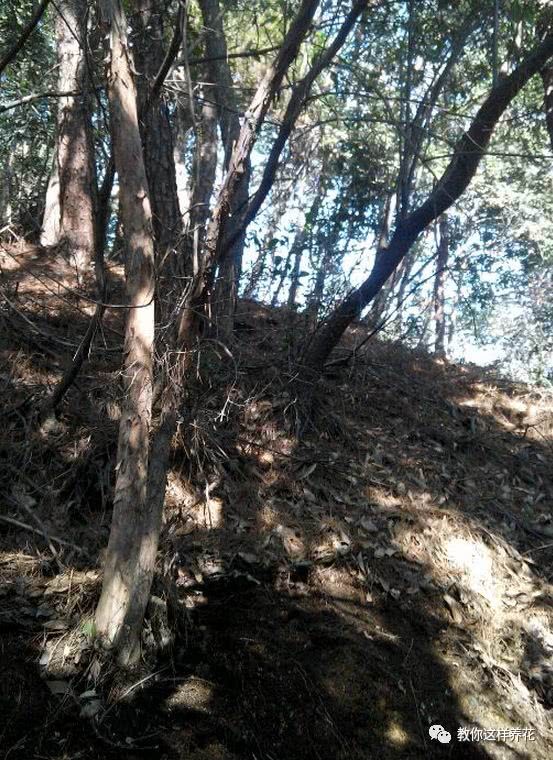
Leaf mold can be dug up anywhere, whether in the mountains or in the city. Huahua tells everyone a little trick: find a remote little grove, and with just a casual scrape there will be a thick layer of leaf mold.
(Rose Bar, Tianxing Work 027)
When digging, just dig the top layer of surface soil, and try to damage the green plants and grass as little as possible. Leaf mold generally has bugs, so it should be dried in the sun for a few days before use. Leaf mold has very good drainage and breathability, and high fertility, so it can be used as the main planting material with a small amount of granules mixed in to grow flowers. When using it, put the large pieces at the bottom of the pot, and the finer pieces can be placed on top.
-Pine needle soil-
Pine trees easily drop pine needles. Under pine forests, there is a thick layer of pine needle soil. For pine needle soil, you need to push aside the surface pine needles and dig out the fully decomposed, soft brown soil inside for use.
Pine needles themselves contain antibacterial substances, so flowers grown with pine needle soil get sick less often. Pine needle soil has good drainage and breathability, but its water retention is slightly poorer.
(Kalanchoe Bar, Novice Kalanchoe)
-Mountain soil-
There are many types of mountain soil, including red mountain soil, yellow mountain soil, black mountain soil, and so on. Black mountain soil has more organic matter, while red and yellow mountain soil contain more minerals such as iron. Overall, they are all relatively strongly acidic flower soils. Some mountain soils also contain incompletely weathered mineral stones, which are very helpful for flower growth.
Black mountain soil is rich in organic matter. It is very good for growing acid-loving flowers such as orchids, camellias, and rhododendrons. Mix in some granules and rice husk charcoal, and the root system grows very strong.
Red and yellow mountain soil has less organic matter, is highly sticky, and easily compacts. It needs to be improved by adding media such as leaf mold or peat soil before being used to grow acid-loving flowers.
-Peat soil-
Peat soil and grass peat soil are basically the same type of material. They are soil produced by the accumulation of decomposed aquatic plants underwater. Grass peat soil contains plant residues that have not been completely decomposed, while peat soil has a higher degree of carbonization. Relatively speaking, peat soil is better.
Peat soil has strong water retention and is slightly acidic, but it drains poorly. If peat soil is used alone to grow flowers, it will also easily compact. Generally, some perlite, coconut coir, and an appropriate amount of organic fertilizer are added and mixed for use. Domestic peat soil is basically found in the Northeast region, so ordinary flower enthusiasts generally cannot dig it up. Fortunately, the price is not too expensive, and it can be bought online.
Peat used for germination has a very high germination rate.
-Bamboo root granular soil-
People who have been growing flowers for years know that bamboo root soil is very fertile, but moso bamboo roots are intertwined and the root system grows horizontally, so it is easy to break the bamboo roots and cause the bamboo's growth to stall. Therefore, bamboo farmers generally will not let you dig the soil.
Flower enthusiast Jiang Fengliao happens to be able to find bamboo root soil and uses bamboo root soil to make homemade granules. This kind of bamboo root soil is submerged year-round under rotting bamboo leaves. With one shovel thrust, it oozes richness. Just by the feel of the soil, neither greasy nor dry, you can tell this soil is a top-grade material for growing flowers.
In moso bamboo forests, due to the soil quality and the effect of bamboo roots, the soil is relatively dry. When the soil dries, there are fewer bugs, and therefore fewer bacteria. This can also be considered a major advantage of bamboo root mud. It has not been sieved, not dried, and not disinfected. Just rub it with your hands and pick out the fallen leaves, and this soil is already ready for processing.
According to the different plants being grown, different fertilizers can also be mixed in in small amounts
Stir, add water, shake the pot soil, and it naturally becomes granules
Then dry it in the blazing sun; it must be thoroughly dry, then store it for later use. Mix it into potting soil, or use it directly to grow plants, and it is even better than akadama soil!
(Sina Blog, Jiang Fengliao)
These soils are very good for growing flowers, with sufficient fertility, and flowers grow quickly when grown in them. However, generally speaking, using a single soil to grow flowers is not very good. It is best to combine multiple media with multiple properties and make different ratios for different flowers in order to create the flower soil that the flowers need. Common matching media include garden soil, coconut coir, plain sand soil, and so on.
Use multiple soils in combination
-Garden soil-
Garden soil refers to vegetable garden soil and field soil. It is soil that has been cultivated and used to grow flowers, trees, and vegetables. Generally speaking, garden soil has good fertility and strong water retention, but the soil easily compacts and easily accumulates water and rots roots.
-Coconut coir-
Coconut coir is a medium made from coconut husk fiber. Coconut coir is soft and breathable, has good drainage, and is cheap, but it has no fertility, so it can be mixed into other soils for use.
-River sand-
River sand has good drainage performance, and its volume will not change after adding water, with a stable structure. However, river sand has no fertility and can be added to other soils to improve soil drainage. The river sand used should be coarse sand with larger granules, otherwise it will not play a drainage role.
Common plant soil mixes
-General plant soil mix-
General plant soil mix:
1 part peat or leaf mold, 1 part garden soil, 1 part granules, a small amount of organic fertilizer.
-Succulent plant soil mix-
Flower enthusiasts in the north can refer to:
5 parts peat soil, 2 parts coarse sand, 3 parts granules, a small amount of slow-release fertilizer.
Flower enthusiasts in the south can refer to:
3 parts peat soil, 2 parts coconut coir, 2 parts coarse sand, 3 parts granules, a small amount of slow-release fertilizer.
In dry and cool places, use more peat; in hot and humid places, use more granules. For old stumps, use more granules; for small seedlings, use more peat.
How many kinds of soil are around you?
What soil have you prepared for spring?
After reading, show it to flower enthusiasts who need it~