15 kinds of flowers are so easy to propagate from cuttings now, roots in 1 week and you'll easily become a big grower
“
Plant cuttings
”
- Mint -
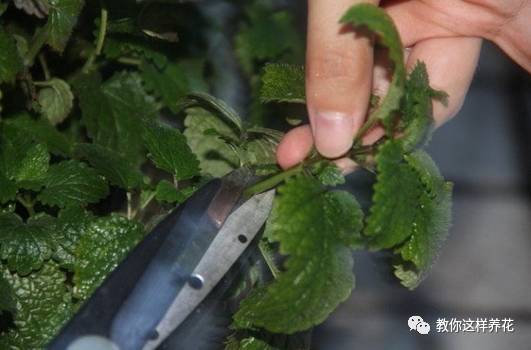
Mint cuttings are relatively simple. Cut a slightly older branch about 10 cm long, remove the bottom leaves, put it in water and it will grow roots in a few days. You can also stick it directly into loose soil, first place it in a shady spot for care, and after 1 week just care for it normally.
- Crab Claw Cactus (Schlumbergera) -
Crab Claw Cactus can be propagated by cuttings after the flowers fade. Do not choose leaves that are too tender for cuttings; cut directly at the stem joint and let it dry for 1-2 days. Find some loose nutrient soil, insert the leaf into the potting soil, water a little, place it in partial shade, and after about 2-3 weeks you can care for it normally.
- Kalanchoe (Kalanchoe blossfeldiana) -
Kalanchoe cuttings are also relatively simple. Choose some relatively mature fleshy stems and let them dry. Insert them into plain sand or nutrient soil, water, place in a partial shade spot at a temperature of 15-20°C, and generally roots will form in about 3 weeks. Some fallen leaves can also root and sprout when inserted into soil, and small buds can grow from the leaf stalk.
(Kalanchoe Forum, Meng Siyuan)
- Ivy (Hedera helix) -
Cut an ivy branch about 10 cm long, preferably with aerial roots, remove the bottom leaves, insert it into loose, breathable potting soil, place it in a partial shade spot for care, water thoroughly, and generally 20-30 days after insertion it will root and survive.
- Snake Plant (Sansevieria) -
Cut the Snake Plant into small sections about 10 cm long and let them dry first. Then insert them into plain sand, water thoroughly, and pay attention to the front and back - they must not be inserted upside down. Roots will form in about a month, and after growing 2-3 leaves, they can be potted up. Snake Plant cuttings will cause the golden-edged varieties to lose their stripes and become ordinary Snake Plants.
- Camellia (Camellia japonica) -
Generally choose healthy, plump semi-ripened branches of the current year as cuttings, 8-10 cm long, keeping 2 leaves at the tip. When cutting, keep a little old wood at the base if possible, as this makes it easy to form callus tissue after insertion and roots develop quickly. Cut and insert right away, inserting about 3 cm into the medium. When inserting, the leaves should overlap each other, and after insertion press firmly with your fingers. Shallow insertion is better, as this allows air circulation and faster healing and rooting.
The medium is generally plain sand or perlite. Note that before use it should be sterilized by sun exposure, or sterilized by pouring boiling water over it.
The cutting bed needs shading and film covering, spraying the leaf surface every day, keeping it moist, and maintaining the temperature at 20-25°C. When inserting, dip the base of the cutting in rooting powder for 2-5 seconds, which has an obvious effect of promoting rooting.
About 3 weeks after insertion, healing begins, and roots form after 6 weeks. When the roots are 3-4 cm long, transplant and pot up.
(China Camellia Forum, Huang Jinzhai)
(China Camellia Forum, Huang Jinzhai)
- Rose (Rosa) -
Select healthy rose cuttings of the current year that have already bloomed and are of appropriate age and tenderness, cut diagonally at the bottom, keep 2 buds, preferably with a heel, and keep 2-4 leaves. Soak in carbendazim for disinfection, and prepare river sand by sterilizing it in the sun in advance. Insert the branch about 1 cm into the sand, then place it in a larger water-filled container.
(Rose Forum, hanwym)
- Gardenia (Gardenia jasminoides) -
Gardenia cuttings are also relatively simple. Choose semi-lignified, well-developed young branches, cut them into 10-15 cm lengths, and keep two leaves. Soak the base in rooting powder, insert into acidic soil with strong water and fertilizer retention, and roots will form about 1 month after insertion, and they can be transplanted after 50 days.
- Lucky Bamboo (Dracaena sanderiana) -
Lucky Bamboo roots faster when the temperature is higher. The cutting should have a diagonal cut surface, which can increase the area for water absorption and make Lucky Bamboo root faster. Remove the leaves inside the bottle to prevent them from rotting due to lack of air over time and affecting plant growth.
The water level is generally controlled at about 3-4 nodes above the cut, about 1/3 of the water. If it is tap water, it is generally better to let it sit for a day before use.
Place it in a cool place with scattered light, and do not expose it to the sun. Do not move its position, change the water once every 2-3 days, and generally new roots will grow in about 20 days. After new roots grow, a small amount of nutrient solution can be applied. During this period there may be some listlessness and yellow leaves; this is rooting and adapting to the new environment, and it is normal.
- Rubber Plant (Ficus elastica) -
For the cutting potting soil, you can use plain sandy soil or vermiculite. For the cutting, it is best to choose two-year-old semi-lignified middle branches, and the survival rate can reach over 90%. To prevent too much milky sap from flowing out of the cut and affecting survival, immediately seal the cut with clay or plant ash after cutting. The length of the cutting is based on keeping 3 buds, cut off one lower leaf, fold the upper two leaves together, and tie them with thin plastic string to reduce leaf surface evaporation.
The suitable temperature for rooting is 18-25°C. Often sprinkle water on the ground to increase air humidity, and do a good job of shading and ventilation. Roots will form in about 2-3 weeks. After potting, place it in a slightly shaded spot, and gradually increase light after new buds sprout.
(Rubber Plant Forum, Jingting ing Huakai)
- Hydrangea -
Use peat and perlite as the cutting medium. After filling, water thoroughly once to keep the medium moist. Choose young branches of the current year, cut the branches as shown in the picture below, one pair of leaves per small section, then cut each leaf in half to reduce water evaporation. The cutting is 5-7 cm long.
After inserting, water thoroughly once, place in a cool, ventilated place, spray water every day to keep moist, and roots will grow in about a month.
(Hydrangea Forum, Keke Coaee)
- Jasmine (Jasminum sambac) -
Choose mature 1-year-old jasmine branches, cut them into cuttings with more than two nodes, remove the lower leaves, insert them into a cutting bed of half mud and half sand, cover with plastic film, maintain relatively high air humidity, and roots will form after about 40-60 days.
A cutting with 3 nodes is enough. The lower cut is best 0.5 cm from the leaf node, which makes rooting easy. To reduce evaporation, keep 2 leaves on the whole cutting, then cut them in half.
After about 21 days, roots have basically formed. After transplanting, water thoroughly
(The above jasmine pictures are from Tahua Xing, Yisheng Ailan)
- Pothos (Epipremnum aureum) -
Pothos cuttings are very simple. As long as the temperature is suitable, they can be done all year round. There are two types of cuttings: soil cuttings and water cuttings. Prepare nutrient soil and sterilize it by sun exposure for later use.
Choose a healthy vine with aerial roots as the mother plant for cuttings. Having aerial roots can greatly shorten the rooting time. Cut the branch section by section, each about 10 cm, leaving 1-2 leaves and 1 bud node on top. Try to avoid the aerial roots at the cut, and cut the lower end at a 45-degree angle, preferably smooth. After inserting the branches, water thoroughly and place in a cool, ventilated place. It is necessary to keep the soil moist and the air temperature relatively high. Roots generally form after about 10 days.
- Spider Plant (Chlorophytum comosum) -
Spider Plant propagation is very easy. Cut off the clustered stems and leaves on the spider plant's stolon (actually a new young plant, with leaves above and aerial roots below), and directly plant it into a flower pot to cultivate, water thoroughly, and place in a cool spot for care. When inserting, be careful not to bury it too deep, otherwise the center will rot.
(Spider Plant Forum, Ma Cuier)
You can also cut it off directly and put it in a hydroponic container, and it will root quickly too.
- Peperomia (Peperomia obtusifolia) -
Cut healthy Peperomia branches or leaves, insert them at a 45-degree angle into perlite or vermiculite. Keep the potting soil moist. Keep the temperature above 20°C, and roots will form in about 15-20 days. Once 3 new leaves have grown, normal care can begin.
Peperomia can also be propagated by leaf cuttings, and they can also survive.
(Peperomia Forum, Bingxue Xiaohan 668)
- Succulent Leaf Cuttings -
Choose healthy succulent leaves; do not use leaves that have turned to mush or died. Succulent leaves can first have water withheld for 4-5 days, which makes the succulent leaves easier to twist off. Never pull the leaves off roughly; pay attention to keeping the growth point intact. Damaged leaves find it very hard to grow roots and sprout, so be careful during the twisting process.
(Intact bud point)
(Torn bud point)
Lay them flat on the soil. Be careful not to water on the surface of the succulents; you can water at the gaps between the leaves. If there is water on the leaves, you can absorb it with a paper towel. Place them in a cool environment without direct sunlight and wait for roots to form.
Cuttings are actually not hard
Propagate some now, and you'll become a big grower too!
Come and give it a try
After reading, share it with flower friends who need it~