How to cultivate a potted Tradescantia sillamontana variegata? Remember these four points to grow it well
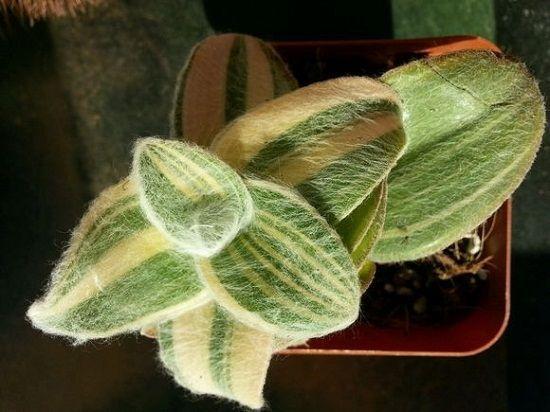
As one of the succulent plants, Tradescantia sillamontana variegata is relatively rare in our daily life. Its plant surface is covered with a layer of fuzz, and under light conditions it gives people a certain sense of translucency. At the same time, its flowers are also very lovely. During the flowering period, Tradescantia sillamontana variegata blooms pink, three-angled flowers that are extremely distinctive. So if you want to cultivate a good Tradescantia sillamontana variegata, what issues do you need to pay attention to?
I. Cultivation of Tradescantia sillamontana variegata
Tradescantia sillamontana variegata is mostly cultivated by sowing and propagation, and sometimes division propagation is also chosen for planting, while potted Tradescantia sillamontana variegata is easier to manage when grown from seeds. Prepare an appropriate amount of Tradescantia sillamontana variegata seeds. Before sowing, the seeds need to be thoroughly cleaned, and the seeds should be placed in a place with a suitable temperature to dry in the sun for a period of time.
The reason for doing this is that the treated seeds germinate more easily; otherwise, the seeds may need to wait a month or even longer before germinating. After the seeds have successfully germinated, you still cannot relax your management of them at this point. Before the plant grows leaves, the pot should be placed in a semi-shady spot to grow for a period of time. After about a few weeks, once the plant has grown a small number of true leaves, it can enter routine management.
II. Care of Tradescantia sillamontana variegata
1. Soil conditions
Tradescantia sillamontana variegata must grow in soil that is relatively fertile and has good drainage. If the potting soil for Tradescantia sillamontana variegata is relatively ordinary or poor, it will often make the growth of Tradescantia sillamontana variegata rather unsuccessful, for example, the plant cannot grow taller for a relatively long time, its ornamental value is poor, and problems such as dull leaf color and fewer flowers appear. Therefore, choosing good soil as the potting soil for Tradescantia sillamontana variegata is very important, and the potting soil generally cannot be used for more than two years, because by then the soil conditions are already relatively poor. In order to ensure the good growth of Tradescantia sillamontana variegata, the potting soil must be replaced regularly, preferably about once every other year.
2. Light requirements
Tradescantia sillamontana variegata has extremely strict requirements for light. Since it cannot tolerate overly strong light, the placement of the pot is especially important. In autumn and winter, in addition to ensuring that the environmental temperature is in a relatively warm range, the plant can be allowed to receive light for a longer period at this time; while in summer, the situation is exactly the opposite, especially since the afternoon sun is very strong, and Tradescantia sillamontana variegata cannot grow under such conditions, so the pot must be placed in a cool, well-ventilated place to grow. Otherwise, the plant is very likely to suffer sunburn, and in severe cases this often causes irreversible effects, so we need to take careful care of it in daily life.
3. Watering requirements
Tradescantia sillamontana variegata at the seedling stage generally needs more water, and should be watered once every two to three days. When watering, avoid pouring water directly onto the plant itself; otherwise, if the water on the plant does not evaporate in time, it can easily cause rotting. In addition, rice-washing water, tea water, and the like from daily life cannot be used as water for Tradescantia sillamontana variegata. If used for a long time, it is not only extremely unfavorable to the growth of the plant, but also quite harmful to the soil, making the soil prone to hardening.
4. Fertilization conditions
Tradescantia sillamontana variegata has average nutrient needs. Normally, fertilization can be carried out about once every half a month to ensure the normal growth of the plant. Even if fertilizing less, be sure to avoid over-fertilizing, because excessive fertilization will cause the excess fertilizer to remain in the soil, and the plant cannot absorb it in time, which can easily cause the root and stem parts to rot. Therefore, this is also something we need to pay attention to in daily management.