What should you pay attention to when turning sweet alyssum from a roadside ornamental into a home potted bonsai?
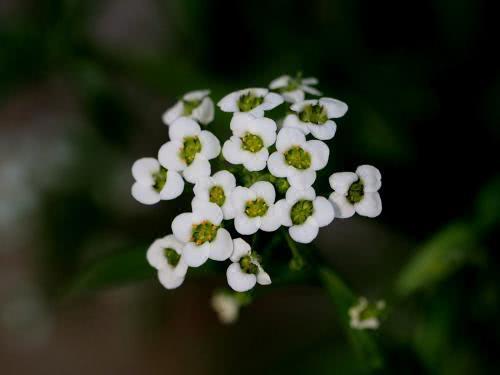
Sweet alyssum is often also called little white flower. Its plant form is not tall, with mature plants reaching about 30-40 cm in height. It is native to the Mediterranean region and was later introduced to Jiangsu, Hebei, Zhejiang and other places in China, where it is now widely cultivated. A sweet alyssum plant generally takes the form of one plant with multiple branches, and each branch is covered with snow-white flowers, accompanied by a faint fresh fragrance that attracts quite a few bees. Therefore, it is used for laying out flower beds and gardens, and it is also quite good as a potted ornamental.
I. Cultivation of sweet alyssum
Seed and cutting propagation are the main cultivation methods for sweet alyssum, but in daily life, people mainly use sowing propagation to grow sweet alyssum. Depending on the region in China, the sowing time also differs. If cultivated in the south, sowing can be done in spring or autumn, while in the north, sweet alyssum is mostly sown in spring.
When sowing, the seeds are best germinated and raised indoors, so that the indoor temperature can be well controlled to reach the optimal temperature for seed growth. It germinates quickly; generally, about one week after sowing, it will germinate. After the seedlings emerge and go through a few weeks of cultivation, once the plants have grown an appropriate amount of leaves, they can be transplanted for growing on, and after that comes normal management work.
II. Care of sweet alyssum
1. Soil conditions
Sweet alyssum has good adaptability to most environments, so its requirements for soil are also relatively low. Usually, choosing a relatively loose, well-draining sandy soil or garden soil for the potting mix is enough. Based on past flower-growing experience, many friends also place a small amount of decomposed organic fertilizer at the bottom of the pot, such as manure or cake fertilizer, so that the soil fertility is better and the growth speed and condition of sweet alyssum will be even better.
2. Light requirements
Sweet alyssum grows best under suitable indirect light. Because it is relatively shade-tolerant, when summer arrives, in order to avoid the plant being scorched by overly strong light, the pot is often placed in semi-shade for growth, and certain shading measures should be taken when necessary. In other seasons, under the warm sun, sweet alyssum can also receive full sun, allowing the plant to grow fully.
3. Moisture conditions
Unlike many plants, it is better to keep the potting soil of sweet alyssum in a semi-dry condition. It is not suitable for growing in a moist environment, as this easily causes roots, stems and branches to rot to varying degrees. During the plum rain period in the south, the pot should especially be placed in a ventilated place for growth.
4. Nutrient requirements
As for fertilizing sweet alyssum, just remember not to apply fertilizer with too high a concentration and not to fertilize irregularly. Usually, fertilize once every twenty days to about one month, and it is best to fertilize together with watering each time, so that the fully diluted fertilizer is more easily absorbed by the plant.