Variegated star jasmine has diverse and highly ornamental leaves, and its strong stress resistance makes it suitable for bonsai.
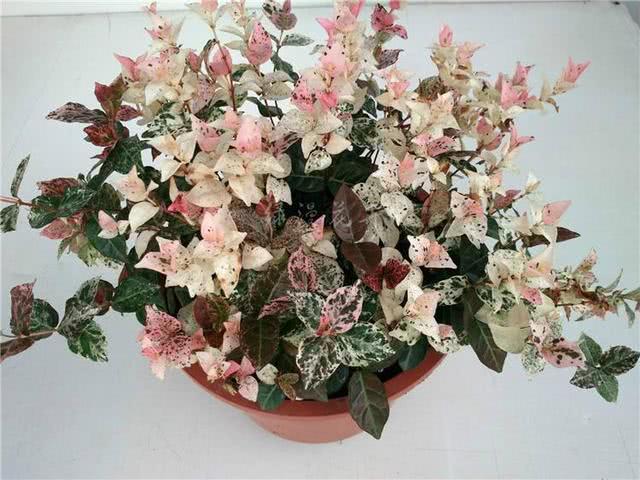
Variegated star jasmine, also known as white sweet flower, is one of the most widely used flowers in landscaping and other greening in Japan. Its flower colors range from white and red to pink, and groups of variegated star jasmine are extremely eye-catching in terms of ornamental value, so it is also widely used as ground cover plant material. Potted variegated star jasmine is also an excellent choice; choosing it for indoor decoration or scene arrangement means it can go for a long time without much management, making it extremely convenient.
I. Cultivation of variegated star jasmine
Because of its very good stress resistance, propagation of variegated star jasmine by cuttings can be carried out at any time throughout the year, with spring and autumn being the most suitable. We usually choose semi-lignified variegated star jasmine branches as cutting material, because overly tender branches have too low a degree of differentiation, while old branches have too low a success rate for cuttings.
When carrying out cuttings of variegated star jasmine branches, it is best to do so indoors in a greenhouse, because the rooting process of the branches has high environmental temperature requirements, and the outdoor environment has large temperature fluctuations that are difficult to control, so it is more suitable to do it indoors before the plant roots. Within two to three weeks after the cuttings are completed, the branches can generally complete rooting. At this time, note that the plant must not yet be fertilized; a small amount of watering can be done, and normal management can only begin after the plant has grown true leaves.
II. Care of variegated star jasmine
1. Light requirements
Variegated star jasmine generally grows in temperate climates, so its demand for light is relatively high. Usually the pot should be placed in a place that can receive plenty of light for growth, such as sunlight or a sunny spot by a window. If the temperature is too high in summer, variegated star jasmine can be moved to a cool indoor place for growth, and then placed outside again after the temperature is suitable.
2. Soil conditions
It is precisely because variegated star jasmine can adapt well to most environments that it can be used in many ways. Therefore, its growing soil can be ordinary sandy soil or relatively fertile humus soil, as long as the potting soil has good drainage; at the same time, it is not suitable for growth in alkaline soil.
3. Water requirements
In a relatively humid environment, variegated star jasmine can grow better. In spring and autumn, it usually needs watering once every two to three days; in summer, the plant consumes water too quickly, so it must be watered every day; as for the relatively cold winter, it generally needs watering only once every half a month to a month.
4. Fertilization requirements
In addition to ensuring that the growing soil for variegated star jasmine is relatively fertile, fertilization at regular intervals is also essential. Although the plant's fertilizer demand is not high, "frequent application of thin fertilizer" will keep the plant in good growth condition for a long period of time and also has a certain promoting effect on the plant's flowering.