Desert Rose Growing Habits and Care Tips for a Beautiful Shape and Vibrant Blooms
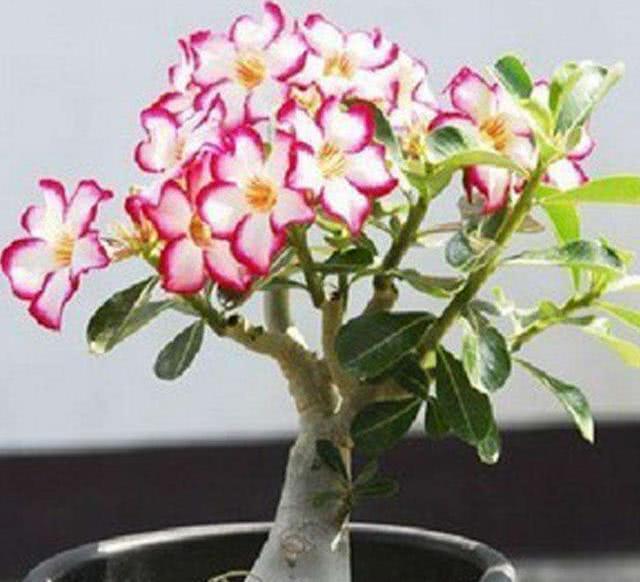
The Desert Rose plant is short and small, with an ancient, rugged tree form and a swollen rootstock shaped like a wine bottle. When it blooms, the flowers are trumpet-shaped and bright red, making it very suitable for indoor growing and viewing. It originates from areas of Africa close to the desert, and its flowers are red like roses, hence the name Desert Rose. The Desert Rose blooms from May to December. When growing Desert Rose at home, pay attention to the following aspects to achieve a beautiful shape and vibrant blooms.
1. Soil.Desert Rose prefers calcium-rich, loose, breathable, well-draining sandy soil. For the soil mix, it is recommended to mix leaf mold, peat soil and coarse sand in a 4:4:2 ratio. Before potting, sprinkle an appropriate amount of fully decomposed bone meal or chicken manure fertilizer at the bottom of the pot to provide sufficient energy for the flowering period.
2. Temperature.Desert Rose prefers a high-temperature, dry environment with plenty of sunlight and good ventilation, and it is very tolerant of extreme heat. Hot summer weather is also its vigorous growth period. However, it is not cold-tolerant, and the suitable growing temperature is 25-30°C. When the winter temperature drops below 10°C, Desert Rose enters a semi-dormant state and may drop leaves due to unsuitable temperatures, but new leaves will grow again after the temperature rises.
3. Light.Desert Rose is a flowering plant and loves basking in the sun. It can be placed in a sunny spot all year round, and no shading is needed even in summer. A good sunlight environment helps flowering. Turn the pot regularly so the plant receives light evenly, which helps maintain a beautiful shape.
4. Watering.If you want to grow Desert Rose well, watering is the top priority. As the name suggests, Desert Rose is very tolerant of drought. Its stems and leaves have strong water-storage capacity, and it prefers a dry, well-ventilated environment. It fears water accumulating in the pot most of all. Even during the vigorous growth period, you must wait until the potting soil is completely dry before watering. During the winter dormant period, water even less to prevent root and stem rot.
5. Fertilizing.During the vigorous growth period of Desert Rose in spring, summer and autumn each year, maintain a sufficient fertilizer supply, increase phosphorus and potassium fertilizer, and reduce nitrogen fertilizer. You can also apply self-decomposed liquid fertilizer once every 10 days, or bury an appropriate amount of bone meal around the pot to help bud formation and flowering. Avoid applying raw fertilizer or concentrated fertilizer; apply light fertilizer frequently. Stop fertilizing during the low-temperature period in winter to prevent burning the roots.
6. Pests and diseases.When temperatures are high from June to September each year, poor ventilation or water accumulation in the pot can cause soft rot in Desert Rose. You can remove the rotten tissue, provide a well-ventilated environment, reduce watering frequency, and spray with a 1000-fold dilution of agricultural streptomycin. In summer, Desert Rose is prone to scale insect infestation, which in severe cases can cause all leaves to drop, the growing points to die, and even the whole plant to die. You can wipe them off with a cotton swab dipped in water or rinse them clean with water.
7. Toxicity.It should be noted that Desert Rose belongs to the Apocynaceae family, and its sap is somewhat toxic. Accidental ingestion can cause symptoms such as accelerated heartbeat and irregular heart rate. Flower lovers with young children at home should place it out of children's reach to prevent accidents.