Growing succulents with leaf mold keeps the soil airy and rich in nutrients
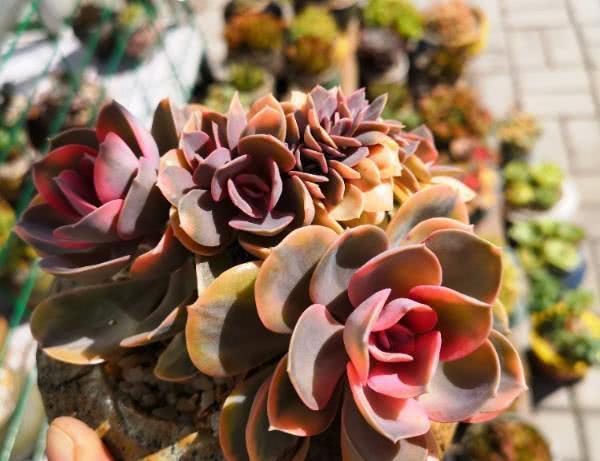
Using leaf mold to grow succulents not only ensures the air permeability of the succulents but also provides the nutrients they need to grow. To get leaf mold, you can gather it on the spot in the woods, or you can compost leaf mold at home. If you live in the city center and are rather far from places with leaf mold such as woods, then you can make your own leaf mold at home.
Collect some fallen leaves, prepare some coal ball slag, find a fairly large container, and lay a layer of fallen leaves in the container, then a layer of coal ball slag, repeating this over and over. Then add sewage water, and finally sprinkle a slightly thicker layer of coal ball slag on top. After that, just leave it in a sunny, well-ventilated spot to ferment. In about a year or so it will be ready to use.
The soil for succulents can be mixed according to different growth stages: in the seedling stage the root system is not well developed, so the organic matter content should be slightly lower, and the soil should mainly be lightweight materials combined with some fine sand, with the organic matter content gradually increased later on. The climate in the north is dry, so there are certain requirements for the soil's moisture-retaining ability; the south has abundant rain and high air humidity, so there are higher requirements for the soil's drainage and aeration.
Generally, succulents need loose, airy, well-draining soil, in other words, soil with larger particles. You can buy pre-mixed soil from a succulent shop, or mix your own; it is usually made with peat, perlite and vermiculite, with no fertilizer added. If you want something even better, use granular soil, such as akadama and kanuma. It costs a bit more, but it is better for the succulents and looks nicer too, for example if you want to place them on a table or somewhere like that.
If you are more particular, the soil can be sifted through a sieve and sterilized before planting. In addition, the degree of drainage should be based on your own watering habits; if you like to water every day, the more drainage the better. If your watering intervals are relatively long, the soil should be mixed to retain more water.
The more ample the light and the greater the temperature difference between day and night, the more beautiful the leaf colors of succulents become. When temperatures allow, it is best to keep them outdoors to ensure ample light. When light is insufficient or the soil is too moist, they become leggy, the whole plant turns light green or dark green, the leaves become sparse and the spacing between them stretches out, and it grows upward faster, seriously affecting its ornamental value and possibly even causing death because the plant's photosynthesis is hindered.
This is a gathering place for succulent lovers, sharing succulent care tips; you are welcome to follow and join the conversation.