Beginners growing orchids: master these 3 "degrees" well and you'll easily learn orchid-growing skills
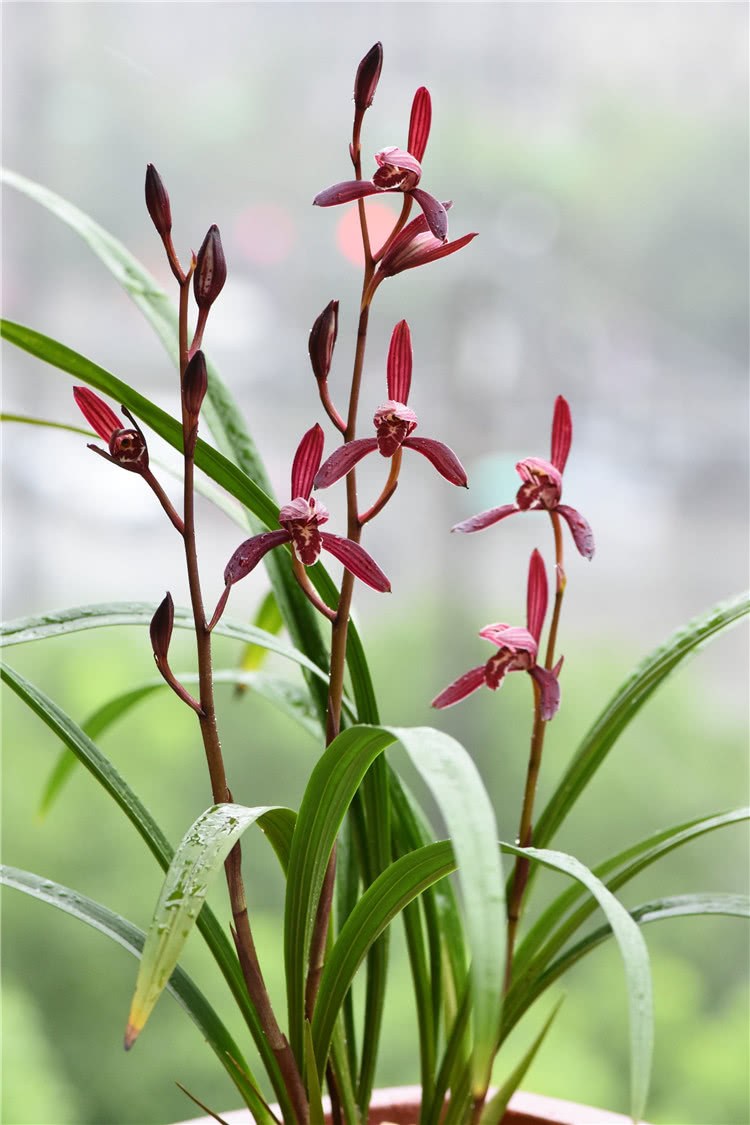
When I was little, I often heard adults say, "Whatever you do, you need a sense of proportion in your heart." When the little gardener was learning to grow orchids from an old master, he said the same thing. He said that growing orchids requires grasping 3 "degrees" in your heart. Indeed, with these degrees, when caring for orchids your hand is steadier, you won't be timid and hesitant, and only then can you grow orchids well.
The reason many beginner orchid owners fail to grow orchids well is also that they haven't mastered these basic 3 "degrees." The orchids they grow are prone to rot in summer, with yellow leaves and scorched tips, and in autumn they have few flowers and the fragrance is very faint. Hurry up and learn these basic 3 "degrees" of orchid growing.
1. The first degree: the degree of "potting medium looseness or density"
Beginners don't know how to mix potting medium, and old orchid friends want to challenge new potting medium formulas, so when everyone cares for orchids, the looseness or density of the chosen potting medium varies greatly. The large potting media popular on the market now (bark, stones, etc.) have good air permeability, are very loose, and drain well, but their moisture retention and fertilizer retention are slightly insufficient. In such an environment, orchid roots are not easy to grow thick and numerous.
The fine potting media that old orchid friends want to challenge, such as soil-based media and sand-based media, are good things for growing roots, and they can also improve flower quality and fragrance; but the drawback is poor air permeability, easy water accumulation, and root rot. So the old master's suggestion is: use large and small together, with large making up 7 parts and small making up 3 parts. This formula can both support root growth and flowering and ensure air permeability and drainage, keeping rot disease away.
Of course, if you are an experienced old orchid friend, appropriately increase the proportion of fine soil and adjust as needed. With this formula, it is best to use it together with orchid organic nutrient solution. During the growth period, use it with organic fertilizer that strengthens roots and seedlings; during the flower bud differentiation period, use it with organic fertilizer rich in phosphorus and potassium elements. This can make orchids beautiful and produce floral fragrance.
2. The second degree: the degree of "potting medium dryness and wetness"
Having covered the degree of looseness and density, let's talk about the degree of grasping the dryness and wetness of the potting medium. This tests your skill in watering and increasing humidity. The old master breaks down the degree of dryness and wetness of orchid potting soil into roughly four dimensions: dry, moist, wet, and waterlogged. He said that he usually observes the potting medium. If the surface soil is light-colored and the pot is also very light, then it is "between dry and moist." If the surface soil is damp and the potting soil is relatively heavy, then it is "between wet and waterlogged."
The humidity orchids like most is usually around 60%, which is to say "between wet and moist." We can prepare a bamboo stick to judge the water amount, and we can also use a specialized plant detector to measure humidity; either is fine. Once you get used to it, you will have a standard in your heart, and this is where the experience of caring for orchids comes from.
3. The third degree: the degree of "environmental yin and yang"
In growing orchids, the "yin and yang" degree of the environment is actually the lighting issue of the placement environment. A shade net is actually essential. Even now, at the turn of summer and autumn, the midday sun is still too strong, so it must not get too much sun. 4-6 hours of light each day is enough. It is best to have light from 7-9 in the morning and 4-6 in the afternoon. It is gentle and does not harm the orchids. This is what is more suitable.
For beginners growing orchids, the little gardener's personal suggestion is to prepare a small notebook yourself, observe often, and record the time you water, environmental changes, and so on. Slowly, you will be able to figure out some patterns from it, and this is the most precious thing (image from forum friend "Another Year of Spring Wind Green").