Succulent soil is very important; I'll teach you the mixing method for a fall growth explosion
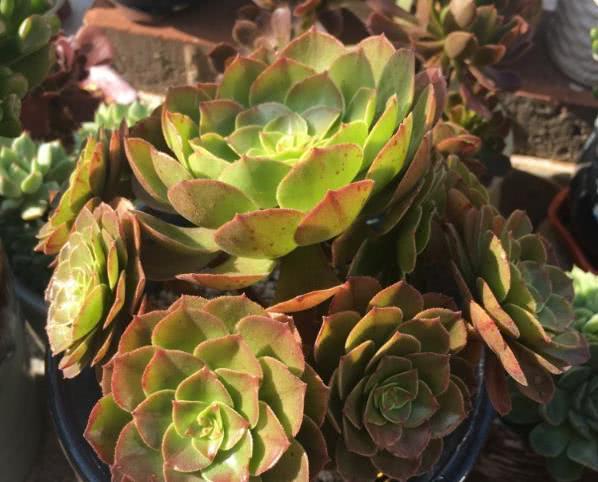
Soil is very important for succulents. The succulents we just bought home from the flower market may have pests and diseases in their soil. Continuing to use this kind of soil will make the succulents attract insects, or the soil may not be loose enough and may be relatively lacking in rich nutrients. If this kind of soil is used, the soil will become compacted, and a lack of nutrients will cause leaves to fall off, and so on. Therefore, at this time, it is best to change the soil after buying the succulents home. Choosing loose and nutrient-rich leaf mold works very well.
Because leaf mold is rich in nutrients, it is formed after leaves falling from trees onto the ground are decomposed by microorganisms over a long period of time. It is generally relatively loose, with many gaps, and its nutrients are extremely rich and very easily absorbed by plants. It also contains organic matter, humic acid, and so on.
The soil of succulents is very dry; should you water? For succulents, when the potting soil is relatively dry, water thoroughly in time, mainly to supplement water and prevent dehydration that causes the succulents to dry up and die. If the potting soil is very dry and you do not water, the root system cannot absorb water from the potting soil, and the succulents will dry up from dehydration after losing too much water through evaporation.
In summer, succulent soil is best with more grit. Put some large-particle volcanic stone at the bottom. The soil actually does not need to be too particular. For small seedlings in summer, you can use gritty soil 5: peat 4: perlite 1. Now it is advocated to use less peat, because peat damages the ecological environment. You can switch to coconut coir. Place Haworthia in a shaded, ventilated spot. For top dressing, gritty soil is fine. I use rainbow stone. Sun-facing stone. Gritty soil mixes can also use coal cinder as a substitute, and I generally also put some slow-release fertilizer in the soil.
Generally, soil mixes are divided into two parts: organic substrates and inorganic substrates. The main function of inorganic substrates is to increase the soil's air permeability, drainage, water retention, and so on. At present, akadama, volcanic rock, perlite, Kanuma soil, furnace ash slag, and even large-particle river sand are all relatively effective at improving the soil's air permeability and drainage.
The main function of organic substrates is to provide the necessary nutrients required for plant growth. Increasing organic substrates will also increase the soil's water retention. Common organic substrates include peat soil, leaf mold, coconut coir, Xiantu soil, garden soil, and so on. For small succulents and for sowing soil, it is best to choose a small amount of small- to medium-sized particles (maintaining a certain air permeability) plus a suitably larger amount of peat soil or garden soil, because small seedlings are very fragile and need a relatively mild environment.
This is a gathering place for succulent lovers, sharing succulent care tips. Welcome to follow and exchange ideas.