There's a right way to air out your quilt - the wrong method can easily ruin it
What does everyone usually do on weekends? Generally speaking, Huahua's weekends are either spent cleaning up or just resting and reading a book or something, pretty relaxing. If the weather turns out sunny with nice sunlight, I'll also choose to air out the quilt in the sun, and when I sleep at night it'll have that scent of sunshine!
When it comes to airing out quilts, there's actually a lot of knowledge involved. Quilts made of different materials need to be aired out in different ways, otherwise a perfectly good quilt can get ruined. Today Huahua has summed up a few of the materials we commonly use for quilts and will explain them one by one, so you don't use the wrong method and damage your quilt.
1. Cotton quilts
Huahua guesses that cotton quilts are the most widely used type of quilt, right? Although there are many different varieties of quilts on the market now, cotton quilts are still the mainstream choice. People have been using cotton quilts for a very long time. In the past, whether for weddings, Chinese New Year, or making clothes, cotton was indispensable.
When airing out a cotton quilt, you can generally do it once every half month, and basically two to three hours is enough. While airing it, you can gently pat the quilt with your hands - this is a little trick to make the quilt fluffier - but don't use too much force, or you'll break the cotton fibers and it won't be warm anymore. If a cotton quilt is used for too long, it easily clumps up, so generally a cotton quilt should be replaced after more than five years of use.
2. Silk quilts
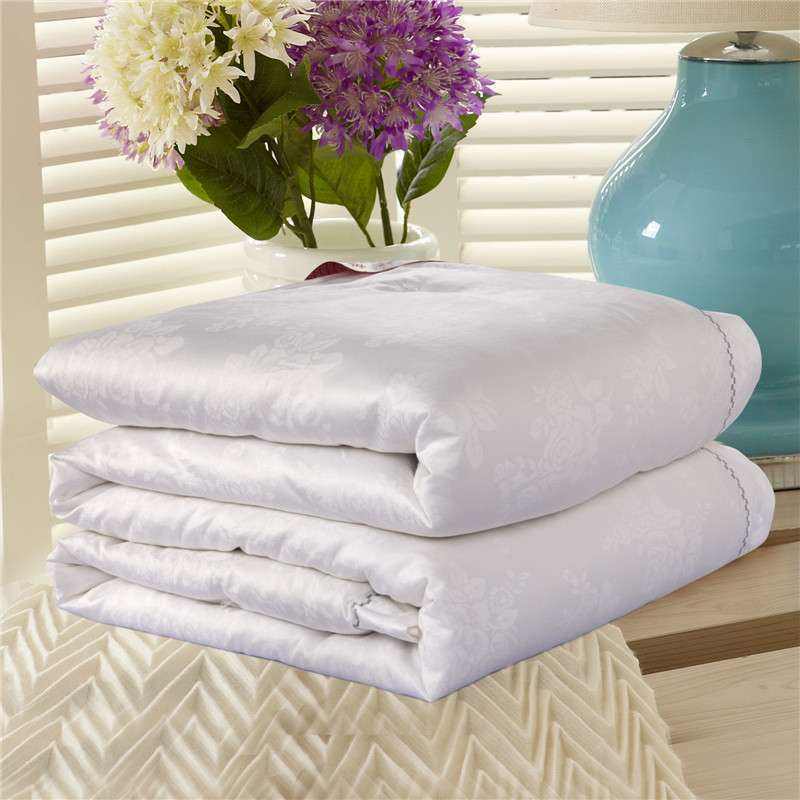
Silk quilts are also a type of quilt that quite a lot of people use. Silk is very comfortable, and some of the substances it contains can nourish the skin and prevent skin aging, so girls who love beauty can give it a try. In addition, silk quilts are also very good at keeping you warm. When airing out a silk quilt, be careful to avoid direct exposure to strong sunlight as much as possible. Even when airing it out, it shouldn't exceed two hours. Long-term exposure of silk to strong light will cause it to deteriorate and the fibers to break. Silk quilts are very delicate. Once they get dirty, for minor cases use a specialized detergent, and for serious cases send them to the dry cleaner!
3. Fiber quilts
Fiber quilts generally use synthetic fibers as filling. These fibers have relatively good warmth retention and fluffiness, won't go moldy, and are cheap, making them the material of choice for many hotels and home textile shops. When airing out a fiber quilt, it's best not to expose it directly to the sun, as it will bake and damage the chemical fibers, so when airing it you can cover the thin quilt with a thin layer of cloth to protect the fiber quilt. About once or twice a month is enough, and don't pat it too hard either!
These three types of quilts are basically the ones everyone uses most often. Have you learned all the airing methods introduced here? Sleeping well is what matters most!