How to make succulents plump in September? It's easy once you master these tips
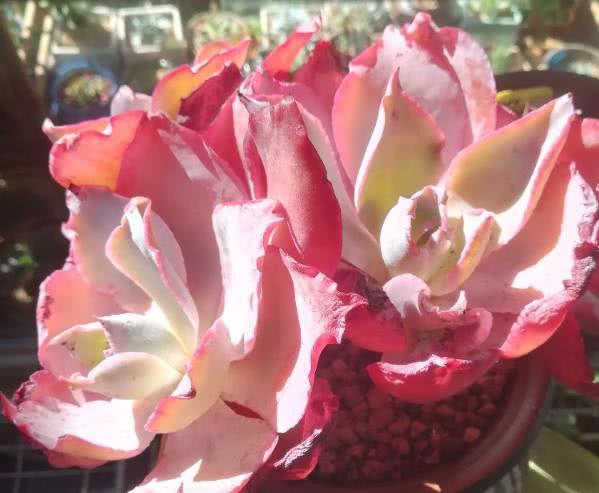
In September, no matter what type of succulent it is, if it has been kept indoors or in a low-light spot for a long time during summer, it must not be moved directly into strong sun to bake. In mild cases it gets sunburned and scarred; in severe cases it turns to mush and rots from the sun, causing the whole plant to die. By September the temperature has already dropped, and some succulents growing normally can be fertilized. Keep to the principle of not watering too much and watering thoroughly only after the soil has dried out completely.
For succulents to grow, they naturally cannot do without nutrients. Although most of the content of their leaves is water, a small portion is still made up of substances that are not water, and these substances are naturally formed from various nutrients drawn from the outside. If the potting soil for growing succulents is too poor, even if they can still grow plump, it is unhealthy plumpness.
Therefore, generally every year or two, succulents should be repotted, or a small amount of organic fertilizer should be applied appropriately during the peak growing season. If you never repot and never fertilize over the long term, wanting succulents to grow plump is simply impossible. The times when succulents most easily grow plump are spring and autumn, because in winter and summer they are either hibernating or semi-hibernating. Especially in autumn, if you pay attention to water control and fertilization starting in September, by about October the succulents will be able to grow plump and start showing their colors.
How do you grow strong roots on succulents? The soil for succulents is the key to growing roots. The soil mix for all succulents must contain a granular substrate to ensure air permeability. Otherwise it easily leads to waterlogged soil, poor root respiration, and root rot. Growing roots on succulents is a long-term process, so you need patience. In daily care, do not frequently repot, transplant, or trim roots. Try to plant them in place in one go, and without special circumstances, maintain this for more than a year, otherwise constant repotting and root trimming will seriously affect the development of the succulent's root system.
Coal cinders are a commonly used ingredient, but almost all furnace slag contains sulfur. Succulents are not allergic to sulfur, and sulfur has sterilizing and pest-killing effects. From years of planting comparisons, plants grown with coal cinders are more resistant than those without, and are less prone to root rot and root mealybugs. The coal cinders used are best as fully burned granular raw coal cinders (whether they contain incompletely burned coal does not matter), with honeycomb coal cinders second. Honeycomb coal cinders contain a large amount of soil, so if you want to use them you should crush them and sift them. Rinse the coal cinders with water before use to remove dust and alkalinity.
Autumn rain often falls continuously for several days, which is what we often call "continuous autumn rain." This kind of weather keeps the soil and air in a state of water saturation for a long time, which is extremely unfavorable for the growth of succulents. Therefore, if you encounter this kind of weather, it is best to shelter succulents from the rain, to avoid the potting soil being wet for a long time and easily breeding pathogens such as sooty mold.
This is a gathering place for succulent lovers, sharing succulent care tips. You are welcome to follow and exchange ideas.