Ferns are the versatile all-rounders of the floral art world, and a must-have green plant for the home
In late spring, bamboo shoots and ferns dry in the clock of fortune; at sunset, fishermen and woodcutters are like the immortals of the three isles. Ferns have peculiar and elegant forms with delicate fronds, and have gradually become a unique choice in floral art and home decor for elevating aesthetic taste. Large or small, ferns of variable size can fully display their tenacious adaptability in the home, growing slowly and steadily, letting their plant form gradually spread out into the most suitable natural posture.
I. Boston Fern: A natural purifier, absorbing more than 80% of indoor harmful gases
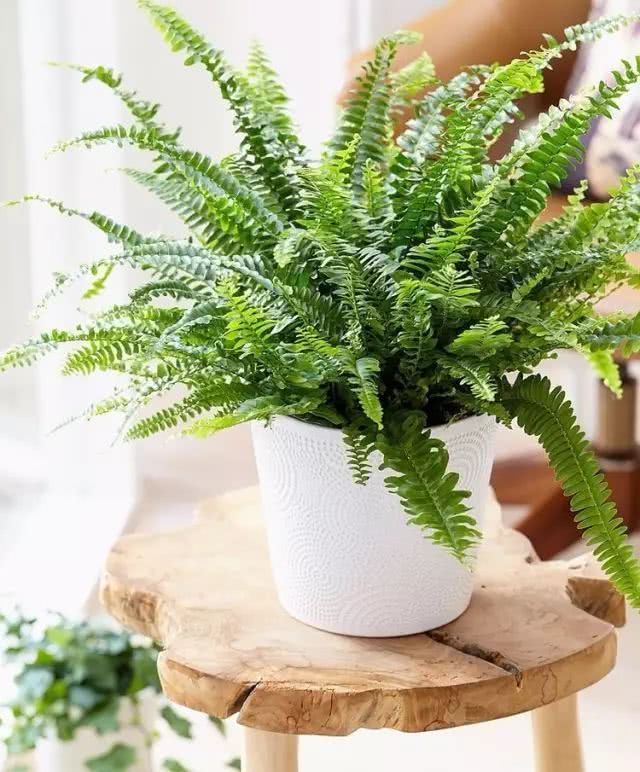
The Boston fern is one of the most common ferns, a perennial evergreen fern herb belonging to the genus Nephrolepis in the family Nephrolepidaceae. The Boston fern's fronds are feather-like, bright in color and airy and graceful; when a breeze comes, the fronds sway gently, like dancers gracefully dancing.
From small enough for a desktop or desk to large enough for a living room, study, or entrance hall, Boston ferns of different sizes can suitably decorate any space. The Boston fern's fronds droop after unfurling, so it is also suitable for hanging to adorn the environment in midair. The Boston fern has one super skill: it is the master of formaldehyde absorption among ferns, able to absorb about 20 micrograms of formaldehyde per hour. In addition, the Boston fern can also suppress xylene and toluene released from computer monitors and printers, with maximum air-purifying power, making it simply the "beloved" of home green plants.
Care tips: Avoid direct sunlight and maintain a ventilated and shaded environment, so as to keep the fronds emerald green. It likes warmth and relatively high humidity; in summer, spray water around the Boston fern or on its fronds to increase humidity and prevent the leaf edges from drying out and curling. Keep the soil moist, water thoroughly each time, and water when dry.
II. Staghorn Fern: A forest elf that glows when hung on the wall, the most mysterious & artistic & literary
As a member of the fern family, the staghorn fern is named for its fronds resembling deer antlers; it is itself an epiphyte, also from the tropics. It was once all the rage on Ins and in Western circles, and because it is rare and precious, its price is relatively high, yet fanatical admirers never hesitate to leave an entire white wall empty just to win the favor of a staghorn fern.
It is generally planted in wooden boards or rotten wood and hung on the wall as an artwork for viewing, with more vitality than ordinary hanging decorations. It can be hung in the entrance foyer, a corner of the living room, or in front of a desk/office desk.
Care tips: During the peak growth period in summer, water more, watering in the early morning or evening when temperatures are low, and spray water frequently. In winter, do the opposite. Try to avoid touching its lovely fronds with your hands, otherwise the white fuzz on the frond surface easily falls off.
III. Bird's Nest Fern: An epiphytic fern, a natural air freshener
The bird's nest fern, also known as spleenwort, mountain sushua or king's crown fern, is a perennial shade-loving herbaceous foliage plant belonging to the genus Asplenium in the family Aspleniaceae. The bird's nest fern's fronds grow clustered outward, forming an empty funnel in the middle, resembling a bird's nest in appearance, hence the name bird's nest fern.
As an epiphytic fern, the bird's nest fern often grows attached to tree trunks in rainforests and monsoon forests, or on rocks beneath the forest, native to Southeast Asia, India and East Africa, and widely distributed in the tropical regions of China.
The bird's nest fern can be hung indoors, or planted beneath tropical garden trees or on rockeries; small potted plants can be placed in the living room or study. They are effective air fresheners; their lush green fronds can absorb large amounts of carbon dioxide through photosynthesis, making enclosed indoor air fresh and natural.
Care tips: Avoid direct sunlight and maintain a ventilated and shaded environment, so as to keep the fronds emerald green. It likes a warm and humid environment; in summer, you can frequently spray water around the bird's nest fern to cool it and increase humidity, so as to prevent the leaf edges from drying out and curling. In summer, water at intervals of about 5-7 days, watering thoroughly each time, and water when dry. In winter, water once or twice a month.
IV. Rabbit's Foot Fern: The overlord of plant micro-landscapes
The rabbit's foot fern belongs to the genus Davallia in the family Davalliaceae, mostly distributed on shaded, damp rocks or tree trunks by streams. Because its rhizome is exposed, fleshy, and covered with brown scales and hairs on the surface, like a rabbit's foot, it is also known as the rabbit's foot fern.
The rabbit's foot fern has a wild beauty, able to use its winding rabbit-tail-like stems to create rich and varied shapes and to harmonize with other plants, and thus the rabbit's foot fern holds absolute dominance in plant micro-landscapes.
Using the rabbit's foot fern as the main material, several styles for making micro-landscapes include:
1. Plant it in a flower pot and let the rabbit's foot fern stems climb on the outer wall of the pot.
2. Wrap the rabbit's foot fern into a ball shape and hang it up.
3. Let the rabbit's foot fern climb on rotten wood.
Regardless of the style, given time, emerald moss will grow among the rabbit's foot ferns, as if it were a naturally formed micro-forest landscape.
Care tips: Avoid direct sunlight to prevent the fronds from wilting and curling. It likes a warm and humid environment; in summer, you can frequently spray water around it or on its fronds to cool it and increase humidity. The watering principle is to water when dry. Semi-ventilated conditions are preferable.
V. Cyrtomium Fern: A must-have for Nordic-style homes / the internet-famous leaf
A while ago, a foliage material from the Netherlands instantly became all the rage on Ins with its "cold, minimalist" temperament, worthy of being called the most popular internet-famous leaf in history. This foliage material is the Cyrtomium fern. The Cyrtomium fern belongs to the genus Cyrtomium in the family Dryopteridaceae; its distinctive premium gray-green tone and the unique frond form of ferns interpret the natural minimalism of Nordic home style, and also easily call to mind "wilderness" and "nature."
Care tips: Currently in China only Cyrtomium fern foliage imported from the Netherlands is available, and its vase life can last as long as 2 to 3 months; simply place it in a vase with clean water.