As long as you avoid these three taboos when growing a money tree, its leaves will grow so abundantly they'll fill the pot
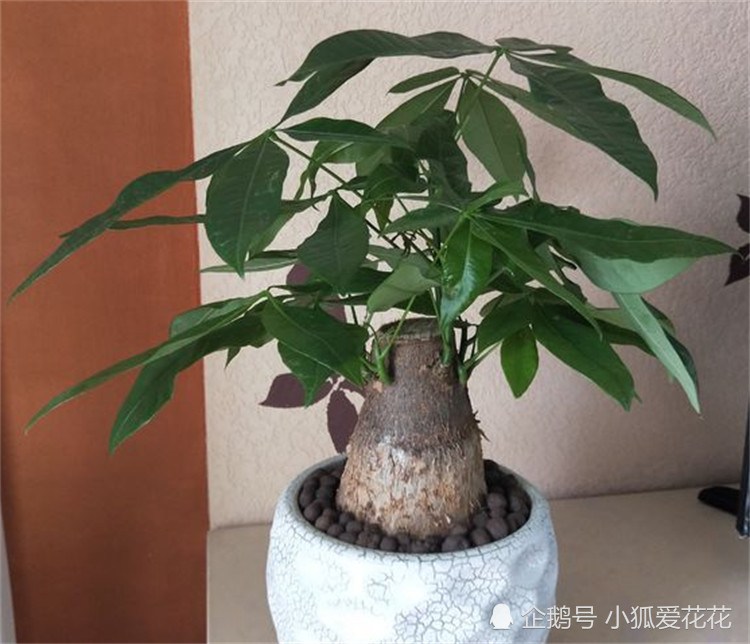
Introduction: The money tree (Pachira aquatica) is primarily a foliage plant, but many people grow one that looks dull and lusterless, with strings of yellow leaves. This article analyzes the reasons for this and focuses on some taboos when growing a money tree.
The money tree (Pachira aquatica) has an auspicious meaning and a high ornamental value, and many people like to grow a few pots of it, partly to invite good fortune and partly to add a bit more vitality to their space.
But some people's money trees either have dull, lusterless leaves or frequently develop yellow leaves and even drop leaves, which really makes it hard to love such a money tree. In fact, when the above situations occur, it is very likely that you have hit some taboos during care, which is why the money tree is not growing as well as it should. Let's take a look at what taboos there are when growing a money tree.
Taboo One: Fertilizer that is too strong is a burden, not love
The money tree (Pachira aquatica) is a plant that likes fertilizer, so if you want to grow it well, fertilizing is a very important step. Because a money tree lacking fertilizer will have roots and stems whose nutrition cannot keep up, and the leaves will suffer along with it, very likely developing dark yellow leaves and even dropping leaves. But many flower enthusiasts also know that the money tree likes fertilizer, so they fertilize it relentlessly. Applying too much or too strong fertilizer easily burns the roots, and then the leaves turn yellow and drop.
So fertilizing should not be too much or too little; you need to strike a balance. Generally, fertilizing once every 15-20 days is about right. Also, do not choose high-concentration chemical fertilizers; homemade liquid fertilizer needs to be diluted before use, and normally you can also reasonably use some organic fertilizer, preferably purely biologically fermented, as that is safer and greener, does not harm the roots and stems, and promotes oily green, glossy leaves.
Taboo Two: Making the money tree live a lightless life
Just because the money tree often stays in an indoor corner, do not take it for granted that it does not like light. That's right, it is suitable for placing in a shady spot, but it also likes light; it just cannot withstand long periods of direct strong light.
If it does not see light for too long, the money tree will also develop dull leaves and drifting yellow leaves. So we should properly give the money tree some sunlight, and it is best to move it to a place with diffused light. Give it a little sunshine, and it will bloom beautifully for you.
Taboo Three: Too much love makes the money tree's heart damp
The money tree (Pachira aquatica) has thick roots and stems and strong adaptability, so its water requirements are not very high. But many people disagree with this and water the money tree very diligently, which actually makes it very easy for the potting soil to become waterlogged and overly wet. Over time, this more easily causes root rot, which then drags down the leaves.
The money tree does not need to be watered too frequently. Generally, watering once every 7-10 days is no big problem, and you can also increase or decrease the watering frequency according to how dry or wet the potting soil is. Alternatively, you can usually spray a bit more water on the leaves, which also has a nourishing effect, and the leaves will naturally become oily green and glossy, looking very beautiful.
You must all be clear about these "three taboos" of growing a money tree now, so we will just avoid them from now on. In addition, you are welcome to leave a message to share your experience and insights on growing flowers.
Some images are from the internet