What are the basic cultivation methods for the black rubber plant?
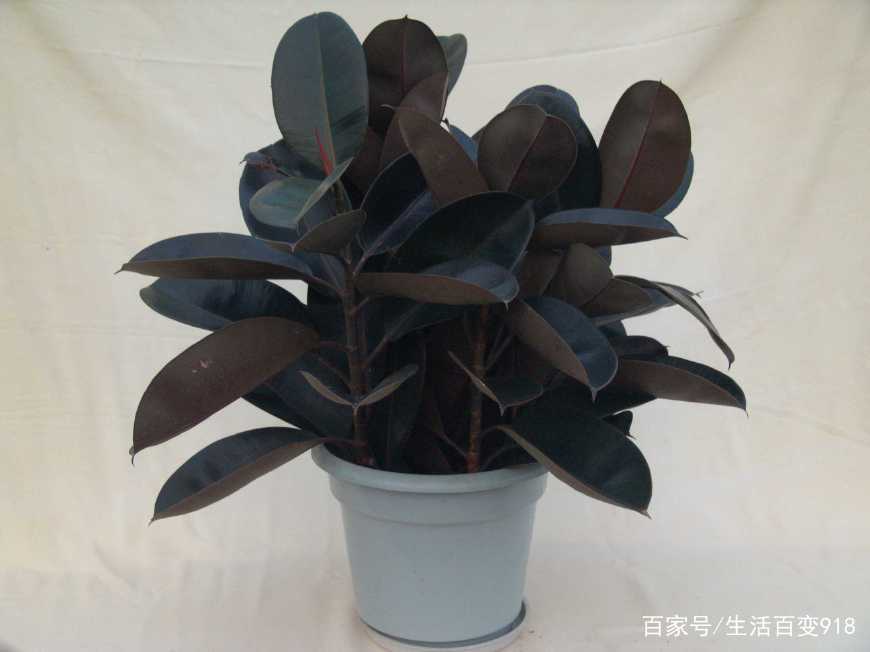
The black rubber plant has grayish-red bark that is smooth. Its leaves have long petioles, are alternate, thickly leathery, oblong-ovate to ovate, 8-30 cm long and 7-9 cm wide, with a rounded apex, a rounded base, entire margins, and a deep green color with a glossy sheen; the lateral veins are numerous and fairly prominent and parallel; the stipule is solitary, lanceolate, sheathing the terminal bud, up to 1/2 the length of the leaf, purplish-red, and after falling leaves a ring-like scar. It is monoecious, and the fruits are borne in pairs in the leaf axils of fallen leaves, yellowish-green when ripe, ovoid-oblong; the achene is ellipsoid and has small tuberculate projections..
The black rubber plant is an evergreen tree in the Moraceae family, native to India and Malaysia, hence its other name, the Indian rubber tree. The rubber tree has a fairly prominent trunk, few branches, and aerial roots. The leaves are alternate, oblong-ovate, thickly leathery, bright green, with numerous parallel lateral veins; young leaves are red, and the petioles are thick and sturdy. The black rubber plant likes water, and in winter it should overwinter indoors! Generally water about once a week, and in summer decide based on the weather and the moisture of the potting soil.
Reasons for the black rubber plant's leaves dropping:
Light is too dim. The light required for the black rubber plant's growth environment is about 10000-20000 lux; when light is too low and accompanied by poor ventilation, yellow leaves and leaf drop will occur.
Temperature is too low. The suitable temperature for the black rubber plant's growth is between 20-30°C, and it grows most luxuriantly at 25-30°C. Below 10°C it grows poorly, and below 0°C it is prone to cold damage. Indoors, if it is exposed to cold drafts, yellow leaves and leaf drop will occur.
Improper watering. The black rubber plant likes water but is not tolerant of waterlogging; when drought stress symptoms appear, and when the roots cannot get oxygen, yellow leaves and leaf drop will occur. Watering should follow the principle of "water when dry, stop when wet," and do not water too frequently.
If the black rubber plant is not very tall, you can continue to care for it under normal maintenance and management, and it will stop dropping leaves afterward, but when the plant is already over 1.2 m tall, you may consider placing it outdoors or on a balcony for two weeks, and once growth trends toward normal, cut the trunk back at a height of 20-50 cm (the height depends on your preference); the cut branches can be inserted into river sand and placed in a cool place, ensuring sufficient air humidity, and after about 2 months they can become a new black rubber plant. After trunk cutting, the lower part can sprout several branches, making the plant shape fuller and more attractive..