What soil do cherry trees like? A detailed guide to sweet cherry growing requirements
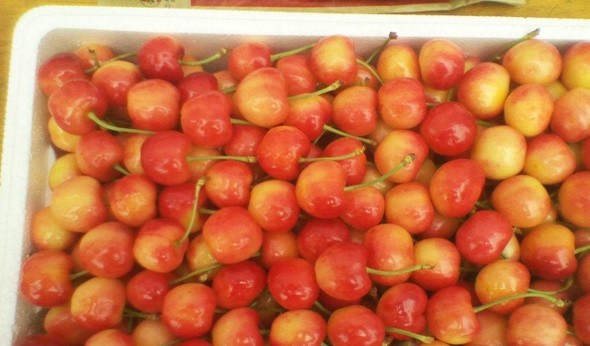
Sweet cherries are a common fruit variety in our daily lives, rich in nutrients, good in taste, and with a promising market. In recent years, more and more growers have taken up sweet cherry cultivation, and spreading knowledge of sweet cherry growing requirements and techniques has become increasingly important. Below, the editor will explain the requirements of sweet cherry trees for temperature, soil, water, light and more.
I. Requirements of sweet cherry trees for the growing environment
1. Temperature
Sweet cherry flower buds begin to break when the daily average temperature rises above 10°C, begin to bloom above 15°C, new shoots grow fastest above 20°C, and the fruit matures after 50-60 days at 20-25°C. When the daily average temperature falls below 5°C, the trees begin to shed leaves and enter dormancy. Sweet cherries are not resistant to frost, and are prone to frost damage in spring if a late cold snap occurs.
At different stages from bud break and flowering to young fruit growth, sweet cherries tolerate low temperatures differently. For example: at the bud stage they are easily damaged at -5.5°C to -1.7°C, while at the flowering and young fruit stages they are damaged at -2.8°C to -1.1°C. If the temperature drops sharply, 96-98% of flower buds suffer frost damage, whereas with a slow temperature drop only 3-5% of flower buds are damaged. In addition, the degree of frost damage to sweet cherries is directly related to the nutrient storage content in the tree.
Therefore, improving the management of nutrient storage levels in sweet cherry trees is also an important measure for preventing frost damage.
2. Soil
Sweet cherries are suitable for cultivation on sandy loam with deep soil layers, loose texture and good aeration. If cultivated on soil that drains poorly, is heavy and sticky, or is compacted, the tree will grow weakly, the root system will be shallowly distributed, and the tree will be neither tolerant of drought and waterlogging nor resistant to wind. Sweet cherry trees grafted onto Mahaleb cherry rootstock are especially intolerant of heavy, sticky soil. Sweet cherries are sensitive to soil salinization, so sweet cherries cannot be cultivated on saline-alkali land. The suitable soil pH is 5.6-7.0.
3. Water
Water is an indispensable condition for the normal growth and development of sweet cherries, but because the roots of sweet cherries require a relatively high oxygen concentration and are very sensitive to oxygen deficiency, they are also very sensitive to soil moisture content. When soil moisture is too high, besides easily causing excessive vegetative growth of branches and leaves, which is unfavorable for fruiting, it also causes insufficient oxygen in the soil, affecting the normal respiration of the root system; in severe cases it causes root rot and gummosis on the aboveground parts, ultimately leading to weakened trees and death. When soil moisture is low, especially in summer drought with insufficient watering, not only is new shoot growth inhibited, causing premature aging of the tree and the formation of "little old trees" with low yield and poor fruit quality, but it also causes heavy fruit drop.
4. Light
Sweet cherries are a light-loving species. Under good light conditions, the tree is robust, the fruiting branches live long, flower buds are plump, the fruit set rate is high, the fruit ripens early, colors well, and has a high sugar content. If light conditions are poor, the shoots on the outer part of the canopy tend to grow excessively, the branches inside the canopy are weak, the fruiting branches have short lives, the fruiting zone moves outward, flower buds develop poorly, the fruit set rate is low, and the fruit ripens late with poor quality.
5. Wind
Wind has a great influence on sweet cherry cultivation. Strong winds in severe winter easily cause shoots to dry out and flower buds to freeze; strong winds during the flowering period easily dry out the sticky secretion on the stigma, affecting insect pollination; autumn typhoons can break branches and topple sweet cherry trees, seriously affecting the storage of nutrients in the tree.
II. Sweet cherry tree planting and management techniques
1. Techniques for improving the fruit set rate of sweet cherries
According to research, the main factors currently affecting the fruit set rate of cultivated sweet cherries are:
First, poor flower bud differentiation and development quality, resulting in female-sterile flowers after blooming; second, unbalanced nutrients, with insufficient nutrient elements in the tree that favor flower bud differentiation and fruit set; third, unreasonable combination of pollinator varieties and quantities; fourth, improper water and light management; fifth, pests and diseases (such as viruses, gummosis, etc.) weakening tree vigor.
2. Shaping and branch-thinning techniques for sweet cherries
Shaping, thinning branches and improving light conditions are very important for improving fruit quality and yield in sweet cherries. However, during pruning the following points should be given special attention:
(1) The crotches of sweet cherry trees split easily, so branches with small crotch angles should not be used as main branches. Therefore, those with small angles should be thinned out early.
(2) When thinning large branches in winter pruning, the wounds heal poorly and gummosis occurs easily. Therefore, it is suitable to thin them during the growing season or after harvest, when they heal quickly and gummosis is unlikely. When thinning, the wound should be flat and small, with no stub left. Never leave a "sky-facing scar" wound, as such wounds heal poorly and easily cause wood decay.
(3) Girdling should not be used on sweet cherries, as gummosis and breakage occur easily after girdling.
(4) Long branches of sweet cherries often produce 3-5 whorled branches, which should be thinned during the dormant season of the year they appear, keeping at most 2-3. If thinned too late, the wound is large and gummosis occurs easily, which is unfavorable for growth.
(5) Although winter pruning can be carried out throughout the dormant season, the later the better; generally, pruning near bud break is appropriate. If pruned too early, the wounds lose water and dry out.
(6) Common problems in sweet cherry cultivation and pruning:
In young tree shaping, there is widespread excessive heading back, and heading back is continued for too many years, resulting in too many large branches, which causes dense, crowded branches, poor light conditions and a disordered tree form. When renovating such trees, do not cut drastically; the large branches that need to be removed should be removed gradually year by year.
In fruiting trees, regardless of variety, all are headed back.
One pruning method is used regardless of tree vigor. For vigorous trees, appropriate light pruning and leaving branches unpruned should be used; if they are headed back, they may become more vigorous the more they are pruned. For weak-growing trees with few fruits, appropriate heading back should be used; if they continue to be left unpruned, they will bloom but not set fruit.
The same pruning method is used regardless of growing season and without attention to the tree's age stage. For young fruiting trees, besides moderately heading back the extension shoots of the main branches as required for shaping to promote new shoots and expand the canopy, other medium and short branches should be left untouched as much as possible, so as to both grow the tree and allow earlier fruiting. From a long-term perspective, the main task for young trees is to develop the tree form, and on the basis of developing the tree form, to develop fruiting branch groups.
III. Sweet cherry orchard management techniques
1. Supplemental application of base fertilizer
For sweet cherry orchards that did not receive base fertilizer in autumn, it should be applied supplementally in spring. Generally, each fruiting tree is given 100 kg of farmyard manure, and the amount for young trees is halved. The fertilizer can be applied in ring-shaped or radial furrows.
2. Boiling and preparing lime sulfur mixture
Boil it in a ratio of 1 part quicklime, 2 parts sulfur powder and 10 parts water.
3. Watering and intertillage
Give a thorough watering all over, and carry out intertillage promptly after watering; an intertillage depth of about 6 cm is appropriate.
4. Continue cold protection and frost resistance
Spray once with the above-mentioned four-in-one cold- and frost-resistant solution; in areas where late frost (late cold snaps) is more likely to occur, a watering before flowering can also be combined to delay the flowering period and avoid frost damage when sweet cherries bloom.
5. Loosening soil to conserve moisture
After watering, the soil should be loosened promptly to conserve moisture.
6. Pinching
Carry out early pinching within 7-10 days after flowering.
7. Fertilizing after flowering
After sweet cherries finish blooming and the fruit has set, foliar fertilizer and root fertilizer should be applied. For foliar fertilizer, "sugar alcohol calcium" can be used.
8. Summer pruning
The pruning work at this time is still pinching, that is, removing the tip portion of new shoots before the branches become woody.
9. Watering
After sweet cherries finish blooming and the fruit has set, the fruit will mature in about one month, and the water demand is high. Therefore, from the end of flowering to harvest, water once every 7 days on average.
10. Pest and disease control
Use 500-fold Pujunte solution to control sweet cherry leaf spot, scab and other diseases; spray 1500-2000-fold Zhongbao Shamie solution, or 1000-fold Chudao solution, to control red spider mites, aphids, scale insects and other pests. Spray once every 10-15 days, and be careful to rotate the pesticides each time.
11. Fruit harvest
Early-maturing varieties generally begin harvest in mid-May, followed by the successive ripening and harvest of mid- and late-maturing varieties. When harvesting sweet cherries, keep the fruit stalk, and be careful to pick and place them gently to avoid losses.
12. Fertilizing after harvest
After sweet cherry harvest, fertilizer should be applied promptly, which is beneficial for flower bud differentiation. Apply root fertilizer within one month after harvest, giving each fruiting tree 0.5 kg of "Aximi"; water promptly after fertilizing. At the same time, depending on the situation, a certain amount of mineral fertilizer (Aize silicon-calcium-magnesium) can also be applied to provide the trace elements the crop needs.
First, pinching: keep 30-40 cm of new shoots and pinch off the tips;
Second, shoot twisting: twist semi-lignified new shoots so they hang down. That is, take upright shoots on the back, competing shoots and inward-facing temporary branches, and gently twist them 180 degrees at about 5 cm from the base of the branch, to the extent that the xylem and phloem have partial cracks but are not broken; by autumn the twisted part can heal completely;
Third, branch bending: starting from the base, bend already lignified branches by hand, then bend them upward every 5 cm until reaching the tip. If the branch is growing too vigorously, branch bending can be repeated several times in succession, and the branch can be bent to a horizontal or drooping position;
Fourth, branch pulling: after harvest, in order to adjust the angle of the scaffold branches, ease tree vigor and promote early fruit set, branch pulling should be carried out;
Fifth, branch thinning and heading back: for strong, vigorous large branches that seriously affect ventilation and light penetration within the canopy and have no value for retention, they can be thinned from the base; for large branches that only affect local light conditions but still have some fruiting capacity, they can be cut back at a branching point;
Sixth, bud removal: remove double buds and overly dense buds.
1. Winter shaping
Sweet cherry trees can use the open-center natural form with a trunk or the central-leader layered form.
For the open-center natural form, when planted, head the tree at 80 cm in the same year. In the second year, select 3-5 well-developed outward-slanting branches and head them back as main branches, with a cut length of 40-50 cm. In the third year, only head back the extension shoots of the main branches; leave the other branches untouched or head them back heavily, to develop fruiting branch groups. Make sure the bud at the cut is an outward-facing bud.
For the central-leader layered form, the heading height is 80 cm. In the second spring, select 3-5 well-developed branches with suitable directions as main branches and head them back, with a cut length of 50-60 cm. In the third year, continue to head back the trunk and the extension shoots of the main branches; the competing shoot formed by the second bud should be headed back, leaving about 35 cm; the branches formed by the third and fourth buds should be side branches, headed back leaving about 40 cm; other branches that are too dense and crowded or whose direction and angle are not ideal should be appropriately headed back or thinned out.
2. Winter pruning of fruiting trees
After sweet cherries enter the fruiting stage, in order to maintain the tree form and keep fruiting ability, all their one-year-old vegetative shoots, except overly vigorous ones, should not be headed back; the terminal bud can be removed, or they can be pruned at the sterile node where the spring shoot and autumn shoot meet, so as not to let them extend growth, and to promote leaf cluster branches, thus facilitating fruiting within a certain range. The lateral buds on the lower part of vegetative shoots also bear fruit, but the fruit quantity is small; where there is space, fruit should also be retained. For bouquet fruiting branches, leave them untouched in all cases, to encourage them to bear fruit continuously.
3. Cleaning up the orchard
Promptly clear the pruned branches out of the orchard.