Kalanchoe budding while dropping buds and drying up? If you didn't pay attention to these 3 points, it's a wonder they haven't all dropped off
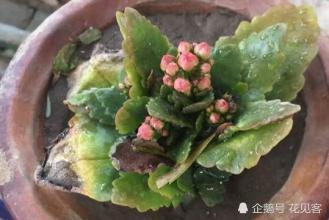
The kalanchoe plant is small and delicate, with dense emerald-green leaves and flowers that bloom in clusters in rich colors. It is a very lovable indoor potted flower, blooming around Christmas, which is why it is also called a "holiday flower," carrying meanings such as "long life of a hundred years, good fortune and wishes fulfilled."
After entering September, the weather slowly turns cooler, and kalanchoe enters its flowering period and begins budding one after another. Recently some flower lovers have reported that their kalanchoe plants are showing dried buds and bud drop. What is going on? In fact, a big part of the reason is that these 3 points were not paid attention to; it's a wonder they haven't all dropped off!
1. Watering
Kalanchoe likes a humid environment, but when it has just transitioned from summer to autumn, it has not fully resumed growth. Watering too much at this time will cause root rot, affect plant growth, and also cause bud drop; otherwise, if it is too dry, transpiration is too strong, causing the buds to lack water and dry up.
Whether it is dry or overly wet, both will affect the plant's growth and are relatively hard to control. The best approach is to place it in a basin filled with shallow water, letting water enter through the drainage hole at the bottom of the pot for it to absorb, which can also increase air humidity.
2. Light
Kalanchoe likes an environment with ample light, but it is a short-day plant, so about 9 hours of exposure per day is enough. Too long or too short is not good for growth and flowering. Also, when exposing it to sunlight, special attention should be paid: it is best to turn it to a different direction every week so the light is even; otherwise, the buds produced on the shaded side will be weak and small, and will also drop.
3. Fertilizer
Plant growth and flowering cannot be separated from fertilizer. In September, kalanchoe needs sufficient nutrients, especially phosphorus and potassium fertilizer. Nitrogen fertilizer should be stopped, and thin fertilizer should be applied frequently: apply diluted liquid fertilizer once a week, using decomposed bean cake fertilizer, fish intestine water, etc., to promote kalanchoe flower bud differentiation and bud growth. If nutrients are insufficient, the buds will compete with each other for nutrients, which can cause phenomena such as spider plant...
The care of kalanchoe is introduced here. If flower lovers have other additions, you can share them with everyone in the comment section below. To learn more about flower-growing knowledge, you can follow Huajianke!