Properly handling succulent root rot so the plant can recover its health
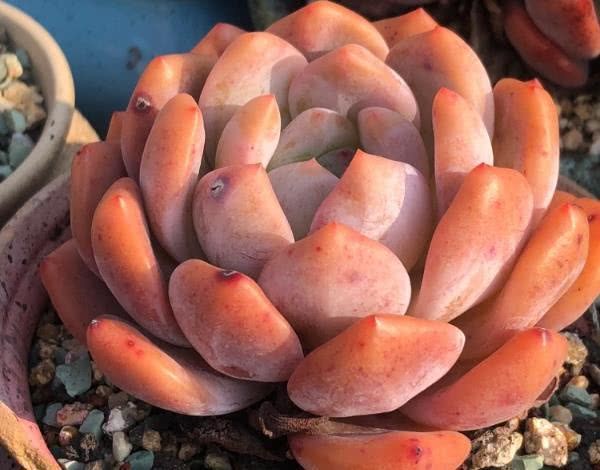
Once you have determined that a succulent has developed root rot, take the following rescue measures: remove the plant from its pot, pick away the surrounding old soil, locate the rotted roots, cut the rotted roots off at their base with scissors, then use a 0.1% potassium permanganate solution to disinfect the wound, or apply clean plant ash to the cut, and then repot it or plant it in the ground. When potting or planting in the ground, the severely damaged parts of the wound and root system should be surrounded and filled with clean damp sand, then covered with clean growing medium, to encourage new roots to sprout from the wound.
The second method: pull the succulent out, wash the roots clean, and cut away all the moldy parts. Apply carbendazim to the cut and the moldy areas, then let it dry for about three days. Re-root the treated succulent: you can rest it at the mouth of a bottle with water below but not touching the roots to encourage rooting; or you can replant it in a gritty soil mix, such as akadama or kanuma.
Place the potted succulent, or the one resting at the bottle mouth, in a spot indoors with plenty of light, but not in direct harsh sunlight, and make sure there is good ventilation. Right after planting, do not water immediately; wait until it has rooted and gradually stabilized before watering. Then it is just a matter of careful observation: if nothing goes wrong, it will re-root and start growing in about one to three weeks.
To prevent root rot in succulents, the first thing is to master watering technique. The watering principle for succulents is: better dry than wet. In spring, summer and autumn, it is best to water in the evening or in the cool of the afternoon, while in winter, because the temperature is too low, it is best to water around midday. When watering, pour along the edge of the pot and do not let water drip onto the leaves. Try to avoid water flowing into the center of the leaves and pooling there; such pooled water acts like a magnifying glass, concentrating sunlight onto one point and burning the leaves directly.
Although succulents can be grown all over the country, if you are lucky enough to live in a climate environment suited to succulent growth, that can save you a lot of worry and time, and the succulents will grow well on their own. For example, in summer in Weihai, Shandong, the highest temperature is only 30 degrees and lasts only about 10 days, then falls back to 23C-28 degrees or more every day, and because it is a coastal city, sea breezes blow in every day, so the actual temperature is a bit lower and very cool. For succulents, this kind of climate almost directly bypasses the summer dormancy trait, and nearly all succulents stay in a growing state, so you can water with confidence.
Terracotta pots, which breathe the best, are quite suitable for growing succulents, because there is no risk of drowning the plant; even if it gets a little dry, as long as the succulent does not die, its condition will still improve after watering, making them very suitable for beginners. But terracotta pots also have a drawback: moisture evaporates too quickly, and the bottom of the pot does not retain water, which slows the growth rate of succulents. Because there is not enough water for the succulent to grow, the water evaporates completely before the succulent has fully absorbed it.
This is a gathering place for succulent lovers, sharing succulent care tips; you are welcome to follow and join the discussion.