Be careful when propagating succulents by leaf pulling; improper handling can easily cause black rot
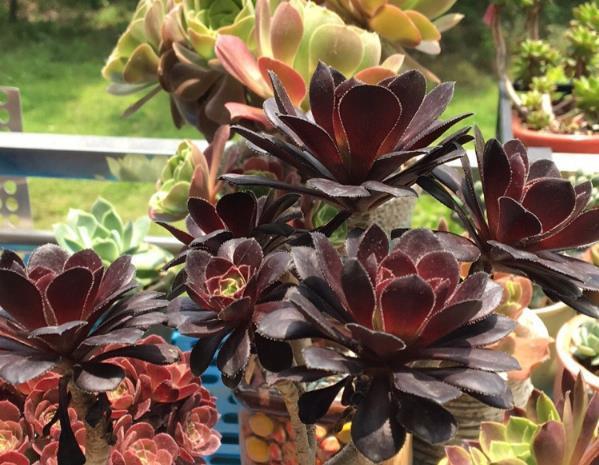
Be careful when pulling leaves off succulents for leaf propagation. When you pull leaves for leaf propagation, the leaves you pull are necessarily not completely dried out, but relatively plump leaves. After such leaves come off, they will leave relatively large wounds on the succulent, which increases the chance of infection in this season, so be careful. Moreover, in this season the leaf sprouting rate has not yet recovered to a very high level, and the removed leaves are also relatively prone to turning to mush, so everyone should still be careful and cautious.
Why is black rot in succulents mostly seen in summer? Why does it occur more often after overwatering or rain? Surprisingly, many succulent lovers even think succulents die of heat. Actually, understanding this issue is very simple. Fusarium oxysporum is a fungus, and its brothers and sisters are mushrooms. Why do mushrooms tend to grow after rain in summer? Because it is warm and humid, and the conditions for reproduction are met. In literature on controlling cotton wilt disease, it is described that the most suitable growth temperature for Fusarium oxysporum is 27 to 32 degrees, so in summer please pay more attention.
If the rot is only mild, the following steps are recommended: Trim the roots. Take the succulent out of the pot and cut off the rotten roots. Sterilize. After trimming the roots, you can soak the whole succulent in a carbendazim solution at a certain ratio to make sure the insect eggs on it are killed. Dry the roots. After root trimming and sterilization, the succulent can be placed in a cool, ventilated place to let its wounds heal, which takes about half a day to one day.
Be careful when potting and watering. Plant the succulent in slightly moist soil, wait 5-7 days, and place it in a cool, ventilated place to let it slowly take root and adjust to the pot. After one week, you can water it in moderation. At the same time, the survival rate of succulents is also related to the growing environment. If it is hot summer, it is recommended to plant in the evening or at night.
Autumn has come. After a whole summer, an owner who is not diligent may have accumulated a lot of dry leaves in the pot. At this time, it is time to clean them up properly, because the temperature and humidity have not truly dropped. If the succulent is again smothered by dry leaves, problems may occur. As for the principle of pulling off dry leaves, only pull off the kind of dry leaves that come off with a light tug. If leaves that are not completely dried are forcibly pulled off, they will leave relatively large wounds on the succulent and increase the risk of infection.
For growing succulents, the indoor temperature is best controlled at around 15-28 degrees. Generally, indoor temperatures are suitable. At the maximum limit, the lowest should not go below 5 degrees, and the highest should not go above 35 degrees. Try to choose the place with the longest light exposure for your succulents. If there is not enough light, do not easily move the succulents outdoors.
Usually there are not many succulents grown at home, so you can often check whether there are bugs on them. Common bugs on succulents include: red spider mites, scale insects, and whiteflies! These can all be cleaned off by hand.
This is a gathering place for succulent lovers, sharing succulent care tips. Welcome to follow and exchange ideas.