How to grow pennywort in autumn? Detailed autumn care methods
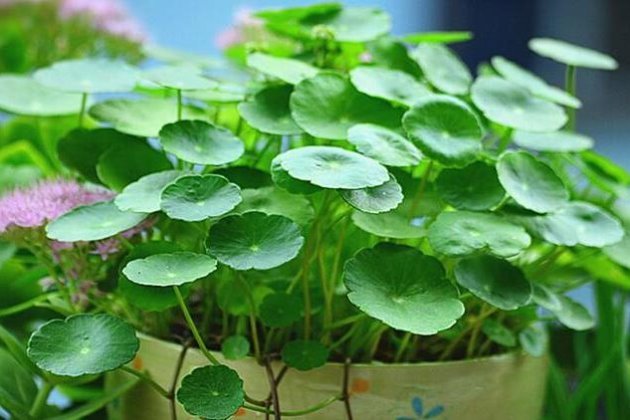
Autumn is a season when everything begins to wither. As early autumn slowly fades and late autumn arrives, many plants have already started to wilt and drop their leaves. So what plants can be grown in autumn and winter to stay lush and green? Today Hua'er Gu is here to introduce autumn care of pennywort (Hydrocotyle vulgaris)!
For pennywort, autumn is perhaps not a season suited to withering. Pennywort only withers when it grows old or is cared for improperly, so generally pennywort stays green all year round when grown, making it very suitable for indoor cultivation.
Pennywort is especially suited to hydroponic growing. Place a few layers of stones at the bottom of the pot; this helps anchor the roots of the pennywort so they do not float around in the water and cause abnormal growth. This is the first point in pennywort care.
The second issue to note in pennywort care is that we need to change the water frequently. Do not wait until the water is full of green algae before remembering that it has been a long time since the water was changed. This is very harmful to pennywort or any other hydroponically grown greenery!
Of course, if the place where we grow pennywort is in the city, the tap water we use cannot be used directly to grow pennywort. It is best to fill a bucket with tap water, leave it under the blazing sun, and then use it once it has reached roughly room temperature indoors.
In addition, we can use boiled then cooled water to grow pennywort. This can reduce harmful substances in tap water, such as chlorine, that damage the plant, ranging from merely inhibiting plant growth to, in serious cases, causing the plant to die.
Many flower lovers like to put some soil at the bottom of the pot when growing hydroponic greenery. In fact, doing so is also very good: first, the soil is rich in nutrients, which can meet the plant's growth needs for a certain period; second, it also helps the plant establish its roots.
However, when using soil for hydroponics, we need to regularly replace it with some fresh soil to avoid pests breeding over a long period.
One very inconvenient thing is that once green algae grows, changing the water for our potted plant becomes very troublesome. So when using soil, we must pay attention to controlling water quality and avoid using water that is not very clean.
Pennywort grown by the above methods can grow naturally and vigorously in autumn and even in winter.
If you also like growing pennywort, let's learn together how to grow it well! If you have even better methods for growing pennywort, you are welcome to leave a comment and share them with the friends of Hua'er Gu!