5 drought-tolerant indoor potted plants with distinctive looks that need no care for months
Most plants kept indoors grow well without much care; it is those that are watered frequently that easily die, because indoor temperature changes very little, and most indoor environments get no sunlight, so care is very simple.
The indoor plants most afraid of water include: money tree, Zanzibar gem, snake plant, dragon tree, Dracaena fragrans, spider plant and aloe, etc. These plants must not be watered frequently; too much water makes their roots and stems rot very easily. Below, the editor introduces several drought-tolerant indoor potted plants, all with very exquisite looks~
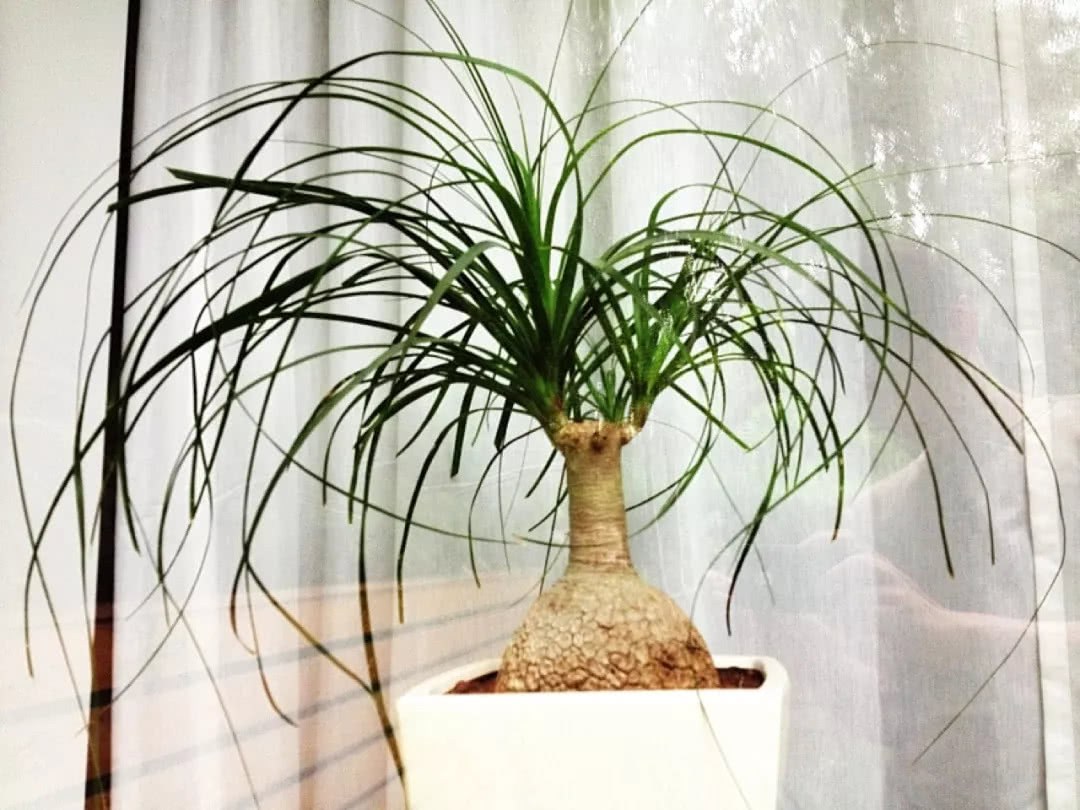
Bottle palm
Bottle palm, also known as elephant foot tree, is native to the hot, dry regions of Mexico. Bottle palm is a tree-like succulent plant, with a plant height reaching up to 10 m. Because its stem has a peculiar shape, with a particularly swollen base that closely resembles a large wine bottle, plus bark cracked into small squares and tufted, gracefully swaying leaves, it has become a very unusual ornamental plant. Using it to decorate a living room or study, or to adorn a hotel or venue, gives people a novel and distinctive feeling.
Care tips: It likes a semi-shaded environment. In autumn, winter and spring, it can be given plenty of sunlight, but in summer it needs more than 50% shading. When bottle palm is kept indoors, place it in a spot with bright light as much as possible, such as a well-lit living room, bedroom or study. Spring, summer and autumn are its peak growing seasons. For fertilizer and water management, follow the cycle of "Huabao" - clear water - "Huabao" - clear water, with an interval of about 1-4 days; shorten the interval on sunny days or during high temperatures, and lengthen the interval on rainy days or during low temperatures, or do not water.
Spring grass
Spring grass, also called spiral grass, gets its name because its leaves twist and coil like a spring. It is a small potted ornamental plant newly introduced in recent years. Its form is unique, its bulb is simple and unsophisticated, and depending on the variety, its leaves may resemble springs, drifting kelp in water, curled long hair, or wrought-iron artwork. Its lines are smooth and graceful, full of variation, and its flowers are elegantly fresh. It is suitable for growing in small pots and decorating windowsills, desks and other places, curious and interesting.
Care tips: Spring grass likes a moist environment. During the growing season, keep the soil moist but not waterlogged. If it is dry and lacks water for a long time, the plant will not die, but its growth will stall, its leaves will turn yellow and may even wither; if the potting soil is waterlogged for a long time, however, it will cause the bulb to rot.
Zanzibar gem
Zanzibar gem is a rather popular large indoor bonsai plant, especially when placed in a relatively spacious living room, study or sitting room, where it has an elegant, plain style with a southern charm. It is a world-famous new generation indoor foliage plant with a graceful, neat plant shape. Its seedlings grow relatively slowly, so it can be grown as a small or medium potted plant for viewing, or as a large combined planter, offering fairly diverse choices.
Care tips: Zanzibar gem likes light and also has strong tolerance for shade. It should be given an environment with good sunlight but also a certain degree of shade. Because this plant is highly drought-tolerant, it is best to keep the potting soil slightly moist and on the dry side, though occasionally watering or fertilizing too much will not necessarily cause root rot. In winter, be careful to spray water on the leaf surfaces and the surrounding environment so that the relative air humidity reaches above 50%.
Desert rose
Whether in flower, leaf, stem or overall form, the desert rose is elegant and distinctive, natural and generous, and uniquely styled. It is especially suitable for decorating the home interior and balconies, and is an excellent choice for indoor cultivation. In the south, it can bloom twice in spring and autumn. If cared for properly, flowers can be seen in all three seasons of spring, summer and autumn. When in full bloom, most of the leaves drop off and the branches are covered with flowers; its posture is graceful, its tree form simple and vigorous, elegant and distinctive.
Care tips: The desert rose is relatively drought-tolerant. Do not water too much each time; if there is more water, the roots rot very easily, and the branches also grow excessively, making pruning rather troublesome. In summer during high temperatures, water according to the soil condition. Generally, water once every two or three days, and do not let water accumulate in the pot. In winter, when the temperature drops, the desert rose also enters a semi-dormant period. At this time, properly control watering and keep the soil dry; watering once a week is enough. The desert rose relatively likes phosphorus and potassium fertilizer; supplement it about once a month.
Mountain turtle
Mountain turtle, also known as Di Bu Rong. It is a herbaceous deciduous vine, completely hairless, with a huge flat spherical tuber, dark grayish brown; the young branch tips are succulent, purplish red, with white bloom. The leaves are oblate, rarely nearly round. It is one of the excellent choices for indoor ornamental plants.
Care tips: Mountain turtle likes a growing environment with abundant sunlight, warmth and dryness. It is shade-tolerant and afraid of harsh sun exposure. Potted plants should be cared for in a bright place without direct sunlight, and in summer during high temperatures they should be properly shaded. Except in summer, it can be grown in full sun. Mountain turtle likes fertilizer; during its growing season, apply decomposed liquid fertilizer or compound fertilizer once about every 20 days.
A like is encouragement | Sharing is the best support,"Plant addicts" pleasego to the bottom and tap the thumbs-up to give a!