Lung nodules: resolve blood stasis early, and Traditional Chinese Medicine has its methods
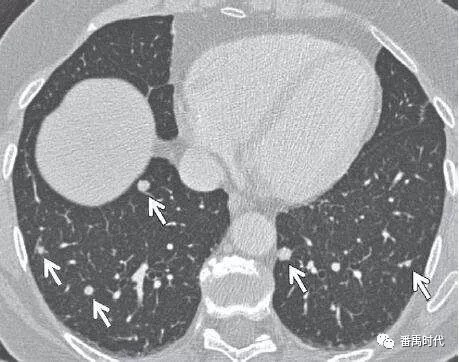
Lung nodules are a term used in Western medicine reports such as X-ray imaging; they refer to what Western medicine calls benign or malignant tumors, which in Traditional Chinese Medicine correspond to qi deficiency and an imbalance of yin and yang, with qi stagnation and blood stasis giving rise to phlegm turbidity or blood stasis obstruction. Western medicine has many descriptions, such as tuberculoma, inflammatory pseudotumor, hamartoma, adenoma, metastatic tumor, and so on. So Traditional Chinese Medicine is about syndromes and phenomena, while Western medicine is about various forms of disease.
Traditional Chinese Medicine says that when qi and blood are deficient, yin and yang fall out of balance. In the eight principles of Traditional Chinese Medicine, yin and yang come first; the eight principles are the dynamic diagnostic framework on which Traditional Chinese Medicine's syndrome differentiation and treatment is based. When this progresses to deficiency and decline of qi and blood, stasis forms, and it becomes a visible, relatively large tumor in Western medicine or a mass in Traditional Chinese Medicine. In Western medicine, the size of a lung nodule is also one of the bases for judging whether it is benign or malignant. In Traditional Chinese Medicine, abdominal masses, water drum distension, qi drum distension, and phlegm syndromes are all critical terminal illnesses.
Today's pollution of air, water, and food has led to the high incidence and high mortality of lung cancer and other cancers, and has also greatly reduced the benign rate of tumors while the malignant rate has risen sharply. In fact, it has also caused a qualitative change in what Traditional Chinese Medicine calls qi stagnation and blood stasis. The treatment methods used in Traditional Chinese Medicine for masses and distension syndromes caused by qi stagnation and blood stasis, such as activating blood and resolving stasis, softening hardness and dissipating nodules, regulating and replenishing original qi, nourishing yin and tonifying yang, and strengthening the spleen and moving qi, are also constantly being innovated and changed.
Western medicine speaks of precancerous lesions, while Traditional Chinese Medicine speaks of deterioration. That is to say, many tumors are benign. Just as in Traditional Chinese Medicine, when qi and blood are insufficient, the movement of qi and blood becomes unsmooth, and some refined substances and "waste" that needs to be expelled from the body temporarily remain and accumulate. If qi and blood remain insufficient and qi stagnation and blood stasis persist over time, deterioration such as what Traditional Chinese Medicine calls phlegm coagulation and toxin binding will occur. Therefore, in the treatment of disease in Traditional Chinese Medicine, the focus is always on supporting the upright qi and consolidating the foundation, nourishing qi and blood, and strengthening the body's own ability to expel disease.