Give These 3 Flowers to Your Elders at Mid-Autumn Festival - They Boost Fortune, Longevity and Wealth
As people's living standards improve, life has entered a new era. No longer do we worry about food or clothing. With better material conditions, people increasingly focus on their spiritual life. For example, some take up fitness, some enjoy studying the way of health preservation, and more and more people have fallen in love with growing flowers. Especially some retired elderly friends - seeing vibrant plants every day makes them feel many years younger. Now the Mid-Autumn Festival is approaching again, and it is once more time to give gifts to our elders. So let's give our elders a few pots of flowers. Let's take a look at which flowers are suitable to give to parents!
Today's sharing topic is:
At Mid-Autumn Festival, give these "3 kinds of flowers" to your "elders" - especially "suitable", boosting fortune, longevity and "wealth"
(One)
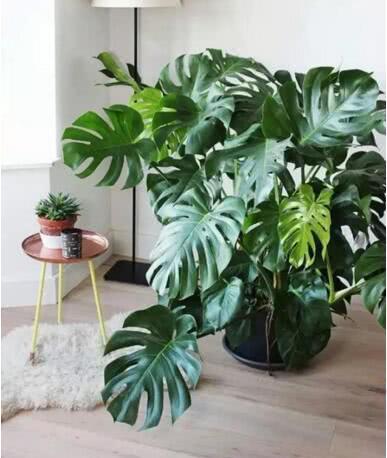
Monstera (Monstera deliciosa)
Monstera is an ornamental potted plant with large, thick leaves. Amazingly, the patterns on its leaves look just like the patterns on a turtle's shell, which is why people call it "turtle-back bamboo" in Chinese. It has an extremely strong air-purifying ability, absorbing harmful gases such as methanol and benzene from the air, and releases oxygen 24 hours a day, earning it the name "natural scavenger". It also carries the meaning of boosting fortune, longevity and wealth, so it is most suitable as a gift for elders. It easily creates a comfortable environment for the elderly, and its auspicious meaning puts elders at ease.
Care instructions:
Light
Monstera likes light but dislikes strong direct sunlight. For home care, place it in a spot with bright, indirect light and good ventilation; direct sunlight is strictly forbidden. Only with bright light will its leaves be emerald green and glossy, and it also promotes growth and reduces pests and diseases. For home care, simply place it near a windowsill, where the indirect light is good and it won't be scorched by the sun.
Watering
Monstera likes a moist, humid environment, but the pot must not hold standing water. Generally, water about once every 5 days, though growers should adjust according to actual conditions - water when the soil is dry and let it dry out between waterings. It is best to mist its leaves every day, which both cleans the leaves and helps them grow well.
Fertilizing
Monstera is mainly a foliage plant, so it needs nitrogen fertilizer. It is recommended to water with fermented rice-washing water or soybean water about once every 15 days, and it will grow well. But if you want its leaves to keep clear patterns and split nicely, then you need to apply phosphorus fertilizer once a month.
(Two)
Clivia (Clivia miniata)
I believe everyone knows Clivia. Clivia has slender leaves that grow symmetrically, and it is enjoyed for its leaves, flowers and berries. It has the reputation of being the "gentleman among flowers", with noble qualities of strength, fortitude and unyielding dignity, and carries beautiful meanings of wealth and good fortune, prosperity, happiness and modesty. It also has an extremely strong air-purifying ability, so giving an elder a pot of Clivia is especially suitable. Whether placed in the living room, study or bedroom, it is elegant and grand.
Care instructions:
Light
Clivia cannot take direct strong light; it needs an environment with indirect light and good ventilation. For home care, it suits a spot near a bright windowsill, where there is no direct strong light but the light is still good. However, Clivia is phototropic, so the pot needs to be turned often to keep its leaves growing evenly and neatly.
Watering
Clivia has broad leaves and thick fleshy roots, so it has a strong drought tolerance and does not need much watering. Generally, water once every 7-10 days, though this depends on actual conditions. The pot must not hold standing water. Do wipe the leaves often with a soft cloth, which can be dabbed with a little beer or sesame oil - this achieves a leaf-fertilizing effect and keeps Clivia's leaves dark green, thick and glossy.
Fertilizing
Clivia is a flower that likes oily fertilizers, so when potting we need to add 5% roasted sesame seeds. During the growing period, focus on nitrogen fertilizer; at the flowering stage, supplement with phosphorus fertilizer, and it will produce large, brilliantly colored blooms.
(Three)
Jade Plant (Crassula ovata)
Jade Plant is also a fairly common foliage potted plant. Its leaves are thick and juicy - it is a type of succulent - and its fleshy leaves are especially cute, emerald green like jade, covered in white flowers, especially fresh and elegant. Because its thick leaves resemble a baby's chubby hands, it is also nicknamed "fleshy baby" and "fleshy evergreen". It symbolizes good fortune, longevity, wealth, beauty and happiness, and its care is very simple, making it especially suitable as a gift for elders.
Care instructions:
Light
Jade Plant is a light-loving plant, but it cannot be exposed to harsh sun. Generally, keeping it by a windowsill is enough. However, in summer when temperatures are high, or at midday when it is hot, be sure to shade it; at other times, normal light exposure is fine.
Watering
Jade Plant has thick leaves with a certain water-storage capacity. During the growing period, water about once every 5 days, but the pot must not hold standing water. In summer, mist its leaves often and move it to a spot with indirect light and good ventilation.
Fertilizing
Because Jade Plant is a foliage potted plant, its growth depends on nitrogen fertilizer. It is recommended to water with fermented rice-washing water or soybean water once a month, and apply a little phosphorus fertilizer at the flowering stage.
That's all for today's sharing