How do you grow a yew (Taxus) bonsai so it stays lush green all year round?
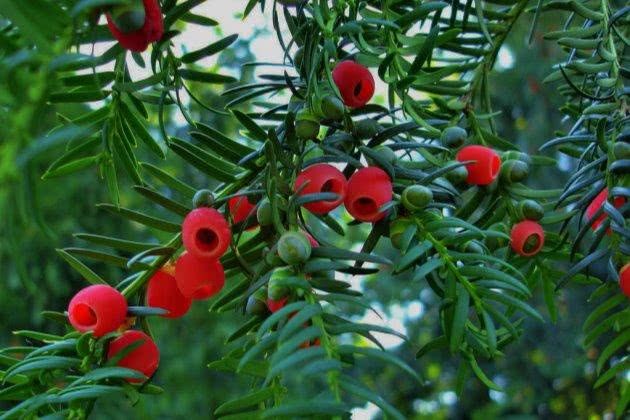
The yew is a fairly good potted greenery plant; growing yew can help people beautify the environment, decorate the home, and purify the air. So we often grow it at home in a bright spot or on the balcony, which can very noticeably improve the home environment.
If you want to grow yew "indoors properly", it invariably has to be transplanted into a pot first, and after transplanting, growing yew is very noticeably different from growing it in the ground. The first difference shows up in water needs: soil in pots dries out easily, while with ground planting this is generally given little thought. So today Huar Gu will introduce the growing methods for yew bonsai.
For growing bonsai yew we need to consider the following points: water, soil, nutrients, light and temperature.
1. Water
Influenced by the growing environment, the daily water needs of potted yew are very obvious; if it is not watered for a long time it will suffer drought and stress, causing problems such as dry, withered leaves, and this is especially obvious in summer. Conversely, because we grow yew in pots, when the yew cannot get rid of excess water it causes waterlogging, root rot and black rot, so watering is crucial for growing it as a bonsai.
So how should we water the yew? The most appropriate watering technique for growing yew is to follow the principle of "water when dry, let it dry out between waterings"; each time, water slowly and stop once water seeps from the bottom of the pot, so that overwatering does not cause waterlogging. If our pot's drainage has gotten poor, then we should repot or add some stones at the bottom of the pot to improve the drainage of the potting soil and prevent waterlogging.
2. Soil
Potting soil becomes depleted as our plants grow and as we water more often, so we need to regularly repot and change the soil, or change part of the soil, for the yew bonsai, so as to continuously provide the nutrient source the yew needs to grow. In addition, it is recommended to use garden soil, leaf mould and other soils with good fertility; red soil, loess and other soils that easily compact are not suitable for growing yew.
3. Nutrients
Nutrients are crucial for plant growth. When changing the soil we can add some bone meal, dried animal manure, etc., which loosens the soil and helps retain fertility. For routine care we can use some compound fertilizer, monopotassium phosphate, phosphorus-potassium fertilizer, etc., or we can use homemade fully rotted liquid fertilizer. We need to fertilize according to the principle of "weak fertilizer, applied often"; a single application should not be too much, and small amounts given frequently can avoid over-fertilizing while still meeting the plant's growth needs.
4. Light
It is best to grow the yew bonsai in a place with plenty of scattered light that does not cause strong direct sunlight; yew grows best in a semi-shaded environment. If strong light shines directly on it, it causes problems such as dry, withered leaves on the yew; conversely, if the growing spot is too dark, it also causes poor growth or unsightly leggy growth.
5. Temperature
The yew is not demanding about temperature; as long as high temperatures do not exceed 38°C for a long time, there are generally no growth problems. One point to stress here is that, whether it is spring, summer, autumn or winter, our potted yew is not suited to being kept for a long time in an air-conditioned room, especially in a spot directly facing the air outlet, which easily causes growth problems for the yew.
The above is Huar Gu's introduction to the growing methods for yew bonsai and some points to note. If you also like growing yew, then follow Huar Gu, and let's exchange the latest flower-growing tips every day!