Giving succulent "bulbs" a fragrant bath, a face mask, and removing old skin
Preface
Follow the Encyclopedia · Meet Beauty (WeChat ID: duoroubaike)
Main text begins:
Thanks to the author [Farmer] for theoriginal exclusive authorizationsharing
Part of the content source: Xianzhenyuan
Edited and compiled by: Encyclopedia Jun
Location: Changning, Shanghai
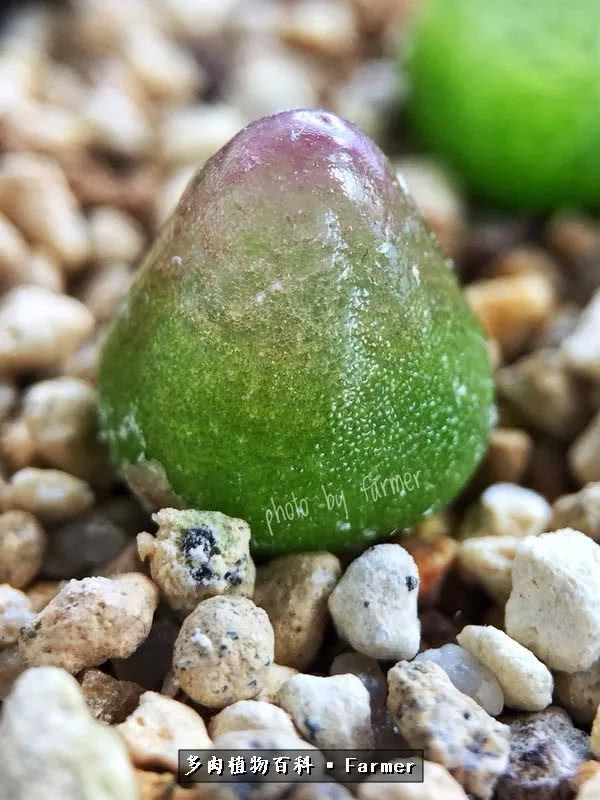
The succulent "bulb" (Conophytum burgeri) is a succulent plant belonging to the genus Conophytum in the family Aizoaceae. Its epidermis is semi-transparent and bright green, it goes dormant in summer, and in environments with sufficient light the epidermis turns red. As the plant grows, the new body inside gradually swells, and the old leaves gradually thin and shrivel, wrapping around the new body like a layer of kraft paper.
In the hot summer the bulb enters its dormant period. Although the dried old leaves wrapping around the outside may look unattractive, they can block the damage to the young plant from the strong summer ultraviolet rays and absorb moisture from the humid air, playing an important protective role for the new body, so do not peel them off easily. By autumn the new body grows further, and the kraft-paper-like old leaves gradually molt away, restoring their crystal-clear state.
However, if you have newly purchased bulbs, your OCD may make it impossible to tolerate the kraft-paper-like old leaves. This article will teach you how to remove the old leaves on the outer layer of the bulb.
Now let's give the bulbs a fragrant bath and make them sparkling clear, looking forward to the birth of a box of candy (dangerous action, do not imitate! Especially those with shaky hands)
Throw the newly arrived bulbs into water and soak for about 3-5 minutes. The soaking time depends on the thickness of the old skin, then gently rub with your hand and they will be clean.
Now you know how small they are, don't let your hands shake
If you think that's too uncreative, then let me share another amazing trick for removing old skin from bulbs~ a face mask!!!
Preparation:Cotton pads, scissors, clean water, tweezers, cotton swabs
Process:First cut the cotton pad into suitable small squares, soak them in clean water, take them out and place them over the bulb (similar to a girl applying a face mask). After about 5-8 minutes, once the old skin is completely softened, tear off the old skin with tweezers, and finally wipe the fragments on the epidermis with a wet cotton swab and you're done!
Considering that some single male flower enthusiasts don't have cotton pads, it is suggested to use tissue paper instead, which will be softer and fit better, since after all the only function is to moisten and soften the surface old skin.
Finally, let me share my personal experience of growing bulbs:
If the soil mix and watering are handled properly, bulb seedlings grow very fast. The 0.5cm seedlings I bought grew to 0.7-0.8cm in two months, so I suggest flower enthusiasts buy small seedlings and grow them themselves.
First, the soil mix. My soil mix is very simple: 5 parts Pindstrup peat (0-10mm), 3 parts Xinjiang white vermiculite (2-4mm), 2 parts mixed granules (1 part akadama, 1 part pumice), plus an appropriate amount of rice husk charcoal, mixed well.
As for watering, for small seedlings I plant them the same day they arrive and water thoroughly the same day. Bulbs like moisture but fear dampness, and their epidermis is especially thin. If kept wet without drying for a long time, the bottom epidermis is very prone to cracking, infection and turning to mush. So for daily watering and care, it is best if the soil surface can dry within 3-5 days.
Planting seedlings is not limited by season, but good ventilation must be maintained, so turn on the fan. In summer, operate in an air-conditioned room; the lower the temperature, the faster the rooting, and generally they will establish within a week.
Appreciation note
This article is purely for sharing. The author has not enabled appreciation. After reading, don't forget to give the author a little like at the bottom right corner at the end of the article to encourage them!
This article has beenexclusively authorizedby the author to WeChat public account: Succulent Plant Encyclopedia (ID: duoroubaike). The article content does not represent the views and stance of the public account! The Encyclopedia has signed with a third-party internet copyright enforcement company and has opened network-wide rights protection. Unauthorized private reprinting by other platforms is strictly prohibited! If pirated reprints are found, infringement liability will be pursued! Netizens are welcome to report!
Advertisement ADVERTISEMENT
The culture of succulents needs you and me to promote it! Remember to share good articles more, so more people fall in love with succulents! Use the power of plants to influence and heal the people around us!