Koi worth hundreds of thousands: ornamental fish from a small mountain village swim to world markets
On the morning of January 24, a light brown mist hung over the hills, and the mountain village looked somewhat chilly in the depths of winter. At around nine o'clock, the reporter arrived at Yanwan Village, Shuangshan Town, Tongliang District, Chongqing, to visit the ornamental fish breeding base in this small mountain village.
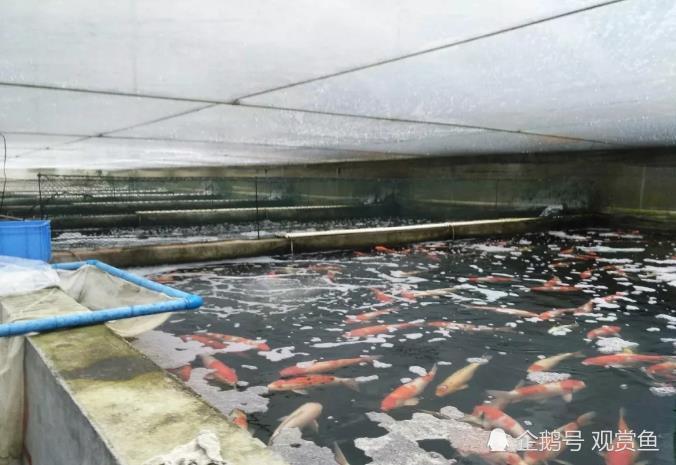
Looking out, the large Dazheng Gully embraced by green hills holds a vast stretch of fish ponds of varying sizes, each covered with a plastic net. A flock of egrets flew back and forth outside the nets, eyeing the delicacies beneath. In the ponds, several workers in waders bent over spreading lime to clean the ponds, preparing to stock fry after the start of spring. On the yard next to the road, workers were busy grading, bagging and oxygenating the fish ready for shipment.
"The fry ponds and commercial ponds in this base cover more than 300 mu, and the main varieties farmed include koi, brocaded crucian carp, Longjin goldfish, Redcap Oranda goldfish, golden coin turtles, tropical ornamental fish and more than 30 other varieties. You could say the finest varieties in China are all gathered here. Although our base is built in a remote mountain village, last year we sold more than 50 million ornamental fish, and some even went abroad to Southeast Asia, Hong Kong and Europe," introduced Hu Hua, head of Chongqing Wosen Agricultural Development Co., Ltd.
The ornamental fish base is located below the dam of Zhangjiagou Reservoir in Yanwan Village. In the past, because it was a stretch of farmland that was flooded with winter water for long periods, the soil became soft and muddy, making it a typical low-yield, low-efficiency field.
"We chose to settle here because Shuangshan Town has a forest coverage rate of 60%, with not a single industrial enterprise and no industrial pollution whatsoever. The water used by the base comes from the high-quality mountain spring water of Zhangjiagou Reservoir, and the flat land below the dam plus ample sunlight provide good ecological conditions for developing ornamental fish," Hu Hua said.
Beside a fish pond, technician Zhao Wenyong gently tapped the bait mixing bucket, and the fish in the pond quickly crowded densely by the edge. As a ladle of bait was scattered, the fish fought for food, splashing with a loud "hua hua" sound.
"This pond is all Japanese koi, the smallest weighing 500 grams and the largest 2,000 grams. On the market right now, a large koi can sell for 50,000 to 80,000 yuan each. But that is not the most expensive; the most expensive koi can sell for hundreds of thousands of yuan," Hu Hua said.
Ornamental fish farming may look like raising other edible fish, but it is actually much more difficult. Technician Zhao Wenyong explained that although a large koi brought to market can sell for tens of thousands or even hundreds of thousands of yuan, it must be bred through many rounds of selection from tens of thousands or even hundreds of thousands of fry. Only those with the most graceful build, the strongest physique and the brightest colors win customers' favor. And to raise a fertilized fish egg the size of a sesame seed into a premium commercial fish, every step of hatching and farming must be handled with great care and not the slightest negligence. The short cycle takes about a year, while the long one takes several years.
"In summer, during muggy thunderstorm season, we fear oxygen deprivation and mass fish deaths the most. We stay by the ponds adding fresh water and oxygen while watching the fish's movements," Zhao Wenyong said.
During the interview, it was learned that to solve technical problems, the company established a technical cooperation relationship with Southwest University, carrying out variety introduction, selective breeding and production under the guidance of aquatic experts. On the sales side, it cooperates with well-known companies such as Shunfeng Express and Deppon Logistics, transporting products to various places by air.
The establishment of the ornamental fish base in the mountain village has also brought tangible benefits to the villagers. In addition to collecting rent, more than 20 stay-at-home villagers were hired by the company as agricultural workers, each earning about 15,000 yuan a year, increasing their income at their doorstep and shedding the label of poverty.
Speaking of this year's plans, Hu Hua said the first is to steadily expand output, the second is to use the export qualification already obtained to sell products directly abroad, and the third is to take the path of combining fishery with tourism, trying to integrate the ornamental fish base with rural tourism so that the base and surrounding farmers can prosper together from tourism.
The above content comes from People's Daily Online; the images are unrelated to the content.