300,000 succulents were submerged by typhoon and torrential rain, turning wrinkled overnight
Every summer is a period of frequent extreme weather. Typhoons and torrential rain can come at any time. The loss of a few pots we keep at home is nothing. Huahua has seen many flower growers' greenhouses flooded, especially the succulents, and it really hurts to look at them.
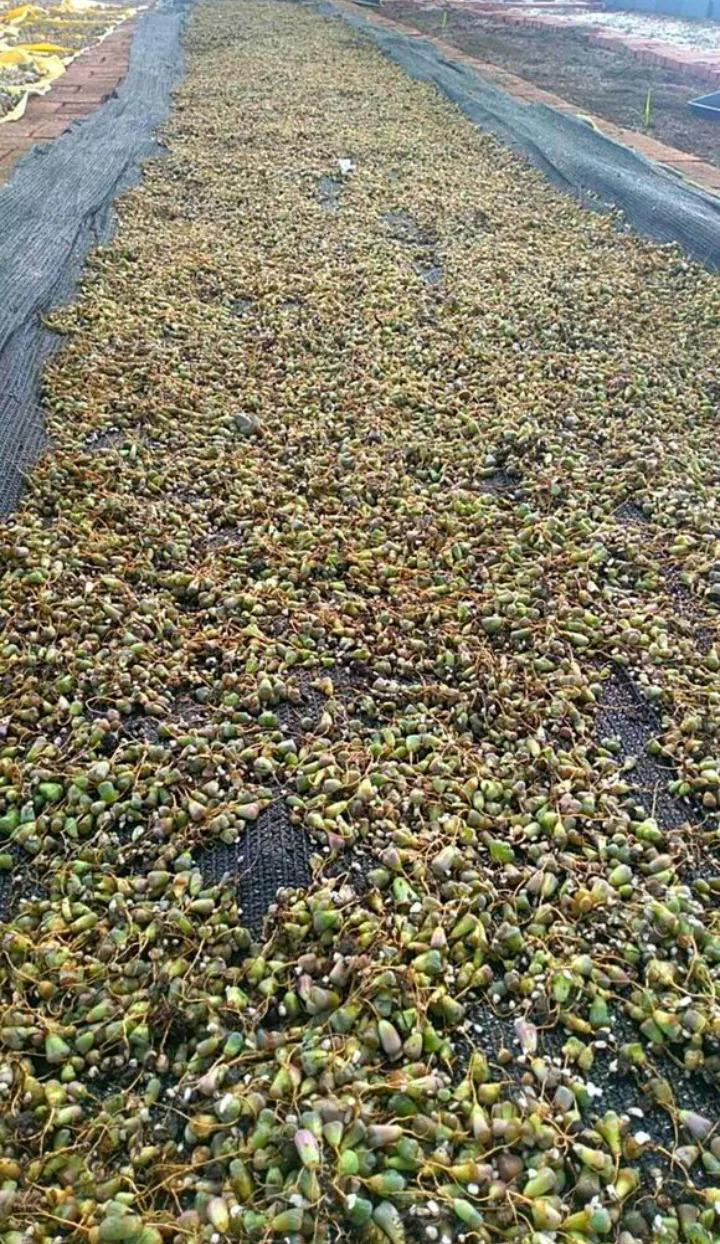
In the picture below, what is being dried in the sun is not dried radish, but the lithops that have become hugely popular in the past two years - succulents in the Aizoaceae family. Why dry them? It turns out that on June 25 the greenhouse was hit by torrential rain, so the owner @ had no choice but to dig them out and dry them.
Lithops are also called butt flowers. Even though they are small, their market price ranges from 3 to 20 yuan. @ said that not only was the supply greenhouse flooded, but two mother-plant greenhouses were flooded as well. This time it is a real blood loss.
The originally plump lithops became wrinkled overnight. No matter whether they look ugly or not, saving one is one!
Do not think that only the north was hit hardest by torrential rain this year. In July in Sichuan, after several consecutive rains, the flower friend @ ran to check their own succulent greenhouse and felt their heart go cold...
The succulents outside had already been soaked beyond saving. I hoped the succulents inside the greenhouse still had a glimmer of hope, but when I looked toward the greenhouse entrance, things really did not look good.
After finally getting inside the greenhouse, the succulents in the greenhouse were not much better than those soaked outside. The situation was not optimistic either. This is really terrible...
Do not think that only outdoor greenhouses get flooded. The succulents of @ were literally taking a bath at home!
After seeing these flooded succulents, Huahua really feels awful. Today, let's not talk about anything else. Let's tell everyone how succulents can "come back from the dead" after being flooded. Whether you encounter torrential rain or simply overwater them, these are tricks you can use!
What to do with succulents after they have been soaked
Huahua said before that succulents can be grown hydroponically, so being soaked for a short while will not kill them. They can slowly get used to aquatic life. But if the flower pot is kept on the ground or another platform for a long time and the bottom is not breathable, then there is trouble, and they can easily turn into boiled meat.
1. Put the flower pots on a rack
The simplest and most direct method is to put the flower pots on a hollow rack. In this way, the bottom of the pots can breathe, and being placed high up also gives better ventilation.
2. Put the flower pots on sand
A more natural and effective method is to put the flower pots on coarse sand. This can simulate natural drainage, and succulents adapt faster.
3. Turn on a small fan to speed up ventilation
Put the succulents on a windowsill or another higher table, place toilet paper under the bottom of the pots, and aim a small fan at them to strengthen the ventilation effect.
4. Switch directly to hydroponics
Since succulents can be grown hydroponically and have already been soaked in water, you might as well switch them directly to hydroponics. Just carefully dig out the succulents, rinse the roots clean with water, and place them in a transparent small-mouth yogurt bottle. The water does not need to be too much; they can survive on the moisture in the bottle.
5. Remove from the pot, dry the roots, and replant
Dig out the succulents, trim the roots, keeping only the main root system, then soak them in a carbendazim solution for 15-20 minutes, and then put them in a cool, ventilated place to dry for 2-3 days. After they are dry, replant them. Note that the original soil can only be used after being sterilized by exposure to the sun!
I hope that whether people or flowers and plants
can all be safe and sound
Flower friends can share it
to let more people know!
?