After the wild mushroom is broken, it oozes milk; it cannot currently be cultivated artificially, and wild ones sell for 40 yuan per jin.
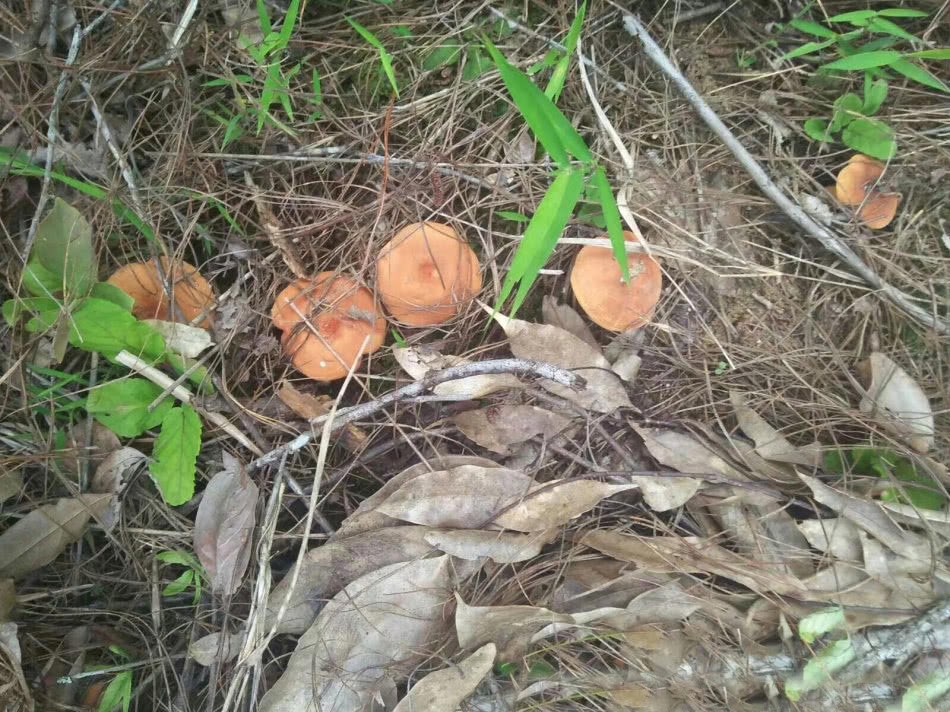
Farmer friends are always enjoying the gifts of nature. Farmer friends who live near the mountains eat more wild foods from the mountains, while farmer friends who live near rivers eat more fish and shrimp from the water. All of this has brought abundant food ingredients to friends living in rural areas. This is what the saying "live off the mountain if you live near it, live off the water if you live near it" means. Today I will introduce a wild food, and it is the milk-cap mushroom.
It is generally said in our rural areas that brightly colored wild mushrooms are usually poisonous and should not be picked, but the milk-cap mushroom happens to be an exception. Especially after rain, milk-cap mushrooms grow in the forest.
The color of the milk-cap mushroom is very bright, so people can spot it at a glance in the dense forest. What is especially important about the milk-cap mushroom is that no matter which part of it is damaged or broken off, it will release a milky white liquid like "milk." This is also why people call it the "milk-cap mushroom."
It is precisely because of this characteristic of the milk-cap mushroom that if you are walking deep in the mountains and are extremely thirsty, you can eat it directly to quench your thirst. Eating it raw is also not poisonous.
There are many ways to eat the milk-cap mushroom. It can be eaten raw or cooked, and there are many ways to prepare it: stir-frying, deep-frying, quick-boiling, stewing, mixing, dry-frying, and flash-frying are all possible. The simplest way to prepare the milk-cap mushroom only requires cleaning the root part of the picked milk-cap mushroom, breaking it into two halves, and directly simmering it in soup with fatty pork. In this way, you can taste the most original flavor of the milk-cap mushroom, which is truly incomparably delicious.
The milk-cap mushroom is not only delicious but also very rich in nutritional value. According to records, the milk-cap mushroom is rich in vitamins, amino acids, protein, calcium, phosphorus, iron, and other trace elements, and it also has multiple effects such as lowering blood lipids, strengthening the stomach, lowering blood sugar, improving human immunity, relieving cough and asthma, and moistening the lungs. In addition, the fat and calorie content of the milk-cap mushroom are both very low, so it has now become one of the wild foods chosen by many beauty-loving women and health-conscious people.
The growing season of the milk-cap mushroom is generally the 3 months of July, August, and September. It is very difficult to find milk-cap mushrooms in other seasons, so milk-cap mushrooms can only be eaten during this period. Its growing locations are mainly on the ground of pine forests or mixed coniferous and broad-leaved forests at altitudes of 1600 m to 2800 m, so it is also relatively difficult to pick.
At present, milk-cap mushrooms are all wild, and artificial cultivation of milk-cap mushrooms is still not possible, so the price of this delicious wild food is naturally very high. In my hometown, it reaches as high as 40 yuan per jin. As the saying goes, things are precious when they are rare.
Although the milk-cap mushroom is delicious and nutritious, it must not be eaten in excess. Remember this!
It is exactly this kind of milk-cap mushroom that oozes white milky liquid, and its taste makes people admire it. Dear friends, do you like eating milk-cap mushrooms? In your hometowns now, can you still often see milk-cap mushrooms appearing after rain?