Grow this potted plant at home and brew its leaves as tea to slow aging and lower blood pressure
On ordinary days, Huahua often teaches everyone about vegetables and fruits that can be grown on the balcony. They are basically common home-grown vegetables. First, it increases our interest in growing things, and second, it is just for convenience. You can grow them at home and eat them at home too, so convenient. I wonder if everyone understands Huahua's intention?
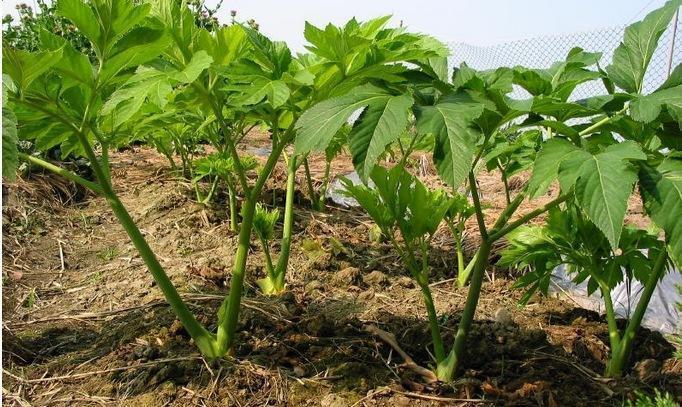
Today Huahua will introduce a different kind of plant to everyone. Grown at home, it is not only edible, but can also prolong life! This plant is called: Ashitaba.
Actually, Ashitaba has another name: it is called Longevity Grass.
This makes it much simpler and clearer, right? But why is it called Longevity Grass? According to legend, Qin Shi Huang sent three thousand boys to search for Ashitaba back then! It probably got its name because of this. Next, Huahua will introduce how to grow Ashitaba, so we can also grow "Longevity Grass" at home!
Generally speaking, now is just the right time to plant Ashitaba, and the current temperature is just right. We can choose to propagate it by cuttings, or we can choose to buy Ashitaba seeds and plant them, except that the sowing method really does take quite a lot of time.
Choosing the flower pot and potting soil well is also very important. Generally speaking, there is no need to choose too large a flower pot. Ashitaba is different from other plants. Seventy percent of its soil must be clay, so that the plant's roots can be pressed down and kept stable.
When fertilizing, you can choose to buy some special fertilizer for Ashitaba and use it according to the instructions. When watering Ashitaba, generally follow the principle of "water when dry, stop when wet." During ordinary growth, weeds will inevitably grow around the Ashitaba pot. When dealing with the weeds at this time, be careful not to use tools to remove them. Just pull the weeds by hand. If you use tools, you may damage the plant's roots.
When growing Ashitaba on ordinary days, you can place it in a cool and ventilated place. Avoid exposure to strong sun in summer, and take good insulation measures in winter. Generally speaking, in order to keep the ambient temperature for Ashitaba above 5°C, you can build a small plastic shed for it.
After talking about growing it, we need to talk about how to harvest Ashitaba. Ashitaba is different from ordinary vegetables. You cannot just go up and pull off a handful whenever you want to eat it. Generally, the leaves should be cut at a place more than 2 cm from the root of the Ashitaba. You can observe your own leaves. If the third leaf of the Ashitaba at home has sprouted, you can cut off the outermost layer of leaves and eat them.
This is how to grow Ashitaba. Have you all learned it? Hurry home and try growing a pot! Maybe it can also prolong life! In addition, Huahua would also like to remind everyone here that Ashitaba and tea are incompatible, so you must not drink tea after eating Ashitaba, and absolutely do not use tea water to water Ashitaba!