Rose Isn't a Frumpy Old Maid: Learn These Two Feeding Tricks and It Will Bloom 30 Flowers and Turn Into a Beauty
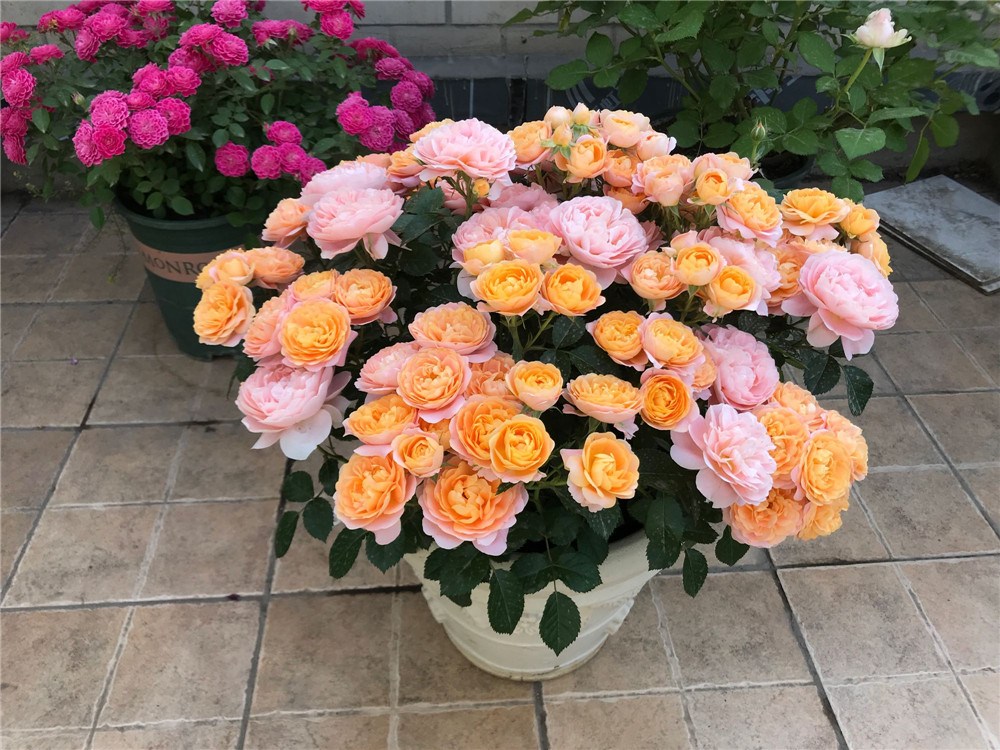
Some flower owners, upon seeing roses, feel it is somehow destined that they should encounter such a beautiful flower, so they "marry" it and take it home. After bringing the rose home, only a small number of flower owners' roses keep their graceful appearance, while most turn into frumpy old maids, which is truly lamentable. Expert flower lovers can not only raise roses into "beauties" but also make them burst with 30 flowers in a 2-gallon pot. Take a look (the picture shows roses at the home of flower lover Big Ears Jun).
This rose owner is quite the expert; he passes through rose bushes without a leaf clinging to him. He says: roses are like women, they need frequent grooming and care for their "figure" to look better and their flowers to bloom more. When caring for roses, he pays special attention to one trick: dwarfing and shaping, plus top-dressing to cleverly boost flowering. Of course, he grows balcony-series roses, such as Zhenyu, Monet, and Juice, so come learn how to dwarf and boost flowering.
1. Dwarfing and Shaping, Rely on "Pruning"
Roses also have "apical dominance," so pruning to dwarf them is necessary. In winter, prune heavily, leaving only about 10-15cm of stems above the soil surface; in spring you cannot prune heavily, so you must be gentle. He keeps pinching the roses: when new buds grow to 10cm, you can pinch off the top leaf buds by hand, letting the shoot buds differentiate again into secondary shoots. This clearly produces several more flower heads, and naturally more flowers too.
That's not the end of it, because our pot is a 2-gallon pot and the plant shape isn't that big; this alone isn't enough, there are follow-up moves. After the first round of topping, when the new shoots grow to 4-5 pairs of leaves, top them again, so each new shoot splits into two and grows new side branches. After that comes fine pruning: prepare a sharp pair of scissors and try to keep the height even, so flowering is more balanced.
2. Top-Dressing to Cleverly Boost Flowering, Rely on "Fertilizer"
Anyone who has grown roses knows roses love fertilizer, and if you want a small pot to produce big flowers and a bursting pot, fertilizer is naturally indispensable. Small pots have limited soil, but no problem, we just need to put effort into top-dressing. This rose owner also has "two tricks" for fertilizing, very practical. Let's take a look.
The first trick is to bury base fertilizer when potting, usually using rural chicken manure fertilizer, which has a longer fertilizer effect and also solves the problem of difficulty fertilizing during the seedling stage. The second trick is "fertilizing on demand"; fertilizer cannot be used randomly or shoved in all at once, and roses can't take it either. During the growing period, we should apply more nitrogen fertilizer to strengthen the rose's roots, stems, and leaves, and make it send up more shoots.
With sufficient fertility, the rose's new shoots grow very fast. When they reach the height for topping, he switches to applying phosphorus and potassium fertilizer. Using nitrogen fertilizer at this point is not good for the rose's flower bud differentiation. Phosphorus and potassium fertilizer can add power to the rose's growth and boost flowering. Give your home roses one application about every 10 days.Huadongde rose-specific organic nutrient solution, combined with the root-strengthening and root-nourishing organic nutrients mentioned earlier, these "two tricks" of fertilizing can make roses burst the pot.
This rose owner's roses grow well and bloom abundantly. To sum it up in two phrases: "dwarfing and shaping, top-dressing to cleverly boost flowering." Master these 10 characters, and when you care for roses on your balcony at home, you too can grow bursting flowers in a small pot. Hurry and learn.