Key points to note when lifting strawberry seedlings for transplanting: get these right and the survival rate will be higher
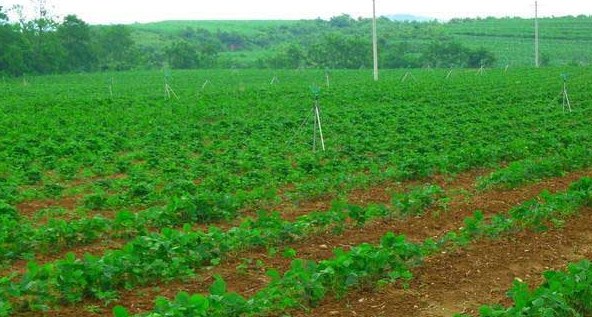
In the past couple of days, many strawberry growers have started busying themselves with lifting and transplanting seedlings. So what key points are worth noting when lifting seedlings for transplanting? Below we will talk about the small details of the seedling-lifting period; mastering these can raise the survival rate.
Reasonable light growth control
If the seedlings are tall and tender, or excessively vigorous, then 5-10 days before lifting the seedlings a light growth control should be carried out, because tall tender seedlings have a low survival rate; if high temperatures occur at planting time, such seedlings are very easily scorched to death, so vigorously growing seedlings need light growth control to improve the survival rate after transplanting. Zhiliang (tebuconazole + prochloraz) 10 g can be used for growth control. At this point only light control is allowed; it must not be used in excess.
Rational use of "send-off medicine"
About 5-10 days before lifting the seedlings, Zhiliang (tebuconazole + prochloraz) 10 g can be used together with growth control. If the seedlings are not vigorous, then 70% thiophanate-methyl wettable powder at 1000 times dilution, or 70% chlorothalonil wettable powder at 600 times dilution, or 25% carbendazim wettable powder at 400 times dilution can be sprayed for sterilization; 4.5% beta-cypermethrin emulsifiable concentrate at 1500 times dilution and 8% Zhongbao acaricide at 2000 times dilution can be added for integrated control of anthracnose, root rot, and pests such as beet armyworm, red spider mite, and aphids.
Reasonable watering
To lift the seedlings smoothly, the soil in the seedling bed should be loose and moist; if the soil is dry during the lifting period, water lightly once in advance, and lift the seedlings after the seedbed soil becomes moist. The lifting depth should be no less than 15 cm to ensure the seedling root system is intact; if lifted too shallowly, too many roots are damaged and the plants are not easy to establish after planting. For seedlings to be planted nearby after leaving the nursery, lift them with a soil ball, as this gives the highest survival rate after planting. If they are to be transported over a long distance, pay attention to packing and refrigeration for cooling; wrap the seedling roots in woven bags, and throughout the whole process take care to avoid water loss from the strawberry roots and prevent root aging.
Prevent disease from entering through wounds
When digging up seedlings, hold the base of the stem by hand, do not use too much force, handle them gently, and do not pinch the heart of the daughter seedling. At the same time, try not to break the main root; during planting, also try to create as few wounds as possible, and within 15 days after planting do not tidy the strawberry plants, to avoid root damage and pathogen infection.
Sorting and grading strawberry seedlings
Before planting, strawberry seedlings should be sorted and graded as necessary, separating large and small seedlings, keeping strong seedlings and discarding weak and diseased ones. If they cannot be planted as soon as they are lifted, then store the seedlings in a cool, ventilated place, and do not stack them, to prevent excessive heat from killing the strawberry seedlings. They should be spread out for storage to ensure good heat dissipation.
Keep 4-5 healthy leaves per seedling; old and diseased leaves can be cut off with scissors, leaving only a section of petiole. When tidying the seedlings, do not pull off excess leaves by hand, otherwise wounds are easily created at the base of the stem and the plants become infected with root rot, fusarium wilt, and other diseases.
Transplant with soil
It is best if they can be transplanted with soil. If they cannot be transplanted with soil and are purchased bare-root seedlings, then at planting keep the root length at 13-16 cm; if longer, the roots do not spread out and tend to coil, and if too short, too many fine roots are damaged, which is bad for recovery. For purchased seedlings, after receiving them, first let them recover before transplanting. It is best to complete the preparatory work for planting, including making beds, soaking the beds, shading, and arranging personnel, before starting the seedling lifting; the production seedlings lifted should be planted as soon as possible.
Dipping roots in fungicide
Dipping the roots in fungicide can prevent many strawberry diseases. Soak the roots of the strawberry seedlings in a solution of 70% thiophanate-methyl wettable powder plus Kairun plus hymexazol plus Bihu for 1-3 minutes; note that the leaves of the seedlings should be kept out of the soak. Let them drain naturally, then plant. Note that the prepared solution should be used for only one soak and must not be reused, to avoid cross-infection of diseases.