Vinegar is not just a condiment; these uses are also very practical
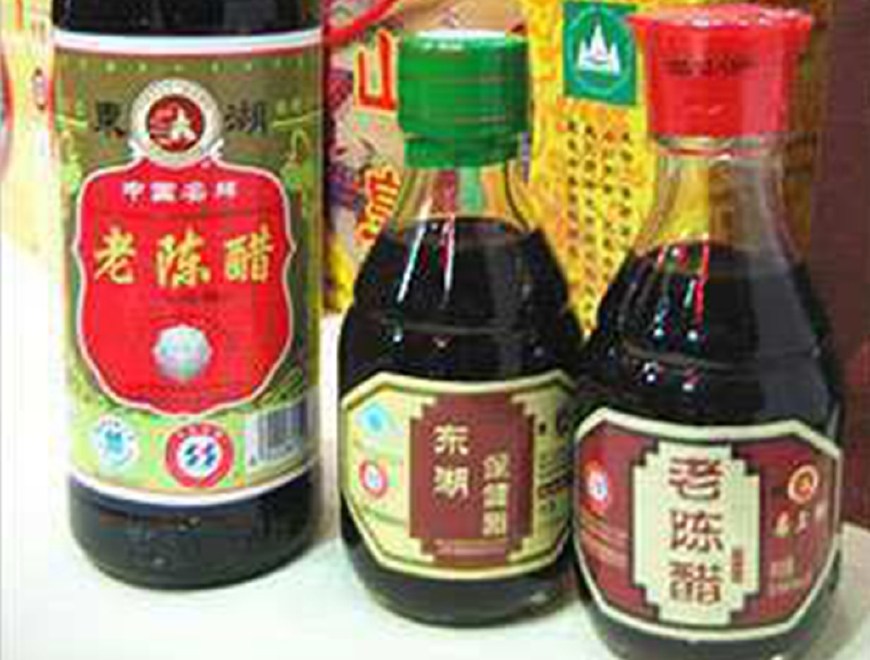
Vinegar is a fermented, sour liquid condiment, mostly made by fermenting sorghum, rice, glutinous rice, wheat, corn, as well as sugars and alcoholic beverages. It is said that vinegar was invented by Heita, the son of the wine sage Du Kang. At the beginning, Heita only brewed wine in the workshop. Over time, he felt it was a great pity to throw away the vinasse after brewing, so he stored it and soaked it in a vat. On the twenty-first day, as soon as he opened the vat, he smelled an aroma he had never smelled before. So he tasted a mouthful of this liquid and found it both sweet and sour, with a good mouthfeel, so he stored it as a "seasoning syrup." Heita thought it over and decided to combine "twenty-one days" with the character "you" to name this seasoning "cu" (vinegar). Thus vinegar came into being. As time passed, it became more and more popular, and gradually it became part of our lives. In this process, many people slowly figured out how to make vinegar from different materials, so its varieties increased day by day. Up to now, there are all kinds of vinegar, such as cold-dressing vinegar, aged vinegar, mature vinegar, rice vinegar, and so on. Vinegar plays a very important role in our lives. We often add it to dishes when cooking. It can be said that it is also a part of our bodies. Vinegar holds a pivotal position in the cooking of Chinese cuisine and is often used in quick-fried dishes, cold dishes, and so on, while in Western cuisine it is often used in salad dressings or for pickling sauerkraut, and in Japanese cuisine it is often used to make sushi rice. Famous Chinese vinegars include Shanxi aged vinegar, Baoning vinegar, Tianjin Duli aged vinegar, Fujian Yongchun aged vinegar, red yeast rice vinegar, and so on. In fact, vinegar is not only used for seasoning; it also has many different uses, such as preservation, ripening, rust removal, and so on. For most people, perhaps vinegar is more of a condiment running through people's lives, and many people do not know that a small bottle of vinegar can also have other uses. This article will teach you other uses of vinegar. So let us take a look below at what other uses vinegar has besides being a condiment!
Another use of vinegar is preservation. Adding a little vinegar to raw fish soaked in water can prevent it from spoiling and deteriorating. In this way, the fish can remain fresh and alive for a longer time. There is no need to worry that it will rot when you eat it. This solves a big problem for us. If you often buy fish, you will know why the fish in wet markets or supermarkets are all so fresh and lively.
Vinegar can also speed up ripening. Everyone knows that when stewing meat, the meat needs to be cooked for a long time. If you want to achieve the ideal flavor, it needs even more time. So how can you make the meat cook through faster? Here is a trick: add a little vinegar when stewing meat. This can speed up the stewing and make the meat easy to cook and easy to soften. In fact, we can add vinegar not only when stewing meat, but also when cooking kelp or potatoes; adding a little vinegar can make the food cook easily. This saves a lot of time, and we can have more spare time to do other things.
Some metals tend to rust easily after being used for a long time. Some people think the rusty spots are very unsightly, so they throw away the rusty items and then buy new ones. Repeating this is quite wasteful. In fact, the rusty spots can be easily dealt with using just a little vinegar. Just apply vinegar to the rusty part or put the rusty metal into vinegar, and the rusty part will gradually become clean and as good as new. This is not only not wasteful but also very practical.
Vinegar can also bring out sweetness. When we cook porridge, adding a little vinegar to the porridge can make it fragrant and sweet. From now on, do not foolishly add sugar anymore, and eating too much sugar is not good either. Adding vinegar to porridge will make others think you are a person who pays attention to health preservation.
Vinegar can also prevent darkening. When we stir-fry eggplant, adding a little vinegar can prevent the eggplant from turning black during stir-frying, and it also improves the taste. It is simply killing two birds with one stone. Vinegar has many different uses. Have you all learned them? From now on, do not say again that vinegar is only a condiment, otherwise others will only think you are very "low" and do not understand life. I believe that after knowing these uses, in your future life, you can also become a little life expert. In fact, many tips in life or the other uses of something all need us to discover and practice. I believe that practice is the only criterion for testing truth, and these uses were also obtained by many people through practice. If you do not truly practice them, then these uses become baseless talk. In life, we should also be people who dare to innovate and are brave in practice. Only in this way can we know which things are correct and which are wrong. Is vinegar only a condiment? Do not be so "low"; it actually still has these uses. What do you think about this? If you feel you have learned knowledge from this article, why not move your cute little hands to click like, or forward and share it, so more people can know!