How do you change the flowering period of potted plants? Mastering these four techniques is enough
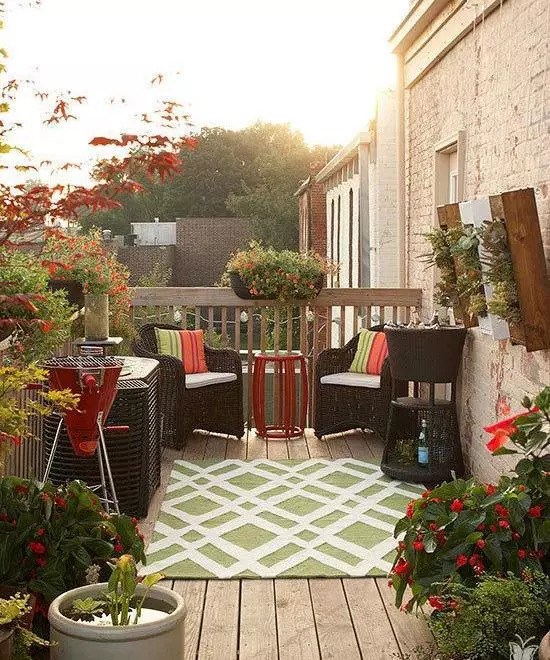
Growing on the balcony, joy within it.
Perhaps the only regret about the balcony is that the plants on the balcony cannot reproduce on their own like those vigorous plants growing in the wild.
The main reasons are:
First, because the narrow flower pots restrict the free growth of the plants, making it harder for them to produce seeds.
Second, because there are no insects and no wind on the balcony to serve as pollination vectors, which is not conducive to plants setting seed.
Most plants on the balcony can only reproduce under the care of fellow balcony gardeners.
But all things are born of the mutual generation of yin and yang,
where there is advantage there must be disadvantage, and where there is disadvantage there will naturally be advantage!
Growing on the balcony, where is the advantage?
Flowers come in a thousand forms and are a feast for the eyes.
If the flowers grown on the balcony could have their flowering period controlled, that would be truly wonderful.
Those whose flowering period is earlier than the natural flowering period are called forced cultivation, and those later than the natural flowering period are called inhibited cultivation.
To make flowers bloom at the right time according to the needs of fellow balcony gardeners, you need to master the growth and development rules of various flowers and understand some effective technical measures.
Four effective technical measures
Controlling the flowering period
One: Temperature treatment
1. Heating treatment:For flowers that can form flower buds at relatively high temperatures.
Such as Chinese rose, jasmine, Aglaia odorata, cineraria, gloxinia, Madagascar periwinkle, geranium, etc. As long as they are heated in advance, they can bloom on schedule when needed.
Head gardener's tip: For flowers that are dormant over winter but whose flower buds have already formed, such as plum blossom, tree peony, ornamental peach, winter jasmine, etc., after they have endured frost and snow, move them indoors and gradually raise the temperature, keeping the room temperature at 15-25°C, and spray frequently, and they can bloom early.
2. Low-temperature treatment:Mostly used for flowers that are dormant over winter.
Such as rhododendron, plum blossom, ornamental peach, etc. If you do not want them to bloom in spring, place them in a cold cellar at 2-5°C and water about once every half month, which can delay the flowering period until "May 1st" or "National Day".
Two: Daylight treatment
1. Short-day treatment:This method can make short-day flowers bloom early.
Such as chrysanthemum, poinsettia, bougainvillea, Christmas cactus, etc. After these flowers have grown vigorously, use shading treatment, commonly covering the whole plant tightly with black cloth (or black plastic), giving only 8-10 hours of light per day; after 50-60 days of this treatment, they can bloom early.
2. Long-day treatment:Using long-day treatment can delay the flowering period of short-day plants. For example, for chrysanthemum before flower bud differentiation (late August), supplement light with lamps every day so that the daily light exposure exceeds 12 hours, which can inhibit flower bud formation and delay flowering; conversely, supplementary lighting can also be used to make long-day flowers bloom early.
Three: Chemical treatment
Using plant growth regulators to treat flowers can break dormancy, promote flower bud differentiation, and make them bloom early.
For example, treating hydrangea, rhododendron, cherry blossom, etc. with 200-400 mg/kg gibberellin is effective for breaking dormancy.
Four: Cultivation measures
Use cultivation measures such as sowing, cutting, pruning, and pinching at different times to control the flowering period.
For example, gladiolus can be planted in stages so that there are flowers in all four seasons;
scarlet sage can have its flowering period delayed by more than 20 days by pinching;
dahlia takes about 120 days from cutting to flowering, and by raising seedlings from cuttings in stages, the flowering period can be adjusted.
Controlling the flowering period is perhaps a way of conversing with nature.
You need to understand it in order to communicate with it and make it obey you.
Hahaha... fellow balcony gardeners, why not give it a try? If you are not sure, you can always talk more with the head gardener!
Growing on the balcony
Alright, that is all for today. If fellow balcony gardeners still have any questions you would like the head gardener to answer, leave a message in the comment section below.