How do you use earthworm fertilizer for balcony flowers? You'll get the correct method at a glance
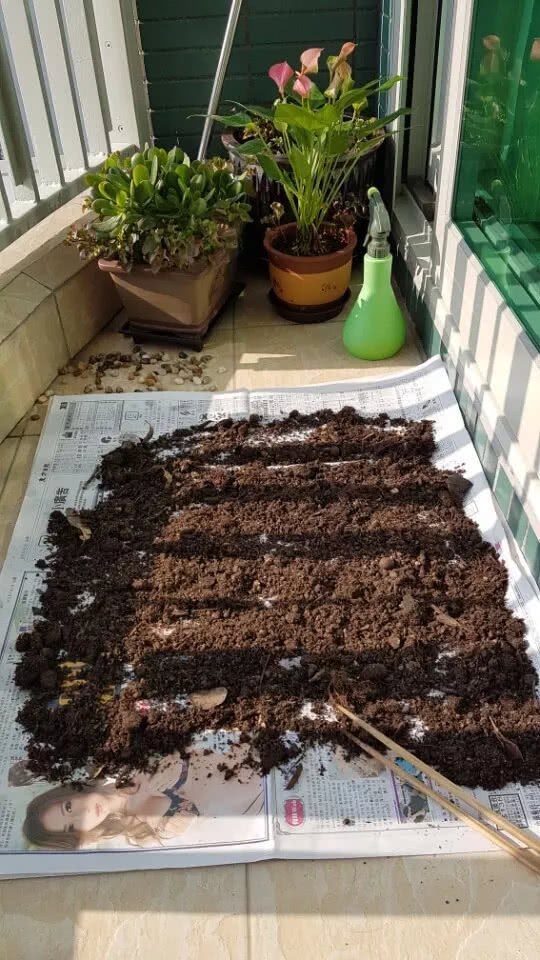
Through the aerated composting method, ordinary kitchen scraps are generally composted for about 1 month, then red worms are added to raise them for 1~2 months, and it becomes worm compost full of worm castings.
For plants, this is simply the very best soil.
Make good use of this soil, and you really can "plant melons and get melons, plant beans and get beans"!
Many gardening friends ask the editor, how good is the nutrient soil bought online?
The editor usually answers: Not that good!
Unless it is imported from abroad and has a clearly stated formula, much of the so-called "nutrient soil" sold on Taobao is something that cannot be clearly explained.
Anyway, with "growing plants," it depends on timing, place and people, and when problems arise, no one dares to conclude that it is definitely a "soil" problem.
So, home gardening uses only a small amount of soil, and the editor still recommends homemade organic fertilizer and soil improvement and regeneration.
Previously the editor talked a lot about the methods and steps for homemade organic fertilizer and soil improvement and regeneration. In this article, let's continue talking about how to make this very best worm compost give maximum effect.
How should worm compost be used?
One: As fertilizer
The worm compost taken out can be used as fertilizer.
Take a flower pot with a diameter of 25 cm as an example. Add 1 small spoonful to the soil, and you can go 2 months without fertilizing; if the cultivation area is 3 sq m, use 1 kg of compost per month, and no additional fertilizing is needed.
Two: As growing soil
Mix worm compost and other media (soil) thoroughly at a ratio of 1:3, and it can be used as potting soil for direct planting.
Three: As pest-prevention liquid
This worm compost can also be used as a pest-prevention liquid, which gardening friends probably never expected!
The method is very simple. Dilute the worm compost with 10 times the amount of water into a liquid, and spray it on vegetable leaves, plant leaves or roots. The plants will grow very densely, and pest damage can be reduced.
Four: As a soil improver
This is the most cost-effective way to use it, and also the method the editor recommends most.
On land not yet planted or left fallow, bury the worm compost into the soil, and at the same time put in some worms, letting the land be naturally restored, which can also improve the problem of soil acidification.
The soil's self-repair ability is very strong. As long as gardening friends give it enough time and nutritional conditions, quietly look forward to it... it can always give you surprises!
Grow on the balcony
All right, that's all for today. If gardening friends still have any questions they hope the editor will answer, leave a message in the comment area below.
I don't know whether the editor explained it clearly and in detail. For gardening friends who did not understand, the editor has specially written an acrostic poem for you. Maybe it is not well written, but it can help you find the editor.
More wonderful and clever articles are all in an acrostic poem:
A gentle breeze lightly strokes, flowers remain ever present
Strolling freely, wandering in spirit on the sunny south mountain
Searching for wonders and seeking cleverness at Bronze Bird Terrace
Planting red and growing green above the blue clouds
--Come and take the challenge: a four-line acrostic-and-tail poem. Connect the first characters + connect the last characters, and you can get an eight-character motto to summon the editor's true self! When you come, remember to say: "Editor, your secret has been cracked by me"!
Growing on the balcony, learning has no end.