Asparagus fern can bear fruit and snake plants can bloom - so it turns out she used this for her plants
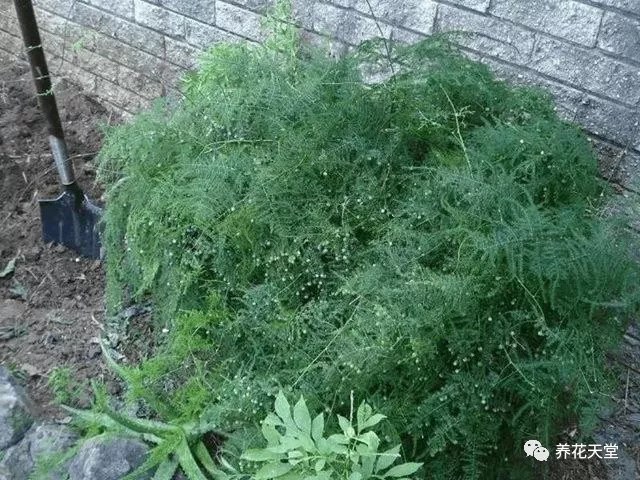
One day my mom came home from her friend's house and was feeling down. After much asking, it turned out the asparagus fern was to blame. The asparagus fern at that auntie's house not only bloomed but also bore fruit. While the asparagus fern my mom grows only had leaves the size of a palm. No wonder mom was unhappy - she had been growing plants for years, yet a beginner was doing better than her. This time mom also learned a lot of methods for growing flowers and potted plants, so here is a brief explanation for beginners to reference.
How to grow potted asparagus fern:
Occasionally use rice water to water the asparagus fern
Before using rice water, a reminder: do not directly use rice water to water plants, otherwise it will make the potting soil compact. The best rice water is fermented rice water. First let the rice water ferment, then dilute it at a ratio of 1 cup of rice water to 10 cups of clear water, and then use it to water the asparagus fern. Rice water is not used every day; it is best to use it 2-3 times a month.
Choose soil culture for growing asparagus fern.
Many households choose water culture for growing asparagus fern. Water culture at home is certainly cleaner, but if you want the plant to grow more and more vigorously, soil culture is still better. Since asparagus fern generally likes to grow in a humid environment, if you find the leaves of your asparagus fern turning yellow, it means the humidity around the asparagus fern is low, so you should actively mist the asparagus fern with water. Therefore, misting and watering the asparagus fern regularly is very important.
Place the asparagus fern in a bright place.
Asparagus fern does not like direct sunlight; simply place it somewhere at home with good light and a bit of scattered sunlight. If the asparagus fern is grown on a balcony, it is best to shade it. As long as everyone pays attention to these three points, I believe the asparagus fern at home will get better and better.
Besides the methods for growing asparagus fern, I also collected care methods for Monstera deliciosa and snake plant, and now I will share them with everyone:
How do you grow Monstera deliciosa so it produces flowers as big as corn cobs?
How to grow Monstera deliciosa:
First, water frequently.
Monstera deliciosa especially loves water. In summer, it basically needs watering once a day. During the dog days of summer, when the weather is too hot, after watering you can mist the leaves of the Monstera deliciosa in the morning and evening. The purpose is to ensure the Monstera deliciosa is in a humid environment and avoid yellowing and wilting leaves caused by lack of water.
Second, occasionally use fermented beer to water the plant.
If you want Monstera deliciosa to bloom and bear fruit quickly, the best method is to let the Monstera deliciosa drink a little beer. Of course, this does not mean directly pouring beer onto the Monstera deliciosa. Instead, take the leftover beer from home, open the lid and let it ferment. Once the alcohol smell has dissipated, dilute it at a ratio of 1 cup of beer to 10 cups of clear water. Use the diluted beer to water the Monstera deliciosa. Fermented beer contains some potassium that plants need for rooting and sprouting, so letting the plant drink a little beer means it will bloom whenever you want it to.
Finally, learn to divide Monstera deliciosa.
When Monstera deliciosa grows too fast, pay attention to the root development of the Monstera deliciosa in the pot. If it is too dense, you must learn to divide the pot, otherwise the flower pot will be full of Monstera deliciosa roots. With no potting soil left, it is difficult to hold the nutrients the plant needs. Therefore, when Monstera deliciosa grows quickly and becomes very large, doing the work of dividing the pot is very necessary.
How can you make a snake plant bloom one string of flowers after another?
How to grow snake plant:
First, water less.
Snake plant is a plant with relatively strong drought tolerance, so normally you do not need to water it much. Otherwise, too much watering will only cause the snake plant to rot at the roots. The way to water a snake plant is to wait until the potting soil is extremely dry before watering. You can use a wooden stick to poke the potting soil and see whether the soil at the very bottom has become dry. If it is dry, water it. If it is not dry and still a little moist, then wait a few days before watering.
Second, fertilize frequently.
If you want the snake plant to bloom with strings of flowers, fertilizer is indispensable. At home, you can bury cooked soybeans or some bean dregs into the soil to serve as organic fertilizer for the snake plant. But everyone needs to note that if the snake plant you grow at home has patterned leaves, it is best to use less nitrogen fertilizer. Instead, you can apply more phosphorus and potassium fertilizer to the plant, so as to ensure the patterned snake plant grows better and better and the patterns do not disappear.
Finally, repot appropriately.
The snake plant has a relatively developed root system, especially when it is growing fast, so it is recommended that in spring and autumn you check whether the roots of the snake plant have grown relatively dense. If they are too dense, quickly repot with fresh soil. When repotting, it is best to add some pine bark to the potting soil, in order to ensure the looseness and air permeability of the potting soil, which helps the snake plant grow without root rot.
The above are the methods shared for growing asparagus fern, snake plant and Monstera deliciosa. I hope they can help everyone take good care of the potted plants at home and let your plants grow healthily.