Succulent leaf cuttings that don't turn to mush: you can have fun with them even in summer, and in half a year you'll have a huge collection
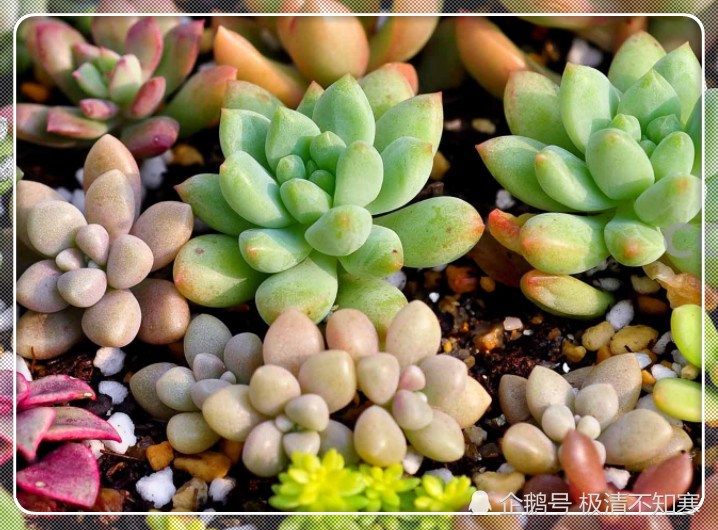
Growing succulents naturally means playing with leaf cuttings. Everyone knows leaf cuttings take easily in spring and autumn, but how to make them take easily in summer is something many beginners certainly don't know. Today I'll tell you what to pay attention to with leaf cuttings.
First, choosing the leaves. We can pick some plump leaves and set them aside, check that they are intact, and place freshly picked leaves in a cool, ventilated, dry spot to wait for the wounds to air-dry before using them. For the soil mix, choose peat soil, with a grit ratio of about 6:4. The soil can be gritty; generally choose perlite and fine sand, plus perlite.
Of course, there is no fixed type or ratio for the grit you choose. In summer, more grit means better water permeability, so you can water often without worrying about waterlogging or mush. After mixing the soil, we can just spray the soil with a spray bottle.
If conditions allow, you can add a little carbendazim and rooting powder to the water, which can speed up rooting and reduce the chance of rot. The soil doesn't need to be too wet; the best is when it holds together when squeezed in the hand and falls apart when released. We can also coat the leaves with carbendazim. When doing leaf cuttings, insert the leaf diagonally into the soil with the back facing down, or you can place it directly with the back down, or bury the whole rosette entirely in the soil.
Here we choose diagonal insertion, which will help new roots quickly contact the soil. We only need to arrange all the leaves at once and put them into the soil; afterward, place them in a cool, ventilated spot and avoid direct strong sunlight. After about 20 days, the leaves will grow new roots all at once, or send out new buds.
During this period, when the soil dries out, just spray with a spray bottle. After about one or two months, new leaves will grow. Summer nights are long, and the most important thing to note is a cool, ventilated spot, which will prevent the leaves from turning to mush. Thanks for watching, see you tomorrow!