Highly toxic, carcinogenic banned pesticide still on sale after 20 years! Bureau of Animal and Plant Health Inspection and Quarantine names three pesticide shops selling counterfeit banned pesticides, and a Sinon chain store is on the list too
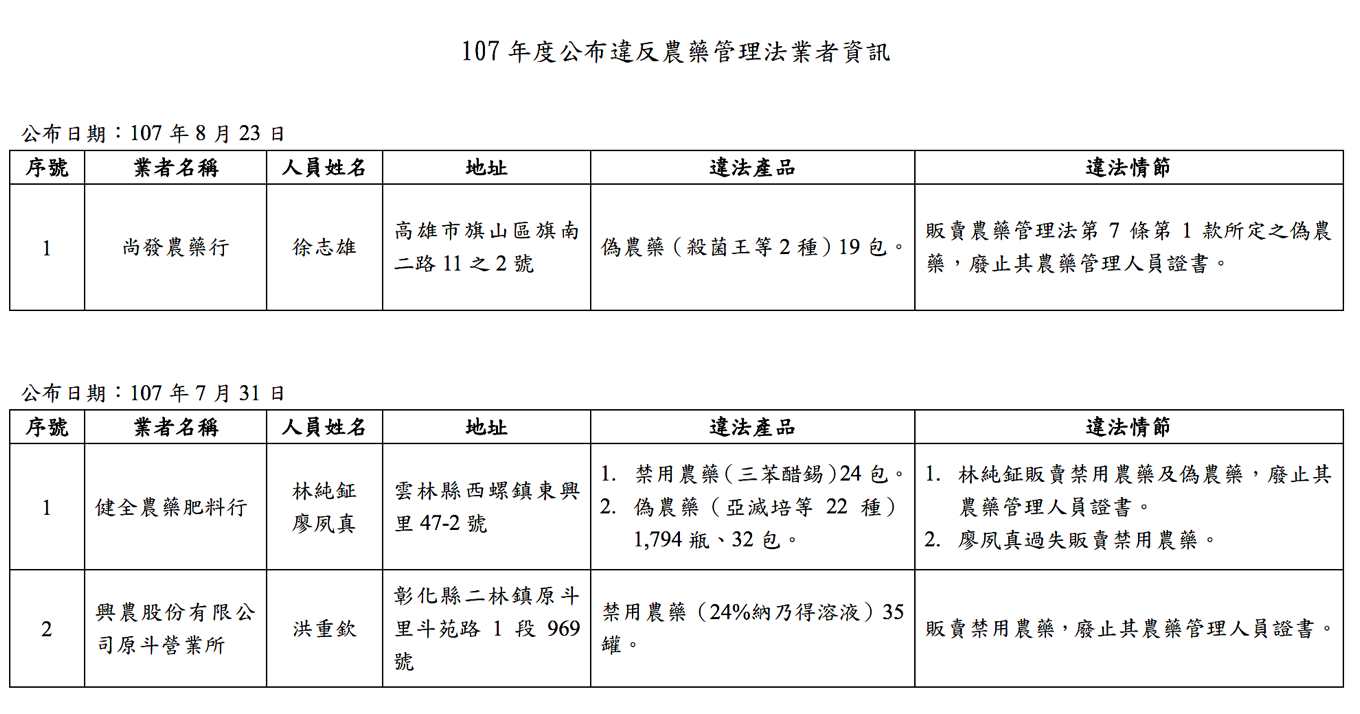
The Bureau of Animal and Plant Health Inspection and Quarantine (abbreviated "BAPHIQ") of the Council of Agriculture has newly caught three pesticide shops selling banned pesticides and counterfeit pesticides, and a chain pesticide shop was unexpectedly among them. For the first time, BAPHIQ published a detailed list with the names and addresses of the violating businesses, hoping to deter operators from breaking the law.
Those named this time for selling banned pesticides are "Jianquan Pesticide Shop" in Xiluo, Yunlin, and the chain pesticide shop "Changhua Yuandou Business Office" under the Sinon Group; in addition, "Shangfa Pesticide Shop" in Qishan, Kaohsiung, was also caught selling two kinds of counterfeit pesticides.
"Inspections were always carried out before, but this is the first time the (violation) list has been published," BAPHIQ said. To strengthen control over pesticide sales, starting this year, whenever a violation of the Pesticide Management Act is confirmed, in addition to revoking the pesticide manager's certificate, the list of violating businesses will also be announced online. The public can go to the BAPHIQ website, enter the "Pesticide Information Service Network" and click "Information Disclosure" to view the data on violating businesses.
BAPHIQ: Names and addresses of violating businesses will all be published
Feng Haidong, Director-General of BAPHIQ, said that with the amendment of the Pesticide Management Act this year, inspection efforts will be strengthened and penalties fully enforced. After investigation confirms that a business has illegally sold banned or counterfeit pesticides, it will be handed over to prosecutors in accordance with the law, the pesticide manager's certificate will be revoked, and no new application may be made within two years. At the same time, the shop name, personnel name, business address and violating products of the offending business will all be published on the BAPHIQ website. In addition, BAPHIQ will join forces with local governments with the goal of inspecting more than 500 pesticide shops a year, "those who should be fined, have their certificates revoked, or be published must all be dealt with thoroughly."
Regarding the problem of pesticide managers being "dysfunctional," Feng explained that in the Regulations Governing the Training and Management of Pesticide Managers revised starting last year, the educational threshold for applicants was raised to a university or junior college level or above (previously high school or vocational school), and the total training hours for personnel were also increased to 120 hours, in the hope of improving the quality of pesticide managers.
In addition, Feng pointed out that paraquat will be banned from sale and use starting February next year, and called on farmers and businesses not to stock up or hoard it any longer; starting next year, paraquat will also be included as one of the key inspection targets in all regions.