Orchids not only have good roots but even better leaves; their robust growth is worth showing off.
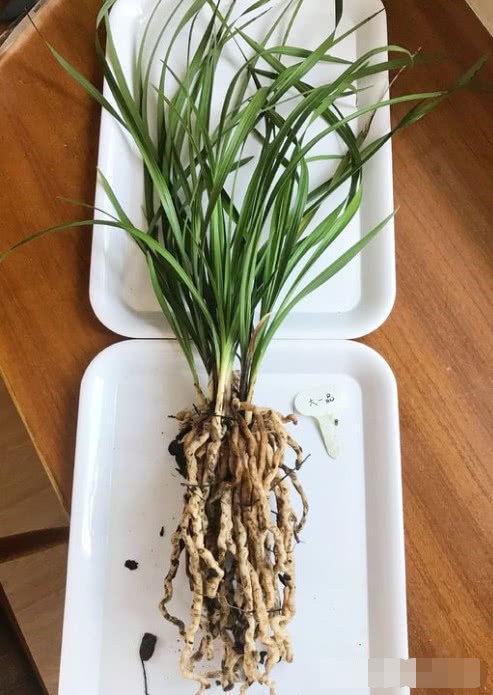
These orchid roots are worth bragging about; not only are the roots good, the leaves are even better.
Orchids have relatively high requirements for water quality. If the water is not clean during care, it can easily lead to the roots being attacked by some bacteria, which will gradually cause root rot.
Note that when caring for orchids, it is best to choose pots made of terracotta or clay pots. This kind of pot has good breathability, which is beneficial to the growth of orchids.
Have any experienced growers ever raised roots like these? Aren't they pleasing to the eye? Its leaves are also very glossy.
The orchid's root system is severely blackened and almost has no vitality. In the picture above, the roots are blackened and the leaves are withered, so it seems reasonable to throw it away. This is a typical case of blackened, rotten orchid roots, and the rot is very severe. Normally, this would definitely be thrown away. I decided to cover it with sphagnum moss to encourage the orchid to grow roots and sprout, and maybe there will be constant surprises.
Orchids are a relatively difficult plant to grow, and they have very high requirements for potting soil. We need potting soil with very good breathability. Generally, when preparing orchid planting medium, we add a large amount of coconut coir, coal cinder, and then some garden soil and leaf mold. This is the basic formula for orchid potting soil.
The environment for growing orchids is very important. The air should be fresh and natural, with few impurities and dust. In a place where orchids are grown with high humidity, there is less dust. Ventilation is the first priority. If you want to keep the leaves fresh and bright, you should often spray water on the leaf surfaces and give the orchid babies a bath, and naturally the orchid leaves will be clean and glossy green.