Clivia is very tough; with consistent care, it is hard to kill even if you try.
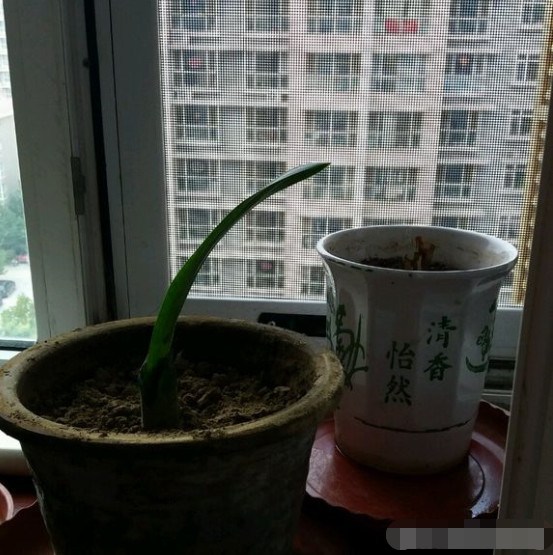
Persistence brings victory; Clivia is very tough, and it is hard to kill.
Three years now, and I have been working at it all along. I am grateful that my clivia has also kept going, with one leaf still left. During this time I changed the soil more than ten times (pine needles and leaf mold were never used), but in the end root rot kept plaguing me. This time I switched to pure garden soil, and there is a bit of hope: a new leaf came out, but I noticed signs of rot on the bulb again. There is still a chance, and I can still try two more times. I hope this clivia is the last one that dies while I am practicing my skills. I still have some peanut shells, bark, stones, and nutrient soil; after work I will keep changing the soil. As long as the clivia's life continues, I must do my utmost to save it. Masters, please do not laugh; I think this is what experience is.
Friends who grow clivia all know that a clivia with a stuck flower arrow is very ugly, and once a clivia has a stuck arrow, it is very likely to have a stuck arrow every year. We must prevent this from happening. Watering flowers with beer can do a very good job of preventing a stuck flower arrow in clivia!
In summer, avoid direct sun exposure, otherwise the leaves will be scorched; then in autumn, avoid rain and water spraying, otherwise the plant will develop root rot and heart rot. If the leaves rot, they can be cut off, but if you want to check whether the clivia has root rot, you can take a stick and gently pry open the soil near the roots, looking all the way down to the roots. If the roots have already turned black and rotted, take the whole plant out of the pot and wash it with clean water.
Fertilizing clivia is done in stages; it is not a case of one formula working for everything, that is impossible. Start counting from after the flowering period. After the flowers fade, if you are not keeping seeds from the clivia, first give the clivia a multi-element fertilizer plus potassium fertilizer to replenish the nutrients consumed by flowering. Everyone knows that flowering and fruiting consume the most nutrients. If you do not replenish after the flowers fade, or if the nutrient content in the soil is too low, the leaves will become smaller, thinner, and softer.