How do you grow Haworthia cooperi so it looks beautiful? These care tips are worth knowing
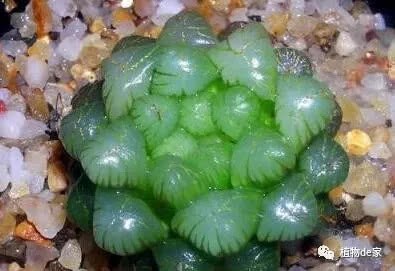
Once you fall into the trap of growing succulents, you will definitely end up growing one kind of succulent, and that is Haworthia cooperi. Haworthia cooperi belongs to the genus Haworthia in the family Asphodelaceae. It is a light-loving plant, but it does not like direct light, and it is a plant that likes a cool and humid environment. Actually, Haworthia cooperi is not very difficult to grow, and it is even easier to grow than some Crassulaceae succulents. Moreover, Haworthia cooperi does not tend to get bugs, so when growing Haworthia cooperi you do not need to worry at all about the threat of pests such as mealybugs and red spider mites.
Haworthia cooperi looks very delicate, small and cute. In terms of varieties, it is also very rich, and it is a very popular succulent variety. When the succulent is small, it mainly grows as a single plant, and as it gradually keeps growing it will become a cluster. Its leaves are actually crystal clear, showing a transparent or semi-transparent appearance. The flowers that Haworthia cooperi produces are small white flowers. Like most succulent varieties, a large proportion of Haworthia cooperi varieties enter a dormant state in summer and winter. So when caring for Haworthia cooperi in these seasons you need to pay special attention, because at this time the succulent's roots are not absorbing water from the soil well, so the amount of water given normally must be reduced accordingly. Especially in the hot and stuffy summer, which is simply the "season of death" for succulents, at this time you can cut off watering entirely.
As for the characteristics of Haworthia cooperi in each season, during the high temperatures of summer Haworthia cooperi will be in a dormant or semi-dormant state. At this time Haworthia cooperi grows very slowly, so it is best to place Haworthia cooperi in a ventilated and shady spot for care. In addition, at this time you must pay attention to controlling water, avoid exposing Haworthia cooperi to the sun, and do not fertilize it. Wait until autumn and then carry out normal care and management. In winter, when the nighttime temperature is above 8 degrees and the daytime temperature is above 15 degrees, the plant can still continue to grow, and you can water it normally. The lowest temperature Haworthia cooperi can withstand is 3 to 5 degrees, and sometimes even 0 degrees is fine, but if Haworthia cooperi is always kept in an environment below 5 degrees, the leaves may show signs of frost damage. So if you want Haworthia cooperi to maintain a good state, it is best to place Haworthia cooperi in an environment above 5 degrees for growing.
First, let's talk about the root system of Haworthia cooperi and the choice of potting soil. Haworthia cooperi actually has a relatively large number of roots, and they are also rather thick and strong. So in order for the roots of Haworthia cooperi to develop better, when planting Haworthia cooperi and choosing a container, try to choose a container with a depth of about 15 cm. In addition, during the growing season of Haworthia cooperi, you can trim the root system in good time. When choosing potting soil, it is best to choose according to the growth and development of Haworthia cooperi, because Haworthia cooperi grows and develops relatively slowly, and its rooting speed is not very fast either. So when choosing potting soil we should preferably appropriately increase the proportion of peat soil. The benefit of doing this is that it can promote the growth of the plant. So what proportion of peat soil is best? It is best if it can make up 60 to 70 percent.
Now let's talk about light. When Haworthia cooperi is in its growing period, you must maintain sufficient light. If the growing environment of Haworthia cooperi lacks sunlight, the consequence is that the plant will look loose and floppy, and the leaves will not only fail to be compact but will also become thin and elongated. But the light also must not be too strong. If the light on the plant is too strong, it is also not good for the growth of Haworthia cooperi. The consequence is that it easily causes poor leaf growth in Haworthia cooperi, and the color turns reddish-brown. It may even directly scorch the leaves, leaving scars on the leaves of Haworthia cooperi. So it is best to place Haworthia cooperi in a semi-shady spot to grow. This way the state of the leaves will be better, and the transparency will also be very good.
As for some matters concerning watering Haworthia cooperi, the first principle is "do not water if not dry, and water thoroughly when you do water." This point actually also applies to some other varieties of succulents. In addition, you also need to note that you must absolutely avoid waterlogging, or being rained on for a long time when grown outdoors, as this makes root rot especially likely. Also, Haworthia cooperi is not suited to long-term drought. Although Haworthia cooperi will not die, it will look very ugly, the leaves will become shriveled, and the color will look dull and lusterless. Actually, Haworthia cooperi prefers an environment with relatively higher air humidity, so when we notice that the air is dry, we can spray a bit more water into the air around Haworthia cooperi to increase the humidity in the air.
Then let's talk about fertilizing. During the growing season, you can fertilize Haworthia cooperi once a month. It is best to apply some rotted, diluted liquid fertilizer or some compound fertilizer high in phosphorus and potassium and low in nitrogen. Many people like to fertilize Haworthia cooperi that has just been potted or those that look relatively weak in growth, but actually none of this is necessary. In addition, everyone also needs to note that when the summer temperature is relatively high and when the winter temperature is very low, you must not fertilize. Also, when choosing the time to fertilize, try to choose when the weather is clear, and it can be in the morning or in the evening of the day.
Finally, let's talk about the issue of enclosed growing. Actually, if you want the succulent to grow crystal clear, you can use enclosed growing. Especially now that it is already autumn, autumn is very suitable for enclosed growing. If you plan to do enclosed growing, it is best to choose to do it one or two days after watering Haworthia cooperi. It is recommended to choose a semi-enclosed growing method. Remember to open the ventilation openings of the enclosed growing box and keep it ventilated. When daytime comes, open the enclosed growing cover. Or you can also cover it with a plastic cup. It is best to make a hole in it, as this will help with ventilation. Because the enclosed growing environment is a high-humidity environment, it is very easy for bacteria to breed, so you must not do enclosed growing for a long time, otherwise the resistance of the succulent will decline. So once you see that the overall state of Haworthia cooperi is gradually improving, stop the enclosed growing. In addition, you must remember that you cannot do enclosed growing in summer, otherwise the excessively high temperature will cause the death of Haworthia cooperi.
There are also a few more things I want to tell everyone. A newly bought Haworthia cooperi will have a lot of roots. Do not think that more roots is good. When we plant it, we must promptly trim off these excess roots. Also, what should you do if Haworthia cooperi blooms? Actually, if Haworthia cooperi blooms, you can pick the flowers off. The small flowers of Haworthia cooperi do not have much ornamental value, and if you keep the small flowers they easily compete with the plant for nutrients, which is not good for the beautiful growth of Haworthia cooperi. Alright, the above are some tips and methods about Haworthia cooperi care that the editor has shared with everyone. Once you understand these, your Haworthia cooperi will grow more and more beautiful and more and more lovely.