What are the meanings and symbolism of the crabapple flower? Read this one article to understand
I. Meanings
1. Jade Hall Wealth and Honor
The "tang" character of the crabapple flower is a homophone of "tang" (hall). Pairing it with magnolia, peony, and osmanthus, taking the "yu" (jade) character of magnolia, the flower language of peony meaning "abundance," and the flower language of osmanthus meaning "preciousness," forms "jade hall wealth and honor." These flowers all represent beauty and wealth, and combined together they carry the meaning of abundance and surplus. When visiting elders or superiors, one can give a bouquet tied together from these flowers.
2. Good News of Longevity Filling the Hall
Pairing it with the chrysanthemum, which represents longevity, and the butterfly, which delivers good news, symbolizes "good news of longevity filling the hall."
3. Five Generations Under One Roof
The persimmon is homophonous with "generation," so placing five persimmons together with it symbolizes "five generations under one roof."
II. Symbolism
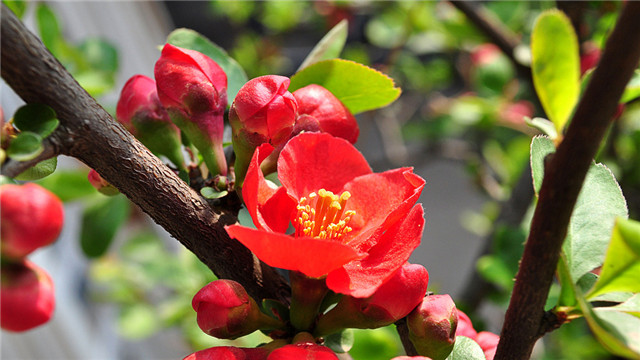
Its flower shape is very charming, just like the shy face of a young woman. In ancient times, it was used in poetry to represent a beautiful girl. Its flower language is bitter love and parting sorrow. It represents the parting feelings of young men and women. There is a poem as evidence: "From now on, to whom shall I tell my feelings? A heart full of spring is entrusted to the crabapple flower." This means that in ancient times, feudal ethics restrained women, requiring them to stay within the inner quarters and not go out. With no place to tell the flowers in their hearts about their beloved, they could only tell the crabapple flower. Therefore, it represents the bitter love between young men and women, and it can also be used for long-distance relationships today.