What to Do When Orchid Leaf Tips Turn Black: Causes and Solutions
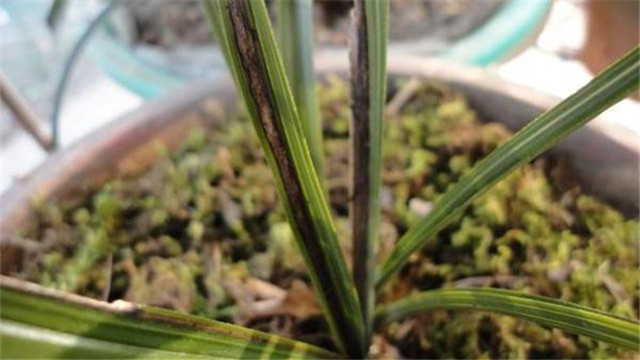
1. Adjust the Temperature
Cause: Orchids are not cold-tolerant. If hit by low temperatures, their roots and stems stop functioning and the leaf tips turn black.
Solution: In winter, move it to a warm place to avoid cold damage. Do not rush to move it back outside in spring either, because early spring temperatures are unstable and cold spells are frequent; wait until the temperature is completely stable before moving it outdoors.
2. Provide Proper Shade
Cause: It does not like strong light. If exposed to direct strong sunlight, the leaf tips will turn black.
Solution: It needs to receive diffused light, and be shaded appropriately when the sun is strong at midday. Winter daylight is relatively short and the sun is not intense, so no shading is needed, and it can receive all-day sunlight.
3. Water Reasonably
Cause: Orchids are not waterlogging-tolerant. Too much watering easily causes water to accumulate in the potting soil, which affects root respiration and makes the leaf tips turn black.
Solution: Do not water too much. When temperatures are high, water once a day; when temperatures are low, water once every two days.
4. Reduce Fertilizing
Cause: Orchids do not like strong fertilizer. Strong fertilizer easily burns the roots, causing health problems, and the leaf tips turn black as a result.
Solution: Fertilize with a dilute fertilizer, and when fertilizing, stay about ten cm away from the roots so they will not be burned. When watering, pour the water onto the fertilizer so the water carries the fertilizer and spreads it out, making it easier for the plant to absorb.