These 10 types of spider plants have been seen by 800 million Chinese people, but do you really know how to care for them?
Golden-edge and silver-edge spider plants
Features: The leaf edges have thin golden or silver margins.
Care tips:
Golden edge, silver edge, whatever you call them, they are actually hard to tell apart when growing them. Give them more sun and less fertilizer, and the golden edge will be more obvious. On the contrary, if grown in a shady spot and given lots of fertilizer, the golden edge will fade to silver, and the silver edge will fade to green.
Golden-center and silver-center spider plants
Features: The leaf edges are green, and the centers are golden or silver.
Care tips:
The so-called golden-center and silver-center types are actually just variegated states of spider plants. These two are harder to grow, so they should be placed in bright, indirect light and cared for carefully, and misted in time to keep humidity up. Do not water too often, otherwise the color will gradually disappear.
Green-leaf spider plant
Features: The leaves are entirely green with no patterns.
Care tips:
If a green-leaf spider plant is not grown well, it looks like a pot of grass. Usually, pay attention to misting the leaves more to avoid dry tips and yellowing. It is best to place it in a spot with scattered sunlight, not too dark; the brighter it is, the more vigorous the growth.
Curly-leaf spider plant
Features: The leaves naturally have a "wavy curl."
Care tips:
It is best to grow several curly-leaf spider plants together, which gives an "explosion of curls" effect. After misting, make sure there is good ventilation, because its leaves easily curl together and water tends to collect on the leaves. If it does not evaporate in time, rot can easily occur.
Pearl spider plant
Features: It is divided into two types, "Buddha beads" and "lover's tears," and the two have different bead shapes.
Care tips:
Both are succulents, so absolutely do not water too much. Especially when the temperature is high, you only need shade plus morning misting. After autumn begins, when the temperature drops below 23°C, consider adding a little nutrient solution or fermented rice water.
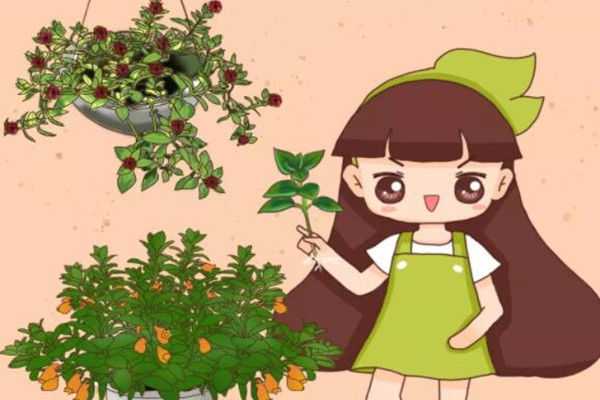
Peony spider plant
Features: Thick leaves and small red multi-petaled flowers.
Care tips:
The peony spider plant is the most easygoing spider plant. It roots as soon as it is stuck in soil. As long as you do not water too much, it stays evergreen through all four seasons and can bloom several times a year. For flower lovers still waiting for blooms, remember to pinch it back and give it more sun, and it will immediately burst into a full pot of flowers.
Goldfish spider plant
Features: Glossy green leaves and flowers that look like little goldfish.
Care tips:
The goldfish spider plant likes sunlight, and more sun can encourage it to bloom. When watering, also water thoroughly in one go, and do not splash water on the leaves, as they rot easily. In autumn the air is dry, so you can sprinkle water around it to keep humidity up, and the leaves will surely be shiny and bright.
Lipstick spider plant
Features: The flowers look like lipstick, the leaves are opposite, and it trails easily.
Care tips:
The lipstick spider plant is very suitable for hanging, and it grows faster when hung up. However, be careful not to expose it to sunlight for too long; 2-3 hours of sun each day is enough, so it can bloom indoors or on a north-facing balcony too.