How to grow an Epiphyllum oxypetalum so it does not die easily? Master 3 planting and care tips
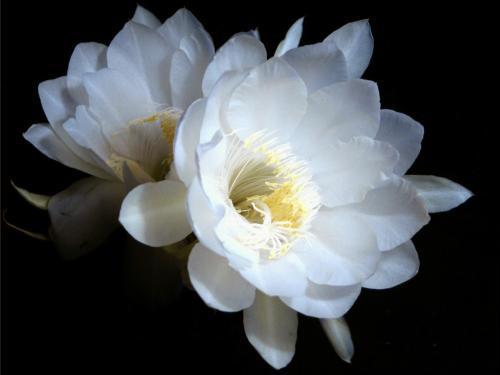
Epiphyllum oxypetalum is often also called qionghua. Because its blooming time is very short, usually only a few hours, people also use the idiom "a fleeting show of the epiphyllum" to describe its momentary beauty. As a famous ornamental plant, it is precisely because its blooming is so rare that everyone has a strong interest in it, and wanting to see an Epiphyllum oxypetalum bloom is no easy matter. So how exactly should it be cultivated to be more suitable and to make it bloom easily?
I. Planting Epiphyllum oxypetalum
Cutting propagation is the most common method for cultivating Epiphyllum oxypetalum, and around May each year is usually the most suitable time. First, from a vigorously growing Epiphyllum oxypetalum, cut off its tender green stems as the main material for cuttings. Generally, the length is often chosen between 12-15 cm, and each Epiphyllum oxypetalum branch can be divided into two to three nodes.
Unlike the cuttings of most plants, the leaves on the cuttings selected for Epiphyllum oxypetalum are very particular. You do not choose ordinary tender leaves, but rather branches attached to old leaves. At the same time, it is best that the leaf veins are relatively inconspicuous, and the leaves whose growth period has already passed, with a size usually medium.
In order to increase the survival rate of Epiphyllum oxypetalum cuttings, we generally do not use the "straight insertion" method for cuttings, but instead choose "oblique insertion" or "shallow insertion", so that more of the branch is exposed to the air, and the wound on the branch heals faster and then takes root and sprouts.
A potted plant right after cuttings should not grow under light conditions, otherwise the branches are prone to shriveling, reducing the success rate of cuttings. After cuttings are finished, at regular intervals, the potted plant needs to be misted with water. The environment should not become dry, otherwise it will have a relatively large impact on the cuttings.
II. Care of Epiphyllum oxypetalum
1. Soil
The growth of Epiphyllum oxypetalum has relatively high requirements for soil quality. It usually needs to grow in relatively fertile and well-draining humus soil or sandy soil, and there are also certain requirements for drainage. When choosing soil, avoid using soil that is too sticky as much as possible. This kind of soil often has poor air permeability and has a bad effect on the growth of Epiphyllum oxypetalum.
2. Light and temperature
During the good growing period of Epiphyllum oxypetalum, sufficient light is indispensable. Under normal circumstances, Epiphyllum oxypetalum is not suitable for growing under direct sunlight, but rather receives an appropriate amount of diffused light or grows in a self-built shed greenhouse. Too strong light has an irreversible effect on Epiphyllum oxypetalum, often leading to leggy branches and withered leaves.
Whenever summer arrives, sufficient shading preparations must be made for potted Epiphyllum oxypetalum, while in autumn and winter it can receive full sunlight, but the ambient temperature for its growth must be kept above 10°C; if the ambient temperature is too low, the plant will often suffer frost damage.
3. Watering and fertilizing
Epiphyllum oxypetalum under daily management does not need too much water. It is usually watered once about every 10 days, and in winter and spring the amount of watering is even less, so it can be watered about once every half a month. In summer, the temperature is generally higher, and the water demand of Epiphyllum oxypetalum is also greater, so watering 2 times per week is appropriate. If water accumulates in the potted plant, the plant is prone to root rot and other diseases, which has a relatively large impact on its growth.
Spring and summer are the peak growing seasons for Epiphyllum oxypetalum, so the potted plant needs to be top-dressed once a week. When fertilizing, organic fertilizer must be thoroughly diluted with clean water. If it is applied directly to the soil, not only is it difficult for the plant to absorb, but the plant may also suffer fertilizer burn.