Water Golden-edged Daphne this way, and its fragrance will carry far and wide when it blooms
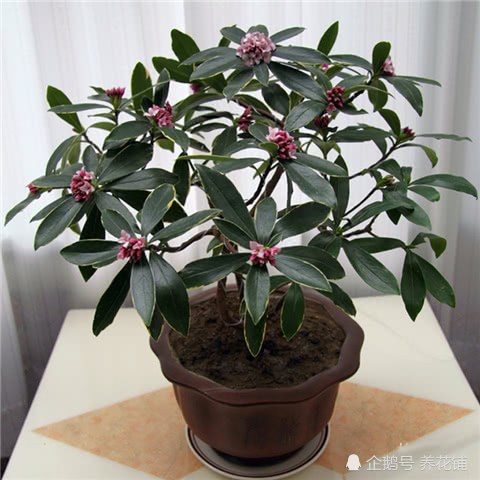
Golden-edged Daphne (Daphne odora 'Aureomarginata') has pure, lovely flowers and a rich fragrance. There is a saying: "The peony is the most beautiful and fragrant of flowers, but among daphnes, the golden-edged one is the finest." It is a common potted flowering plant in homes. To grow it well, you need to master the watering method. Below, we introduce the watering method for Golden-edged Daphne!
Watering tips for Golden-edged Daphne:
(1). Watering in spring and summer
In spring, water thoroughly once before budding. Watering should follow the principle of "dry-wet cycle," watering only after the potting soil has dried out completely. In summer, the plant enters a semi-dormant state. After the soil dries out, water thoroughly, but otherwise keep the potting soil on the dry side. You need to maintain high air humidity, frequently spraying the leaves with water to keep the air humid. The water used for spraying is best "aged water," that is, tap water that has been left in the sun for a period of time. Generally, spray water twice a day.
(2). Watering in autumn and winter
In autumn, keep the potting soil in a semi-dry state, reduce watering frequency, and improve the plant's cold resistance, which helps the plant overwinter safely. In winter, it stops growing and enters dormancy. The potting soil should be on the dry side, and watering should be minimal. Strictly control moisture; water as little as possible or not at all.
(3). Watering during the flowering period
During the flowering period of Golden-edged Daphne, reduce watering and simply keep the potting soil slightly on the dry side. Do not spray water on the leaves and flowers, otherwise the flowers will fade and drop early. At the same time, controlling watering can extend the flowering period of Golden-edged Daphne.
(4). Precautions
Golden-edged Daphne has fleshy roots and leathery leaves, with weak transpiration, so it is not suited to growing in a moist soil environment. When watering, control the amount of water; do not water too much, as waterlogging will cause root rot and, in severe cases, death. Control the frequency of watering, and water only when the soil is dry enough. If too much water is given, drain the excess water promptly and place the plant in a well-ventilated spot for care, so the water evaporates in time.