This vegetable sold by a lady by the roadside can treat stomach pain; it is nutritious and 80 percent of people have never eaten it
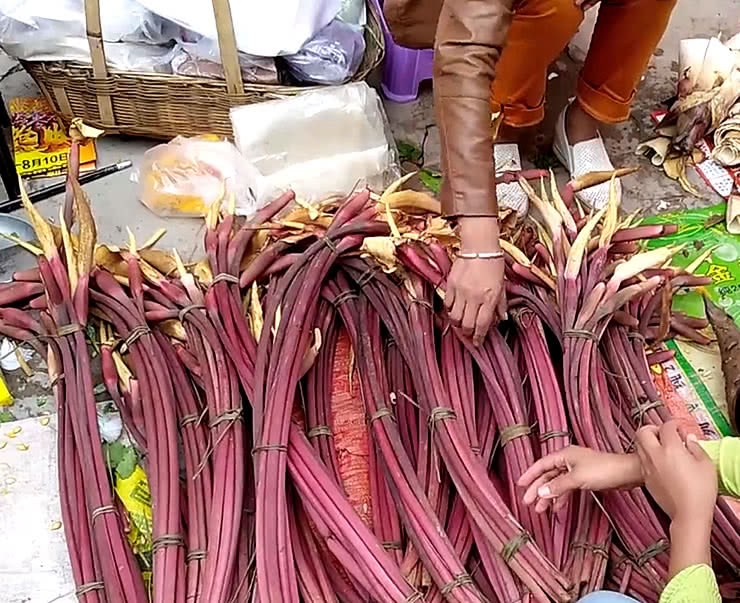
Walking along the roadside, I saw many simple vegetable stalls set up, and one lady's stall caught my attention. I saw red, long stalks that looked very much like taro stalks, but the taro stalks I had seen were generally green, and I had never seen this red kind. And from childhood to adulthood, I had actually never eaten taro stalks either.
The lady told me this is called taro flower, also known as taro sprout flower, which is the flower bud of the taro. After removing the tougher fibers and the flower buds on top, it can be stir-fried and eaten directly. It is nutritious, and in rural areas it is mainly used to treat stomach pain, with very good results.
It turns out that taro flower really is a kind of Chinese herbal medicine, and it can also be used as food. It is mainly distributed in the southern regions of our country; for example, there are many in Yunnan, and many people sell it in markets. The stem tuber of the taro flower is rich in nutrients such as protein, calcium, phosphorus, iron and vitamins, and its fluorine content is relatively high, which can also protect teeth.
This vegetable, which is both medicine and food, not only can enhance the human body's immune function, but can also be eaten as an anti-tumor medicinal dish, delicious and healthy.
We have eaten taro, but few people have eaten this kind of taro flower. In rural areas, taro is generally dug up to eat, and the taro stalks and flowers are all cut off and thrown away. In fact, taro flower has a particularly rich fragrance. Like taro stalks, it contains irritating substances, and if it is not handled well when eaten, it will make your tongue very numb!
The taro flower blooms among the taro leaves, with yellow flowers, but taro blooming is generally rarely seen. It must meet certain high-temperature conditions to bloom, and a taro that has bloomed absorbs nutrients from the taro stem, so taro yield will not be too high.