2 shade-tolerant flowers that bloom without sunlight, and a single leaf can grow into a whole patch
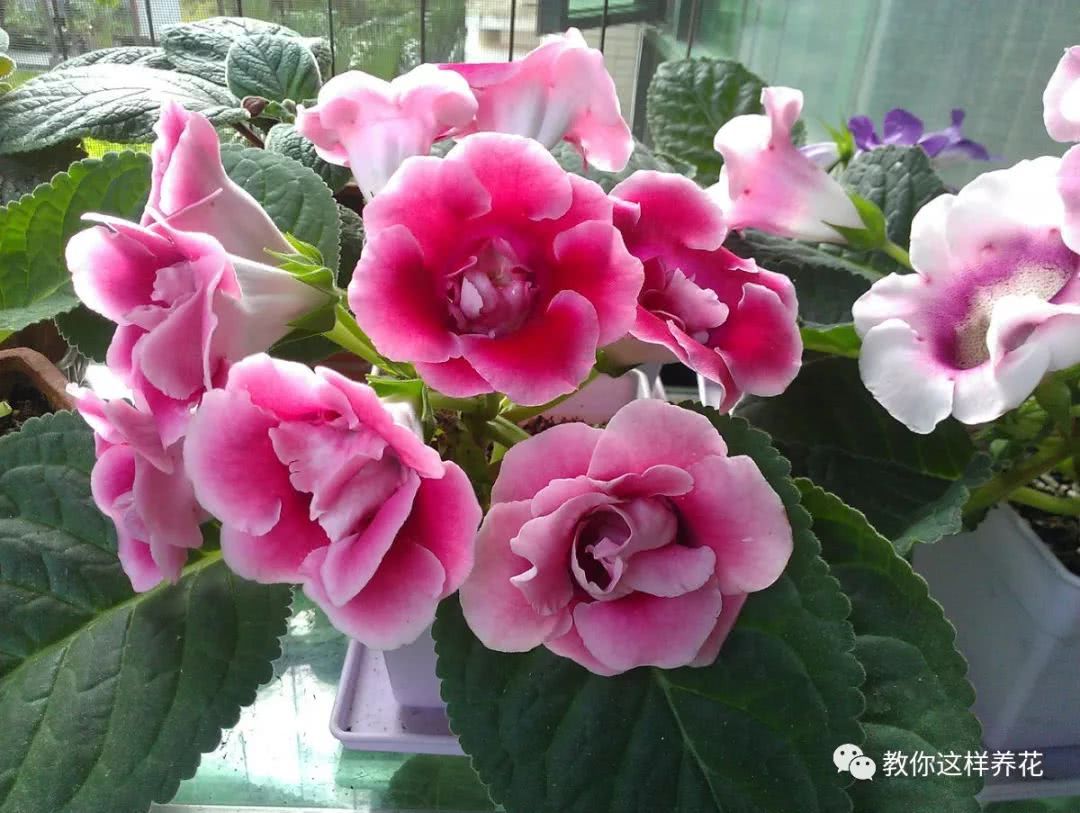
Many gardening friends ask, if the light at home is poor but you really want to grow some flowering plants, what should you do? It would be best if they are also tough and easy to care for, not easy to die! In fact, Gloxinia and African Violet are two flowers that fit gardeners' requirements very well, tough and easy to grow, shade-tolerant and easy to bloom, and they can also be propagated in large numbers by leaf cuttings. Let's take a look!
“
Shade-tolerant and tough
”
-Gloxinia-
Gloxinia, also called "luoxueni", has lush green leaves, large flowers and bright colors, with rich colors including red, white, purple-blue, pink and so on. Its flowering period lasts up to 7 months, and each plant can produce dozens of flowers, making it an excellent indoor flower. Moreover, Gloxinia has very low light requirements and is a very good indoor flowering plant. A single flower can last more than 20 days without fading, and it looks especially beautiful.
Gloxinia needs loose, fertile humus soil and likes a warm, humid environment. For regular watering, water when the soil is dry and let it dry out between waterings. Water in moderation and do not let water accumulate, as too much can easily cause the tuber to rot and the leaves to turn yellow. Gloxinia leaves have fine hairs, so you can water by the immersion method to prevent water from getting on the leaves and causing leaf rot.
The suitable growing temperature for Gloxinia is 18-25°C. It is not very tolerant of heat or cold, so pay attention to keeping it warm in winter and to ventilation and cooling in summer. When the temperature exceeds 30°C in summer or drops below 5°C in winter, it will enter semi-dormancy. In this case, you can let the potting soil stay appropriately on the dry side to help it get through the dormancy period.
Gloxinia does not have high light requirements; it is fine to care for it in an environment with scattered light. It is fairly shade-tolerant, and direct strong light is not allowed, otherwise the leaves can easily turn yellow or develop brown spots.
If you want more flowers, when potting you can apply enough base fertilizer at the bottom of the pot, mainly well-rotted organic fertilizer. Normally you can fertilize about once every 10 days, and after flower buds form, you should also add phosphorus and potassium fertilizer. Be careful not to pour fertilizer water on the leaves either, otherwise the leaves can easily rot.
After Gloxinia finishes flowering, choose healthy leaves and take them from the base together with the petiole. Cut off half of the leaf, insert it diagonally into a medium of perlite or vermiculite, bury one third of the leaf, water thoroughly, and cover with a plastic bag to maintain relatively high air humidity. In about 20 days, small seedlings can grow, and then they can be moved to pots.
-African Violet-
African Violet, also called African violet, is a short plant with a long flowering period and can bloom in all four seasons. Its flower shape is elegant and graceful, and its flower colors are brilliant and colorful, making it a very good indoor flower. African Violet is fairly shade-tolerant and does not need direct sunlight. Care is also relatively simple. As long as the temperature is suitable, it can bloom in all four seasons, and a single flower can last up to 2 months, so it is deeply loved by gardeners.
African Violet likes a warm, humid and semi-shady environment and needs loose, breathable, well-drained soil. You can use a mix of leaf mold, peat soil and sand. The suitable growing temperature is 16-24°C. When it exceeds 30°C in summer, growth slows down. In winter it must not drop below 5°C, otherwise it is easily damaged by freezing.
African Violet likes a semi-shady environment and is fairly shade-tolerant. Normally it can be cared for in a brightly lit environment. In summer, pay attention to shading and cooling, and direct strong light is not allowed, otherwise the leaves easily turn yellow and dry up. You can spray a little water around the flowerpot to cool it down. In winter, it can be placed on a sunny windowsill, which helps flowering.
African Violet leaves have soft fine hairs, so when watering, be careful not to pour water on the leaves. You can use the immersion method to water. African Violet likes a humid environment and is also fairly tolerant of moisture. During the growing period, you can keep the potting soil moist, watering when dry and letting it dry between waterings. During high temperatures in summer and low temperatures in winter, it is better to keep it on the dry side.
During the growing period, apply a diluted well-rotted liquid fertilizer or compound fertilizer once every 10 days. After flower buds form, you should also add phosphorus and potassium fertilizer. Be careful not to apply too much nitrogen fertilizer, otherwise it will only grow leaves and not bloom.
African Violet can be propagated by leaf cuttings. After flowering, choose healthy leaves, cut them off leaving 2 cm of petiole, let them dry slightly, insert them into plain sand, vermiculite or perlite, and maintain relatively high air humidity. In about 20 days they can take root, after 1 month young seedlings grow, and after about 2 months they can be moved to pots.
They can bloom very well even without sunlight
Gloxinia and African Violet are becoming more and more popular among gardeners
Many people are already growing them
Why not give them a try too
Show this to gardening friends who need it!