Solar-powered seed drill: zero carbon, no fuel; sit back without sun exposure and cultivate four hectares a day
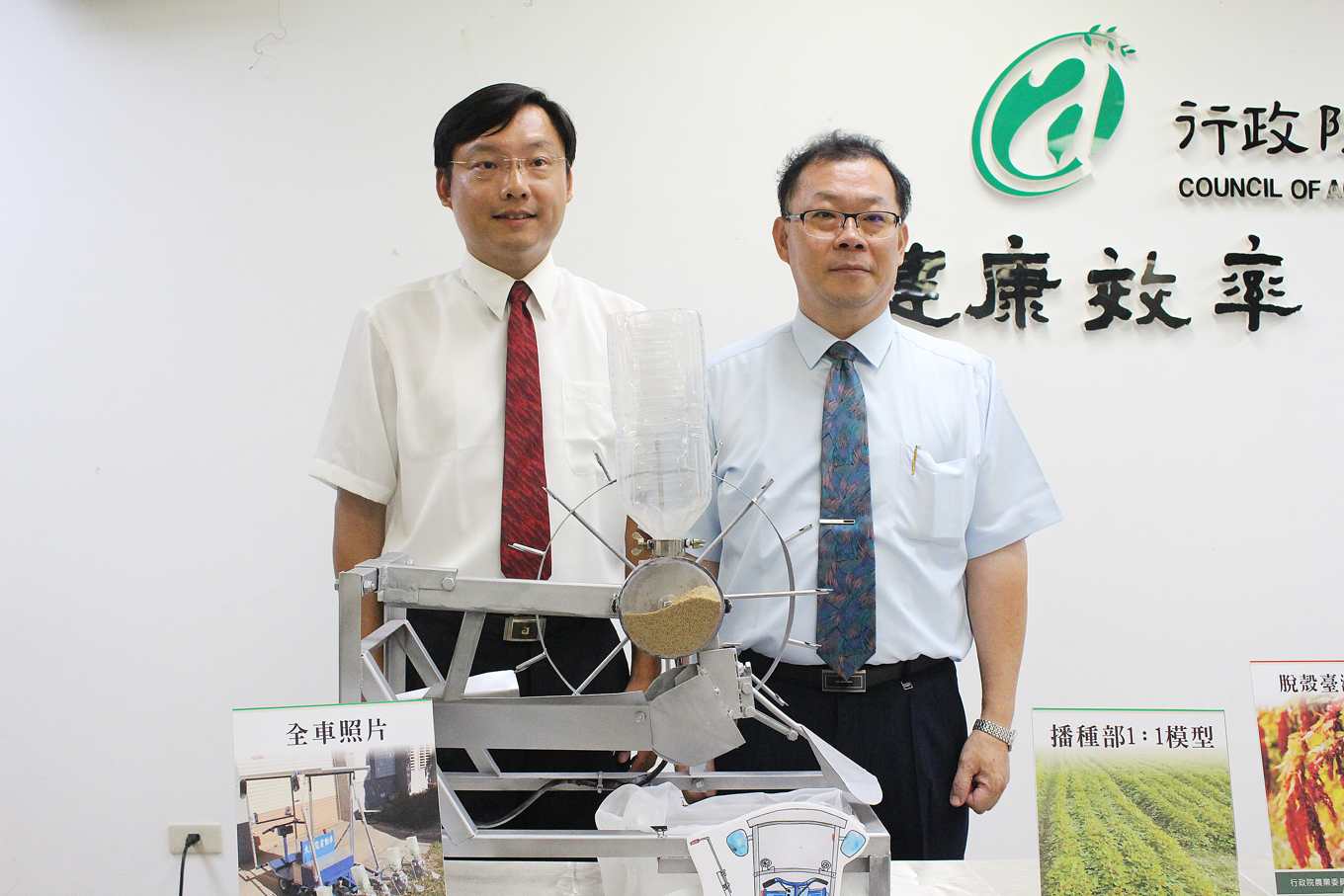
Taiwan quinoa (red quinoa) has seen promising prices in recent years, and the planting area in Taitung has continued to increase, but the problem of an aging tribal population has yet to be resolved. The Taitung Agricultural Improvement Station of the Council of Agriculture spent more than a year developing Taiwan's first solar-powered ride-on seeder, suitable for Taiwan quinoa and millet, and also usable for cruciferous crops such as cabbage. It can save 15 times the manpower, cultivate four hectares in eight hours a day, and relies only on solar power without consuming any fuel.
Saves 15 times the manpower, seedlings grow uniformly
Chen Yuchu, deputy director of the Taitung Agricultural Improvement Station, explained that if Taiwan quinoa and millet are broadcast sown by hand, each hectare takes five hours to complete, and a large amount of seed is needed. The subsequent field plants grow in messy positions, greatly increasing the cost of weeding; if manual row sowing is used, each hectare takes 30 hours, and labor costs are high.
"The newly developed machine takes two hours per hectare, replacing manpower at 15 times the speed." Chen further stated that the seeds are uniform and consistent, and the seedlings grow neatly. The amount of seed used is only 20% of broadcast sowing and 30% of row sowing, which not only alleviates the rural labor shortage but also provides great support for future industry development.
Research results show that the seeder can charge in the sun for 4 to 5 hours, which is enough to sow five fen of land. Chen said that if the machine charges in the sun every day, it can sow nearly 20 hectares in a month. At the same time, the seeder is equipped with labor-saving handles, so elderly people and women can easily operate the machine.
Expected to go on the market next year, each unit priced within 150,000 yuan
At present, the Taitung Agricultural Improvement Station has already contacted manufacturers, hoping to authorize operators to produce through technology transfer, and if all goes smoothly, it can go on the market next year. As for the market price, Chen Yuchu explained that the prototype costs about 200,000, but the price will drop further after large-scale production, and the future price is hoped to be within 150,000. "If based on manual demand of 30 hours per hectare and the seeder at two hours per hectare, then it can pay for itself within one year." However, calculated on the basis of 40 hectares and two crop seasons, it would take one year to pay for itself, so joint purchase by production and marketing groups is more suitable.
Can ordinary farmers accept this price? Zeng Xiang'en explained that farmers can purchase and use it together through production and marketing groups and cooperatives. "If one person pays 20,000 to 30,000, it can be used by the whole tribe, and farmers can accept that." He emphasized that commercial seeders cost about 40,000-plus, "but they need manpower to push them. What we newly developed is just sitting on it and driving, and it can sow four rows at a time. The solar panels provide shade, and farmers do not need to be exposed to the sun."
Chen Yuchu said that he not only wants to take some responsibility for climate change, but also because many indigenous tribes in Taitung are mostly elderly. To solve the lack of manpower, this solar-powered ride-on seeder was developed, hoping to promote the industrial development of Taitung's indigenous tribes and improve the labor shortage problem.