Reasonable water control during the flowering period of Cymbidium goeringii is the only way to appreciate its stretched-out, unusual, and exquisitely immortal bearing
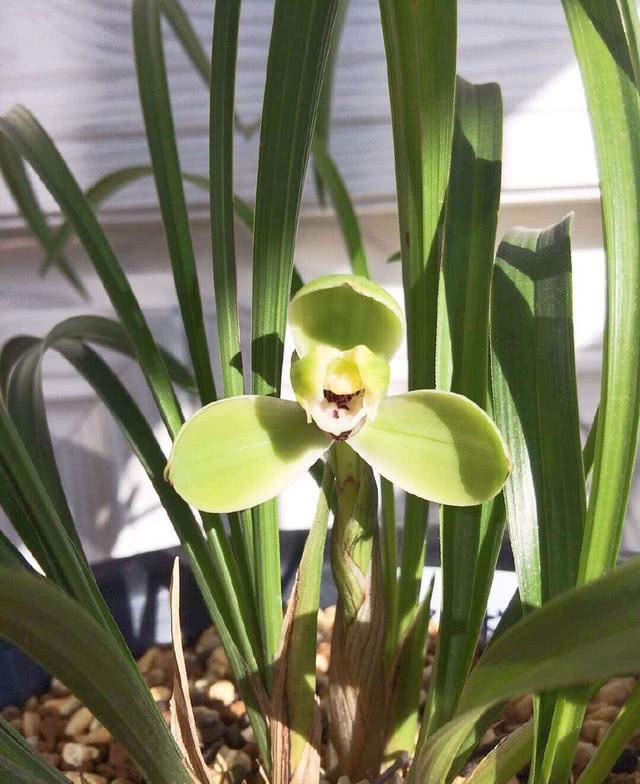
We all know that mastering the timing of water control in Cymbidium goeringii is an important part of achieving good bloom quality. Only with reasonable water control during the flowering period can one appreciate the stretched-out, unusual, and exquisitely immortal bearing of Cymbidium goeringii. So how do you determine the timing and amount of water control during the flowering period of Cymbidium goeringii? Let's share it together below; if anything seems unreasonable, please raise it so we can discuss it together.
When Cymbidium goeringii is about to bloom, that is, when the petal-type flower buds of Cymbidium goeringii begin to push up their scapes, that is, when you see the three outer petals bulging round with a slight gap showing, you can give one final thorough watering. As the flower scape keeps rising higher, the flower quietly opens, and after that there is no need to water again, because the pseudobulbs, orchid roots, and leaf veins of Cymbidium goeringii store a fair amount of water, which is fully enough to meet the water needs of Cymbidium goeringii during the flowering period. Watering again will cause the flowers to fade prematurely.
From the above, that is, when the flower scape is rising high and about to open, water thoroughly once, and afterward only moistening water is needed. As the flowering time goes on, after half a month you can slightly moisten the pot surface with a little water. If there is a saucer, you can add a little water to the saucer to increase air humidity slightly. Water control in this way can make the petal-type flowers that open excellent in every respect, with thick, round petals, level shoulders, and a proper central column, with a distant, delicate fragrance, and they will not fade prematurely.
After Cymbidium goeringii blooms, its rich, aromatic fragrance is intoxicating. The reason some new orchid growers do not get the flowers to open properly, or the flowers fade not long after opening, is that with the same petal-type flowers, once they are in their hands and open for a few days, phenomena such as elongated petals and a crooked central column appear. The more they look, the more dissatisfied they become, so they simply cut them off. Apart from the source of the seedlings and improper routine management, the reason is that they do not dare to let Cymbidium goeringii "open dry," constantly worrying that the orchid will lack water, so the pot is always wet and dripping. In that way, flowers of good bloom quality are out of the question for them.
In fact, this kind of improper worry is completely unnecessary. One often sees orchids die from being wet and stuffy, and very rarely sees orchids wither and die from dryness. If you want to appreciate petal-type Cymbidium goeringii flowers of good bloom quality, just let them open freely under natural conditions! Of course, for plain-hearted Cymbidium goeringii flowers, it is still better to keep them slightly more moist, for only then can you appreciate the best bloom quality of tender green dripping with emerald. For strange-flower and floating-gate types of Cymbidium goeringii, water must be increased for a wet opening, and only then can you appreciate their stretched-out, unusual, and exquisitely immortal bearing.
It can be seen that water control during the flowering period of Cymbidium goeringii is very important. When the flower scape is rising high and about to open, one thorough watering is enough. After blooming, it is enough to ensure humidity; do not water too much. The humidity mentioned here is environmental humidity, not potting-soil humidity.