These three potted plants are beautiful and good for feng shui, and before you know it they grow to the roof
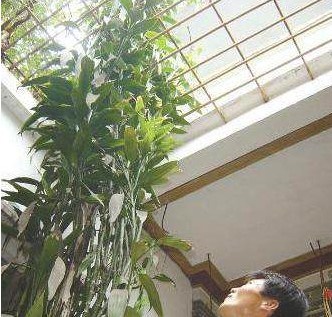
Nowadays people like to grow some potted plants; they not only purify the air and release oxygen, but can also be good for feng shui. Many people want to fill their home with greenery, yet are unwilling to spend too much effort caring for plants, or are busy with work and have no extra time to tend them carefully. Today, we would like to recommend some plants that are both beautiful and grand yet not difficult to care for, in countless forms, and we believe there is always one you will like. It really kills two birds with one stone. Today we will introduce 3 such potted plants, very easy to grow, suitable for lazy people to care for, and they grow to the roof at the drop of a hat.
1. Lucky bamboo
Many people grow lucky bamboo; it is very common in offices and living rooms, but many people just cannot grow it well. If you want to grow lucky bamboo tall, it is best to grow it in soil, place it somewhere with plenty of scattered light, and just keep the soil moist.
2. Dragon bone
Dragon bone is a plant that grows taller the more it grows. It is drought-tolerant and afraid of waterlogging, so watering should be moderate. Place it somewhere with fairly ample light, and remember to turn the pot once a week. Generally it can grow to about 3 m in 2-3 years. If you want it to grow faster, you can use organic fertilizer once a month.
3. Snake plant
The snake plant is also a plant that grows upward, though some people keep it as a small potted plant. In fact, when a snake plant grows large it is quite "frightening." Growing a snake plant is very simple: it is drought-tolerant and afraid of waterlogging, so water by the principle of watering when dry and letting it dry somewhat between waterings, and water thoroughly each time. It is very afraid of standing water and its roots rot easily, so the flowerpot must have good drainage, and the potting soil must also have good water and air permeability; you can mix some sand into the soil.
In addition, let us introduce some common care mistakes:
1. Plants never get light
Although indoor plants are relatively shade-tolerant, they still need light. If they are placed indoors for a long time, poor growth is often caused by insufficient light. During care, the plants should be moved outside every so often to recover, but remember to avoid the high-temperature period in summer and the low-temperature period in winter.
2. Overwatering
When growing flowers and plants at home, watering is a very key point. If there is too much water and standing water in the flowerpot, the plants are prone to yellow leaves, root rot, and even death. Each plant's water needs differ in different seasons. In the process of growing them, we must clearly know the habits of the plant and must not water blindly; watering should also be done according to the preferences of that plant.
3. Watering only half-way
Some friends grow quite a lot of potted flowers, and every time they water they just do it perfunctorily, stopping once the surface soil is moist. In fact, this harms the plants a great deal, because that little bit of water is only enough to moisten the surface soil, and the roots cannot absorb water, which easily causes yellow leaves and wilt disease. Therefore, the principle of watering is to water when dry and let it dry somewhat between waterings, and when you water, water thoroughly.
4. Flowers are never repotted
Some flower lovers have not repotted their flowers for several years. By then the soil in the pot has changed, the nutrients are exhausted, and the soil becomes compacted, which seriously affects the normal growth of the flowers. Every spring is the best time to repot. Change to a new pot and some new soil, and the flowers can grow better and bloom more vigorously.
5. Using eggshells directly as fertilizer
Eggshells are a common kitchen waste, and many flower lovers know to use them for growing flowers; they make very good flower fertilizer. But some flower lovers put eggshells directly into the flowerpot, and the result is either that they stink or that maggots appear. This practice is wrong, because there is egg white inside the eggshells that has not been cleaned off, so they rot very easily.
The correct method is to wash the eggshells, making sure to remove the egg liquid inside, put them outdoors to dry, and after one to two days the eggshells become dry and brittle. Then crush them; the finer they are crushed, the more easily they are absorbed by the plants. Push aside the surface soil in the flowerpot and bury the crushed eggshells in it.
Did you get the key points?